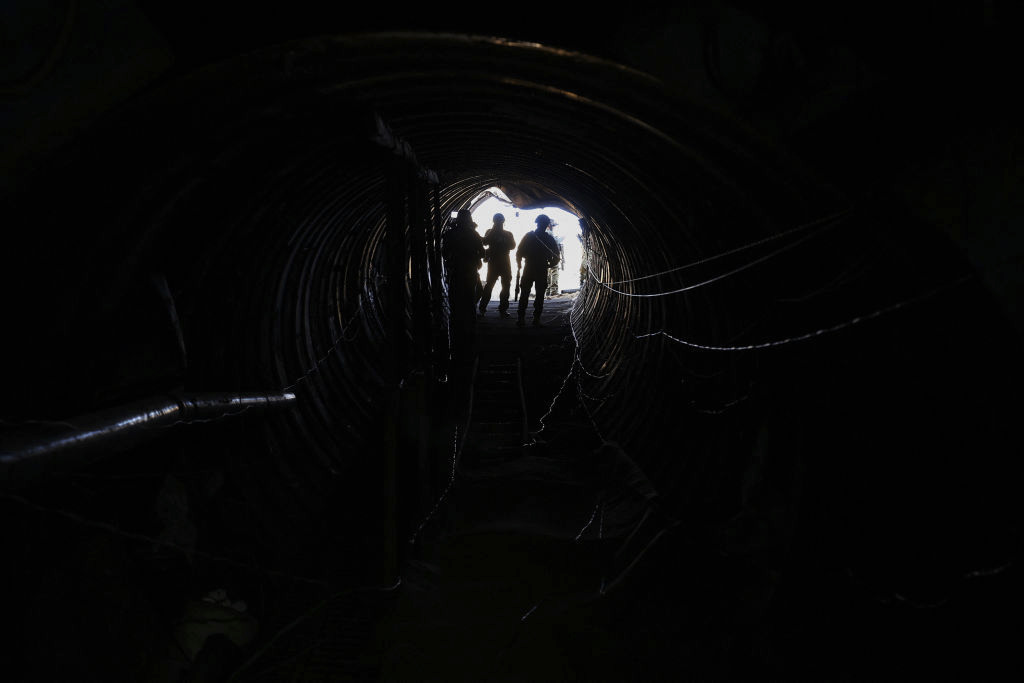










We should cool off enthusiasm over Egypt. No agreement or decision that includes a component of ending arms smuggling will be implemented, even if the Egyptian regime wants it to happen, for several reasons.
First, the Bedouins: The smuggling is not undertaken by Egypt, but rather, by the Bedouins who live in the northern Sinai. These tribes do not speak Egyptian Arabic, they do follow Egyptian culture, and they are not a party to Egypt's political ethos. They make a living by smuggling women and drugs to Israel, as well as arms, ammunition, and missiles to the Strip. Their livelihood hinges on this, and every time the Egyptian regime attempts to press them, they carry out an attack on a Sinai beach, as happened in Taba, in Sharm el-sheikh (twice,) in Nueiba, and in Ras al-Satan. This is how they "convince" the government in Cairo to let them be and continue the smuggling.
When the regime dispatches a police force they fight it, kill its people, and take them captive. The likelihood of the Egyptian government overtaking them is similar to the likelihood that the Israeli government will be able to eliminate polygamy among the Bedouins in the Negev. The Bedouins in the Sinai will continue to smuggle regardless of agreements or decisions that bound Egypt.
Second, the bribes: Those familiar with Egyptian realities know that everything there is facilitated via bribes. The low salaries of officials require them to act in line with their needs, and they do it big time. What do you think would be the response of an Egyptian police officer at a Sinai roadblock who earns several dozen dollars a month when a truck packed with "pipes" seeks to go through, and the driver offers him $100? Will Mubarak personally arrive at the roadblocks to ensure they operate properly? The likelihood that policemen at Egyptian checkpoints would stop taking bribes from trucks transferring arms to Gaza is lower than the likelihood of seeing no corruption among government ranks.
Third, the administration: Mubarak's decisions on almost any front are completely watered down as they pass through Egypt's administration. The number of different ranks the decision must go through is immense, and every level removes the parts it doesn't like. The chances that a presidential decision on curbing smuggling will be implemented as is at a Sinai checkpoint are slim. Mubarak may want it, but his decisions are not carried out. This is not about malice; it's merely Egypt.
Just to illustrate the point: Several weeks ago, the Palestinians published a report that the Egyptians started to seriously combat the smuggling tunnels between the Egyptian and Palestinian Rafah. I will spare the readers the hair-raising details of Egypt's actions. The Egyptians initiated an inquiry to discover who suddenly became so motivated, and discovered it was one person, who did not receive a big enough reward from tunnel operators and decided to teach them a lesson. The Egyptians immediately found a different posting for this hyperactive figure.
We shall see United Nations decisions and perhaps some agreements, yet we shall only see implementation on the ground once Egypt is able to control the Bedouins, once there are no longer bribes there, and once Mubarak's orders are carried out. Until that time, you can forget about Egypt putting an end to the smuggling.
Dr. Mordechai Kedar is a lecturer at Bar-Ilan University’s department of Arabic.