Trump's Apparent Confusion: Who Are Friends of His and Who Are Friends of the West

by Guy Millière  •  July 22, 2026 at 5:00 am

"Scum" would seem quite fitting to describe the current Islamic Revolutionary Guard Corps (IRGC) leadership of the Islamic Republic of Iran, especially after Israel informed US President Donald J. Trump that Iran's leaders are planning to kill him. Pictured: Crowds gather for the funeral procession of Iran's late Supreme Leader Ali Khamenei, in Mashhad, on July 9, 2026. (Photo by Wakil Kohsar/AFP via Getty Images)

"Scum" would seem quite fitting to describe the current Islamic Revolutionary Guard Corps (IRGC) leadership of the Islamic Republic of Iran, especially after Israel informed US President Donald J. Trump that Iran's leaders are planning to kill him.

It is to be hoped that the US President might now kindly reconsider who his real friends are and who America's real friends are. A few of President Trump's "good friends" he has mentioned are the leaders of Qatar, Turkey, Russia and China. They might be friends of his; unfortunately, that does not mean they have at heart the best interests of America or the West. Their definitions of "best interests " may well consist of what they would like -- not necessarily what the Free World might like.

Continue Reading Article

The United Nations Has Run Out of Alibis

by Pierre Rehov  •  July 21, 2026 at 5:00 am

An UNRWA school in Gaza sat above a Hamas tunnel shaft and three anti-tank positions, and its own principal was on the payroll of both institutions at once -- a fact that American investigators, not the UN, brought to light. Pictured: Israeli soldiers inspect the entrance to a Hamas terror tunnel directly outside an UNRWA compound in Gaza City, on February 8, 2024. (Photo by Jack Guez/AFP via Getty Images)

Institutions built to prevent atrocities eventually face the question of what they actually protect. For the United Nations, voting patterns, internal investigations and its own decisions this year no longer support the fiction of neutrality. An UNRWA school in Gaza sat above a Hamas tunnel shaft and three anti-tank positions, and its own principal was on the payroll of both institutions at once -- a fact that American investigators, not the UN, brought to light.

The pattern is old: during the oil-for-food scandal, a mid-level program director faced US prosecution while the officials who managed the program from above kept their positions. When UN failures surface, line staff absorb the exposure. The people who set the policy rarely do.

Continue Reading Article

A Dangerous Miscalculation: Underestimating American Resolve

by Lawrence Kadish  •  July 21, 2026 at 4:00 am

Imperial Japan during WW II offers one example of adversaries underestimating American resolve. Admiral Isoroku Yamamoto, who knew America well, reportedly feared that Pearl Harbor would "awaken a sleeping giant." His warning went unheeded by Tokyo. Pictured: Yamamoto in 1942. (Image source: National Museum of Taiwan History/Wikimedia Commons)

Published reports suggest that China is inundating its citizens with stories that America is on the decline, inferring that the rest of this century is China's for the taking.

It would be wise for China to read up on global history: those who have mistaken America's raucous domestic debates for weakness often find themselves shocked and defeated.

Time and again, adversaries have looked at the United States — loud, divided, seemingly distracted — and concluded that it lacked the stamina or strength for a prolonged fight. Time and again, they have been proven wrong — very wrong.

Continue Reading Article

Iran's War on the Arabs: Time for the Gulf to Stand with Israel

by Khaled Abu Toameh  •  July 20, 2026 at 5:00 am

Over the past week, the Iranian regime has demonstrated once again that its ambitions extend far beyond destroying Israel. Tehran has launched an unprecedented campaign of missile and drone attacks against several Arab states, targeting critical infrastructure, ships, airports, oil facilities, power stations, desalination plants, ports and even residential neighborhoods. Pictured: Flames and smoke from an Iranian drone attack next to Dubai International Airport on March 16, 2026. (Photo by AFP via Getty Images)

For decades, governments of many Arab states have viewed Iran's aggression primarily through the prism of its conflict with Israel. That illusion has now been shattered.

Over the past week, the Iranian regime has demonstrated once again that its ambitions extend far beyond destroying Israel. Tehran has launched an unprecedented campaign of missile and drone attacks against several Arab states, targeting critical infrastructure, ships, airports, oil facilities, power stations, desalination plants, ports and even residential neighborhoods.

These attacks should remove any doubt: Iran's war is not only against Israel. It is a war against the entire Middle East and, ultimately, against the United States and the West.

Continue Reading Article

Trump Must Abandon His Dangerous Plan to Sell F-35s to Turkey

by Con Coughlin  •  July 19, 2026 at 5:00 am

US President Donald Trump's willingness to even consider lifting the F-35 ban is being seen in the context of his charm offensive to forge closer ties with Turkish President Recep Tayyip Erdogan, an initiative the American leader has undertaken despite the Turkish leader's well-documented support for radical Islamist groups such as the Muslim Brotherhood and Hamas. Pictured: Trump speaks with Erdogan during the NATO summit on July 7, 2026 in Ankara, Turkey. (Photo by Emrah Gurel/Pool/Getty Images)

US President Donald Trump must abandon his plans to sell Turkey highly sophisticated F-35 stealth fighters because of the deeply duplicitous conduct Turkish President Recep Tayyip Erdogan displayed during efforts to end hostilities between the US and Iran.

Trump's willingness to even consider lifting the F-35 ban is being seen in the context of his charm offensive to forge closer ties with Erdogan, an initiative the American leader has undertaken despite the Turkish leader's well-documented support for radical Islamist groups such as the Muslim Brotherhood and Hamas.

Trump's courtship of Erdogan, moreover, is continuing despite concerns being raised about Turkey's duplicitous involvement in peace talks to end the Iran war. While, in public, Ankara has said its main objective is to end hostilities in the Gulf, it has also been working quietly behind the scenes to provide support for the beleaguered ayatollahs.

Continue Reading Article

Iran: Cashing Chips Won in War

by Amir Taheri  •  July 19, 2026 at 4:00 am

After almost half a century, it must now be clear to all that the Khomeinist regime is incapable of reforming itself unless it is for the worse. Pictured: Members of the Iranian security forces stand under a billboard of Iran's Supreme Leader Mojtaba Khamenei on April 9, 2026 in Tehran, Iran. (Photo by Majid Saeedi/Getty Images)

After more than a year of war, albeit with on-and-off fighting spells, it is perhaps time for US President Donald Trump to take stock of what has happened so far as a guide to what he might do next.

But before he does that, he needs to ponder the key question: is this a war of choice or of necessity?

Wars of choice seldom produce the results desired by those who start them. One example was the US war in Vietnam, later expanded to Cambodia and Laos. Another was the 1956 British-led war against Egypt. The Soviet involvement in Afghanistan was another example of wars of choice, as was President Bill Clinton's decision to intervene in Somalia.

Currently the most glaring example is the war that Russian President Vladimir Putin started against Ukraine. In wars of choice, even if you emerge as victor, which is seldom the case, the reward you get is often less than the price you paid in blood and treasure.

Continue Reading Article

Iranian Regime's Insatiable Drive to Wipe Out Jews, Christians, Minorities: World Turns a Blind Eye

by Majid Rafizadeh  •  July 18, 2026 at 5:00 am

The Islamic Republic of Iran, since its 1979 Islamic Revolution, has operated as a terrorist state, using the Islamic Revolutionary Guard Corps and proxies such as Hezbollah, Hamas, and the Houthis to advance its aims. No diplomatic deal or agreement has ever permanently halted these activities: the regime views such pacts as temporary opportunities for enrichment and rearmament. Pictured: Iran's President Masoud Pezeshkian looks on as a 'Qasem Soleimani' missile is displayed during a military parade in Tehran, on September 21, 2024. (Photo by Atta Kenare/AFP via Getty Images)

Despite sanctions and military setbacks, Tehran's ideological commitment to the destruction of Israel, and targeting Jewish, Christian, Baha'i and other worldwide minority communities, remains a core pillar of its foreign policy and proxy strategies.

In Iran, far from being "just" rhetoric, this antagonism is daily seen in a pattern of terrorist operations, including plots against synagogues, Jewish sites, Christians, Baha'i and other "infidels," which exposes the regime's transnational reach.

When, however, anyone says that Iran is doing this, the so-called international community and United Nations are completely silent.

Continue Reading Article

'All Christians Must Die': The Extremist Persecution of Christians, April 2026

by Raymond Ibrahim  •  July 17, 2026 at 5:00 am

On April 6, a 45-year-old Moroccan attacked three neighbors with an axe in Montefrío, Spain, because, according to him, he had "felt the call of Allah" and that "all Christians must die." Pictured: Montefrío, which is located near Granada, Spain. (Image source: iStock/Getty Images)

The following are among the murders and abuses Muslims inflicted on Christians throughout the month of April 2026.

The Muslim Abduction, Rape, and Forced Conversion of Christian Girls in Pakistan

On April 11, two Muslims raped a 25-year-old Christian woman, leaving her in critical condition. The survivor, a daily-wage laborer, was picking lemons in a citrus orchard for local contractor Faizan Mehboob Rehmani (also known as Kaka) when the assault occurred. "Kaka may have thought I was an easy target because I am a Christian," she said from her hospital bed. "They have destroyed my life. I want the police and courts to ensure they are punished." According to her:

Continue Reading Article

The Iran-Backed 'Decisive Campaign' To Destroy Israel and the West

by Khaled Abu Toameh  •  July 16, 2026 at 5:00 am

Perhaps the most disturbing revelation of recently published internal Hamas documents concerns its late leader Yahya Sinwar's own understanding of the consequences of his actions. He fully anticipated that Israel would respond to the October 7 massacre with overwhelming force. "The enemy will not hesitate to use all the means and weapons at its disposal," he wrote. "It may even use a nuclear bomb." He deliberately chose to launch the attack because advancing Hamas's ideological objective – the destruction of Israel – was more important to him than the lives of the Palestinians under his rule. Pictured: Sinwar (2nd R) and the late Ismail Haniyeh (L), on March 27, 2017 in Gaza City. (Photo by Mahmud Hams/AFP via Getty Images)

Many Western politicians, diplomats, academics and media commentators have argued that the Iran-backed Hamas terrorist group launched its October 7, 2023 invasion of Israel because of the Israeli "blockade" on the Gaza Strip, from the necessity by Israel to prevent Hamas from smuggling in weapons with the sole purpose of destroying its Jewish neighbor.

Others claimed that economic hardship and humanitarian conditions had driven Hamas to carry out the deadliest attack against Jews since the Holocaust. Some argued that Hamas had by then evolved into a pragmatic movement interested in governing the Gaza Strip and finally willing to coexist with Israel.

Recently disclosed documents handwritten by the late Hamas leader Yahya Sinwar have irrefutably demolished these claims.

Continue Reading Article

Who Decides Childhood in Pakistan: Parliament, Shariah, or the Courts?

by Nasir Saeed  •  July 16, 2026 at 4:00 am

Who has the constitutional authority to decide when childhood ends in Pakistan? That question lies at the heart of one of the country's most significant constitutional challenges, now before the Federal Shariat Court (pictured). Photo by Aamir Qureshi/ AFP via Getty Images.

A constitutional challenge now before Pakistan's Federal Shariat Court will determine far more than the minimum legal age of marriage. At stake is whether Parliament's statutory definition of childhood — or judicial interpretations of Muslim personal law, rooted in classical Islamic jurisprudence — will provide the principal legal framework through which Pakistan protects children from early marriage. The Court's judgment could reshape child protection law and have profound consequences for Christian and Hindu underage girls whose cases have exposed the tension between legislation and judicial precedent.

"All citizens are equal before law and are entitled to equal protection of law." — Article 25, Constitution of the Islamic Republic of Pakistan

Who Decides When Childhood Ends?

Continue Reading Article

'This Is Not Off to a Good Start': Trump's 'Board of Peace,' Double-Standards, the UN, and the Kurds
A Conversation with Joël Rubinfeld – Part III

by Grégoire Canlorbe  •  July 15, 2026 at 5:00 am

"International law, a noble concept in itself, is today being perverted — serving as a shield for some of the worst executioners on the planet. Have the West's useful idiots of the Islamic Republic of Iran already forgotten the tens of thousands of unarmed Iranian citizens massacred by their own horrific government in just two days, on January 8 and 9?" — Joël Rubinfeld. Pictured: Rubinfeld (center) at a march against antisemitism in Brussels on December 10, 2023. (Photo by Simon Wohlfahrt/AFP via Getty Images)

Joël Rubinfeld is a founding member and president of the Belgian League Against Antisemitism and president of the Jewish Coalition for Kurdistan. He was president of the Coordinating Committee of Jewish Organizations in Belgium, vice-president of the European Jewish Congress, and co-chairman of the European Jewish Parliament.

  • Read Part I: 'Israel, the Dreyfus of Nations'
  • Read Part II: 'There Is a Serious Problem in My Country'

Canlorbe: In your view, is Trump's Board of Peace a viable alternative to the UN, one that could also put an end to the unfair, demonizing treatment of Israel?

Rubinfeld: When I look at the composition of the "Board of Peace," I am skeptical.

What is paradoxical is that the founding idea of the UN is fascinating: to bring everyone to the table and try to resolve conflicts through diplomacy. In principle, it is even admirable and carried promise.

Continue Reading Article

Do the Math: Why Europe May Not Pull Through

by Drieu Godefridi  •  July 14, 2026 at 5:00 am

Europe as we have known it — that civilization from which America was born — at this point does not look as if it will pull through. It is giving way to something else: a society more fragmented, poorer, more dependent on the government, less free, and less European. (Image source iStock)

Europe as we have known it for centuries — a civilization founded on a native majority population, a common culture, industrial prosperity, and a certain idea of liberty and property — appears destined to disappear.

This will happen not in some spectacular cataclysm, but through a slow, inexorable erosion, made inevitable by structural trends now too powerful to be reversed in the time it would take to stop it.

Even if, in the years ahead, several European countries bring to power so-called "right-wing" coalitions that have never yet governed, this can no longer substantially alter Europe's collective destiny. The problem is no longer merely political; it is demographic, energetic, economic, and institutional. These four processes interlock and reinforce one another in a sinister yet terribly efficient mechanism.

1. The Collapse of the Native Demographic Base

Continue Reading Article

The Great Palestinian Election Scam

by Khaled Abu Toameh  •  July 13, 2026 at 5:00 am

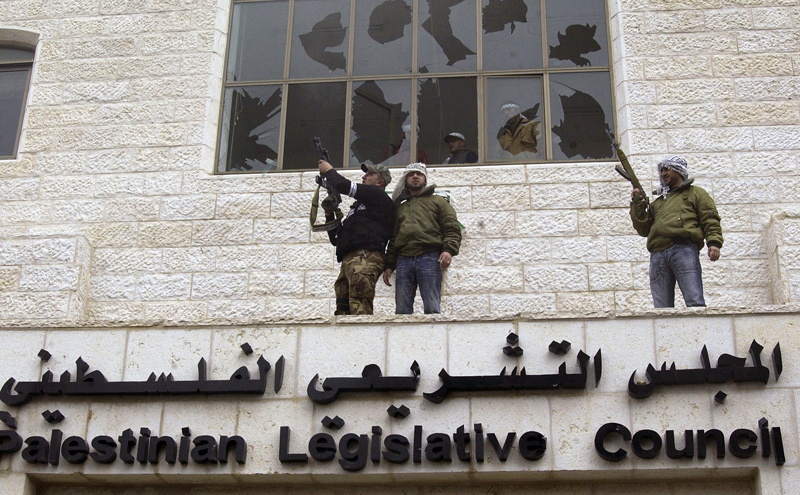
The question is not whether Palestinians should vote. The question is whether the conditions for free and meaningful elections exist. As long as Hamas remains an armed terrorist group with substantial public support, and as long as Fatah continues to monopolize Palestinian political life, elections are more likely to reproduce the current crisis than resolve it. The Palestinian parliament, known as the Palestinian Legislative Council (PLC), has been effectively defunct since Hamas violently seized control of the Gaza Strip in 2007, and Abbas formally dissolved it in 2018. Pictured: The PLC building in Ramallah on January 28, 2006, three days after its last election. (Photo by Zharan Hammad/Getty Images)

Palestinian Authority President Mahmoud Abbas has once again announced legislative and presidential elections, presenting the move as evidence of democratic renewal. According to a presidential decree issued on July 9, legislative elections are scheduled for November 28, 2026, while presidential elections are to follow during the first quarter of 2027. The decree calls on Palestinians in the West Bank, Gaza Strip and Jerusalem to participate in "free and direct" elections aimed at strengthening democracy.

Western governments and donors will undoubtedly welcome the announcement as a sign that Abbas is finally responding to long-standing demands for reform. They should not.

Holding elections for the sake of holding elections is not reform. Elections alone do not create democracy, end corruption, or establish accountability.

Continue Reading Article

After the Fireworks: The Fusion Energy That Will Define America's Next Century

by Lawrence Kadish  •  July 13, 2026 at 4:00 am

As we start to pursue our second 250th era, this would be a good time to recognize that energy security is national security. Securing energy abundance through nuclear fusion will be a strategic precondition for global leadership in the coming decades. (Image source: OpenAI)

The fireworks have faded. The paradegoers have gone home. The red, white and blue bunting will be taken down by the end of the month.

The 250th anniversary of our nation's founding has come and gone. What now?

This historic milestone should not be viewed as a celebration to conclude by July 5th but as the opening of a national conversation about what America intends to become in the decades and centuries to come. But make no mistake: that future will be determined, in part, by energy.

Every American era has been an energy story. Water wheels powered the first mills of the young republic. Coal fueled the railroads and factories of the Gilded Age. Oil powered America's twentieth-century dominance. Electrification transformed daily life for millions of Americans, and our reliable energy grid became the invisible force behind our nation's extraordinary quality of life.

Continue Reading Article

After Khamenei, Nothing Has Changed - But It Might

by Pierre Rehov  •  July 12, 2026 at 5:00 am

After the death of Supreme Leader Ayatollah Ali Khamenei, nothing has changed in Iran, where the doctrine, the gallows and the wager on Western fatigue are those of February. What finally changed, last week, is Washington. Pictured: People gather beneath a billboard of Ali Khamenei and his son and successor, Mojtaba Khamenei, during the third day of the elder Khamenei's funeral on July 6, 2026 in Tehran, Iran. (Photo by Majid Saeedi/Getty Images)

The West has long nurtured the conviction that a regime dies with its ruler. On February 28, American and Israeli aircraft, in a joint operation prepared over months, killed Iran's Supreme Leader Ali Khamenei together with the chief of staff of the armed forces, the commander of the Revolutionary Guard Corps, the defense minister and Khamenei's closest adviser, thereby erasing the command structure of the Islamic Republic in a single morning. US President Donald Trump promised to "annihilate their navy" and level Iran's missile industry.

Across the West, and among Iranians whose January uprising had been drowned in blood only weeks earlier, an immense hope took hold. The theocracy, at last, seemed gone.

Continue Reading Article