by Khaled Abu Toameh • October 19, 2026 at 8:30 am
Why is Fatah treating Hamas as a legitimate political partner before the group has demonstrated a willingness to abandon terrorism, surrender its weapons, and relinquish its independent military forces?
The question is particularly urgent as the international community seeks to establish a different future for the Gaza Strip, one that would prevent Hamas from restoring its military capabilities and ensure that the territory is no longer controlled by an armed organization.
What happens when Hamas refuses to surrender its weapons and accept the authority if a single Palestinian government?
The issue... is whether the terrorist organization Hamas should be permitted to retain the weapons and military infrastructure that enable it to impose its will on Palestinians and launch more attacks against Israel, not to mention its own civilians.
A general commitment to national dialogue does not establish that Hamas is prepared to disarm, dismantle its military infrastructure, or accept the binding authority of a unified government.
Hamas's own account of the Cairo meetings... emphasized the need for elections, which Hamas would no doubt win, and a unified strategy combining political and "field action" against Israel.
The phrase "field action" requires clarification. Does "field action" mean peaceful political activity, or does it leave room for armed operations by factions that retain their own weapons and military chains of command?
The Palestinians do not need another agreement filled with general declarations whose meaning each faction can interpret according to its own interests. They need clear, verifiable commitments that establish who exercises authority, who controls weapons, and who is responsible for security.
A government cannot exercise sovereignty if another organization retains the power to undermine its decisions by force.
The Palestinians... do not need another agreement that allows Hamas, an armed Islamist group committed to the destruction of Israel, to retain its weapons while acquiring renewed political legitimacy.
The Trump Administration's 20-point Gaza initiative and the Board of Peace have placed questions of security, demilitarization, and Gaza's future governance at the center of the debate. Fatah's negotiations with Hamas should be judged against those objectives, not simply by whether Palestinian factions can reach another "unity" agreement.
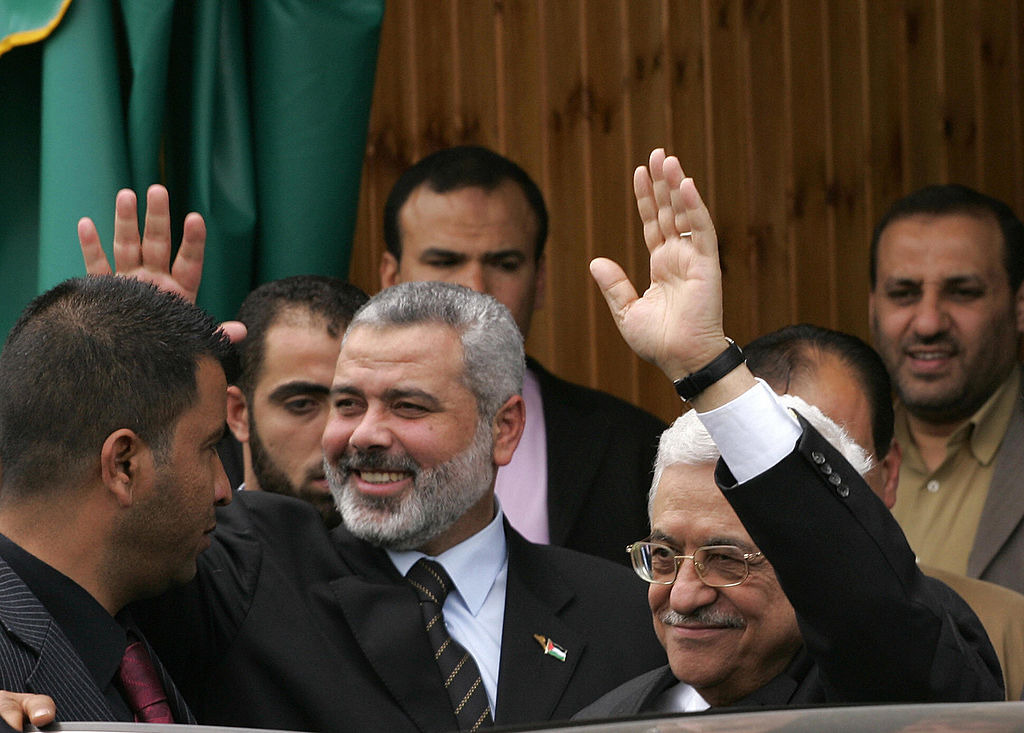
Why is the Palestinian Authority's ruling Fatah faction treating Hamas as a legitimate political partner before the group has demonstrated a willingness to abandon terrorism, surrender its weapons, and relinquish its independent military forces? Pictured: Palestinian Authority President Mahmoud Abbas (R) and the late Hamas leader Ismail Haniyeh in Gaza City, on April 5, 2007. (Photo by Mahmud Hams/AFP via Getty Images)
More than three years after the October 7 massacre, Palestinian Authority President Mahmoud Abbas and his ruling Fatah faction are still pursuing reconciliation with Hamas, the Iran-backed terrorist group that led the assault on Israel.
Instead of making Hamas's disarmament and the dismantling of its military infrastructure prerequisites for Palestinian political unity, Fatah officials are traveling to Cairo to negotiate ways of incorporating the terrorist group into a unified Palestinian political system.
The latest round of talks, sponsored by Egypt, once again raises a fundamental question: Why is Fatah treating Hamas as a legitimate political partner before the group has demonstrated a willingness to abandon terrorism, surrender its weapons, and relinquish its independent military forces?
Six years later, despite regional wars, those relationships [of the Abraham Accords] endure. The Abraham Accords produced something more valuable than a ceremony: a measurable change in relations between states. That is the standard by which presidential advisers should be judged.
Consider Sudan. Its war between Abdel Fattah al-Burhan's regime-aligned Sudan Armed Forces (SAF) and Hemedti's Rapid Support Forces (RSF) has killed and displaced civilians on a staggering scale.
Washington sanctioned both commanders, accused the RSF of genocide and the SAF of committing war crimes, and determined that the regime's forces had used chemical weapons. [Senior Advisor to the President for Arab and African Affairs Massad] Boulos has promoted a 90-day humanitarian ceasefire; no durable ceasefire has emerged.
Does Boulos have a strategy to prevent Sudan's Red Sea coastline from becoming another arena of Iranian influence? The United States cannot afford an approach that treats every armed faction as an equally acceptable partner simply because each controls territory. Diplomacy must distinguish between temporary contacts and legitimizing forces that threaten long-term security.
The reported American proposal [in Libya] envisages a power-sharing arrangement between the Haftar and Dbeibah families, alongside the unification of state institutions and opportunities for American investment in Libya's energy sector.
Washington, however, must confront a more fundamental question: How can a genuine national unity government emerge in Libya when one of the negotiating parties operates within a political environment deeply entangled with armed militias, Muslim Brotherhood-linked networks and hardline Islamist factions?
[T]he underlying problem remains: Who would actually exercise power inside a supposedly unified Libyan government?
Would Washington be helping establish a sovereign state with a unified national army, accountable institutions and civilian authority? Or would it be legitimizing an arrangement in which entrenched political families divide state resources while armed factions and Islamist networks retain influence behind the scenes?
How... can [President Trump's] own representatives pursue deals that risk preserving the influence of armed Islamist networks while the president promises to confront them?
In Sudan, Yemen and Libya, American national security is too important for strategic ambiguity masquerading as balance.
Trump does not need an envoy whose chief asset is proximity to presidential power. He needs results consistent with his stated strategy: stronger allies, weaker terrorist networks, less Iranian influence and durable peace.
Kushner had the Abraham Accords. What will Boulos leave behind? The photograph should document a victory — not substitute for one.
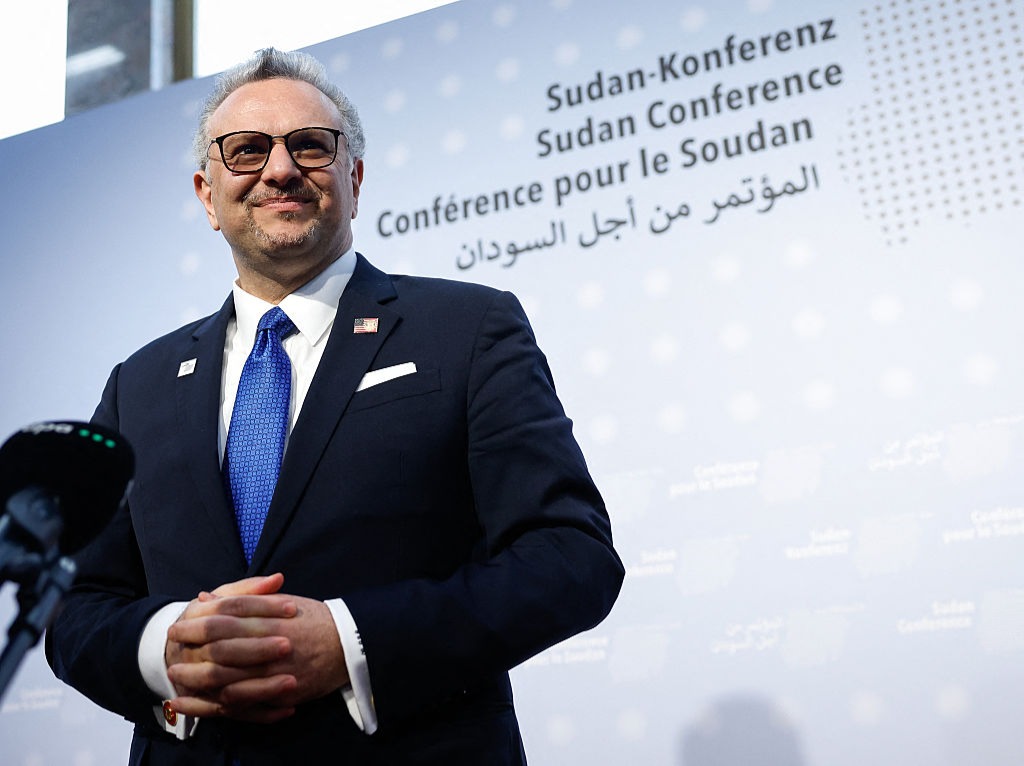
Jared Kushner had the Abraham Accords. What will Massad Boulos (Senior Advisor to the President for Arab and African Affairs) leave behind? The photograph should document a victory — not substitute for one. Pictured: Boulos gives a statement as he arrives to attend the Sudan Conference in Berlin, Germany on April 15, 2026. (Photo by Odd Andersen/AFP via Getty Images)
Two Trump family advisers received extraordinary access to presidential power. One helped change the Middle East. What has the other changed?
On September 15, 2020, US President Donald J. Trump hosted the signing of the Abraham Accords. The United Arab Emirates and Bahrain normalized relations with Israel; Morocco followed. Jared Kushner helped translate a strategic opening into diplomatic recognition, trade and security cooperation. Six years later, despite regional wars, those relationships endure. The Abraham Accords produced something more valuable than a ceremony: a measurable change in relations between states. That is the standard by which presidential advisers should be judged.
Kushner had a recognizable professional identity long before marrying Ivanka Trump in 2009. He was active in real estate and had acquired The New York Observer in 2006. He was not a trained diplomat, but his public record was identifiable.
Al-Sharaa, it appears, is directing most of the state's resources, foreign aid included, toward a large standing army and new weapons systems, while concealing the scale of the effort.
Western governments and al-Sharaa do not attach the same meaning to the word "stability."
Middle Eastern alignments rarely outlive the enemy that produced them... Iran and its militias spent years fighting the insurgency that carried him to power. None of that says what a stronger Syrian state will do in ten years.
In September 2025, al-Sharaa told reporters that a security deal with Israel, modeled on the 1974 disengagement agreement, was a "necessity."
A year after he declared this supposed "necessity," al-Sharaa announced at the UN that the Golan Heights "will remain Syrian" – possibly so that Syrians will once again be able to shoot down at Israeli farmers on the plain below. Al-Sharaa added the complaint that "Israel is launching attacks against Syria. There have been 500 air strikes, more than 1,200 incursions, and 300 detentions. This is at odds with the orientation we're seeing at global level."
Al-Sharaa, however, forgot to mention why. Ever since al-Sharaa overthrew the Assad regime, Christians, Druze, Alawites and other minorities have been victims of attacks that are reportedly "genocidal" – all while al-Sharaa's plan for the radical Islamization of Syria surges ahead.
The Trump administration's removal of Syria from the list of state sponsors of terrorism seems to have been based on wishes rather than any kind of facts on the ground. Perhaps the administration still hopes -- although, after its run-in with Iran, it really should have learned better -- that rewarding good behavior before it takes place will somehow magically cause it to spring into being simply does not work. Gifts in good faith, especially to supposedly former terrorists, can simply get pocketed in expectation of the next ones.
At this point, al-Sharaa's demand [that Golan Heights "will remain Syrian"] is tantamount to expecting the United States to return its southwest to Mexico.
Israel, evidently motivated by survival, treats its northern frontier as a question of capabilities rather than of declared intentions....
The wager is that investment and honors will pull al-Sharaa toward moderation. It may pay off, but its beneficiary, al-Sharaa, is using part of the proceeds to build an armed power of his own.
Israeli security sources concede that a chance to lock in border arrangements was missed when al-Sharaa was weak and newly installed, and now assess that a confrontation is a matter of time.
A channel to Damascus has bought Washington influence that isolation never could, but it should not buy amnesia: al-Sharaa's past is documented, his diplomacy is real, and the army now taking shape belongs to the same man.
Whether Ahmed al-Sharaa has changed since the world knew him as al-Jolani will occupy biographers. Israel's planners have stopped asking. They are counting his brigades.
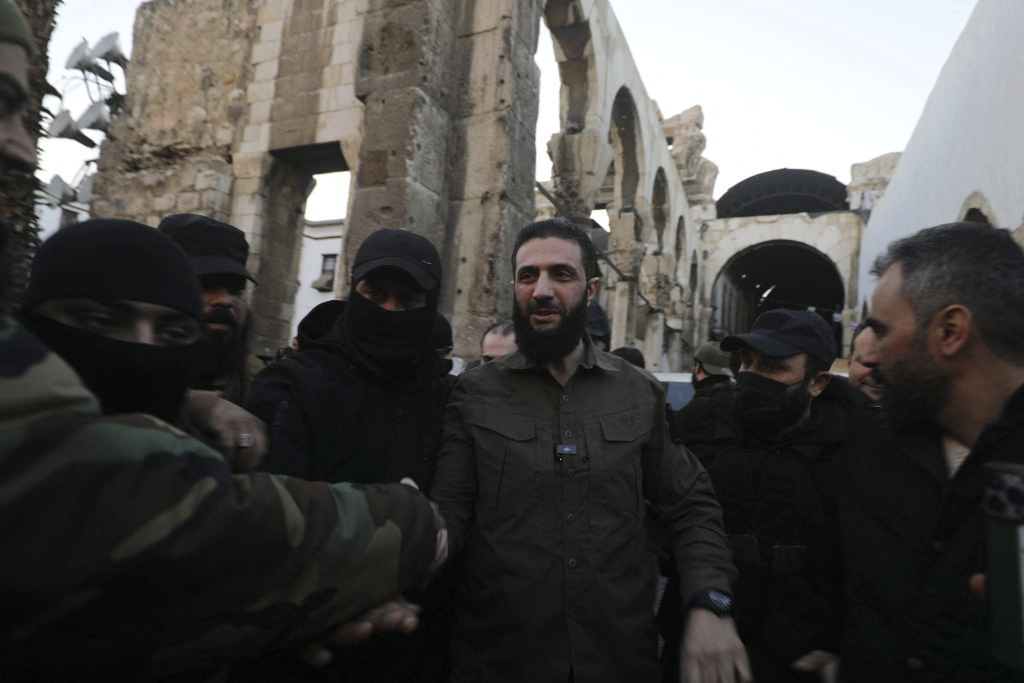
Syrian President Ahmed al-Sharaa, it appears, is directing most of the state's resources, foreign aid included, toward a large standing army and new weapons systems, while concealing the scale of the effort. Pictured: Al-Sharaa is greeted at the Umayyad Mosque in Damascus on December 8, 2024. (Photo by Abdulaziz Ketaz/AFP via Getty Images)
Ahmed al-Sharaa inherited a country in ruins. War halved the size of Syria's economy and left nine people out of ten below the poverty line. According to serious Israeli sources, the priority in Damascus has little to do with reconstruction.
Al-Sharaa, it appears, is directing most of the state's resources, foreign aid included, toward a large standing army and new weapons systems, while concealing the scale of the effort. His forces are not yet rated as capable, but they have held brigade-level exercises, are being organized into brigades with divisions to follow, and are seeking air defenses able to restrict the Israeli Air Force. This is the army Israel gutted in December 2024, when 480 strikes in two days destroyed an estimated 80 percent of Assad's strategic arsenal. It is being rebuilt with money meant to rebuild the country.
In a different context [from nuclear weapons], the "Iran problem" has been defined as "exporting terrorism" with cases concerning over 30 countries –from Kuwait to Argentina, and passing by Turkey, Switzerland and many members of the European Union. To that must be added financial aid, arms and political support that Tehran has given to almost all Palestinian groups fighting Israel not to mention guerrilla outfits in Latin America.
The mistake the outside world made was to ignore that transformation [the 1979 Islamic revolution] and continue with the assumption that they were dealing with a normal nation-state with regular interests, aspirations and ambitions of normal nation-states.
[M]aintaining the status quo became the unadmitted priority of all players.
That means keeping Iran on the wrong train it boarded in 1979 instead of helping it to get off at the first stop.
[Iran] cannot change the environment around it while it is incapable of changing itself to suit that environment. It cannot wage war in a meaningful way but is also unable to seek peace.
(Image source: iStock/Getty Images)
"What is the Iran problem that analysts and policymakers often talk about?" This was the question fired at me at a recent brain-storming session with a number of political commentators in London.
The short answer is that, depending on who is looking, Iran is made of a cluster of problems. To some, like successive US administrations, the core of the problem is the current regime's pursuit of nuclear weapons.
Never mind that for the past quarter of a century US intelligence services have regularly reported that Iran wasn't doing so, every US president presented "tackling the Iranian nuclear problem" as a priority. Under President Barack Obama that "problem" consumed almost all the four years of John Kerry as Secretary of State.
The US wasn't alone in that context. British Foreign Secretary Jack Straw visited Tehran five times to "solve" the "nuclear problem." All German and most French foreign ministers did the same.
A Muslim's duty, we were taught in the Middle East, is to promote and establish Islamic government. Failing to do so means one's religion and duty to Allah remain incomplete. Everyone must perform jihad (holy war; struggle in the cause of Islam) to impose Allah's law on the world's population. Everyone is a mujahid (fighter, from the word jihad). The promised end is one Islamic ruler under whom Allah's sovereignty is complete on Earth.
We were also taught that when, in an election, the choice is between a Muslim and a non-Muslim candidate, a Muslim must always vote for the Muslim. Voting for a non-Muslim is voting against Allah. Character does not matter. Ability does not matter. All that matters is religion.
In Islam, you cannot be a passive religious observer. The core of Muslim identity, we were taught, requires active struggle for the political project. The founder of the Islamic Republic of Iran in 1979, Ayatollah Ruhollah Khomeini, put it: "We shall export our revolution to the whole world. Until the cry 'There is no god but Allah' resounds over the whole world, there will be struggle [jihad]."
This doctrinal demand makes it hard to believe the claims of Islamist nonprofit organizations that they are purely charitable and apolitical. American taxpayers lavishly subsidize them through the Internal Revenue Service's 501(c)(3) tax-exempt status for charitable organizations.
According to the report, when the conduct of these groups was measured against IRS guidance on the ban against political campaign intervention by charities, the conduct detailed in the report closely tracks the agency's examples of prohibited activity. These activities include endorsing candidates, seeking campaign donations, circulating campaign materials, giving platforms to candidates without comparable access for opponents, and releasing scorecards or voting records timed to election seasons.
Americans are effectively underwriting institutions that instruct congregants on how God requires them to vote and then handing the microphone to favored candidates.
[T]he IRS possesses the legal tools, the evidence, and its own training materials, yet appears to lack the will to act.
The report's author, Mahyar Entezari, emphasized that every episode rests on video, audio, newsletters, convention materials, social media posts, and published accounts, but that "no organization has faced any consequence."
[US Representative Chip] stated it is absurd that groups with links to terrorism continue to receive tax benefits that effectively have American taxpayers subsidizing threats against themselves.
The MEF has urged the IRS and Treasury Department to scrutinize every organization named in the report, apply available taxes and revocation remedies, and review groups still soliciting deductible contributions.
The report points out that the IRS and Treasury Department have the statutes, the guidance, and the evidence before them. The question is whether they will enforce the law and act on anything.
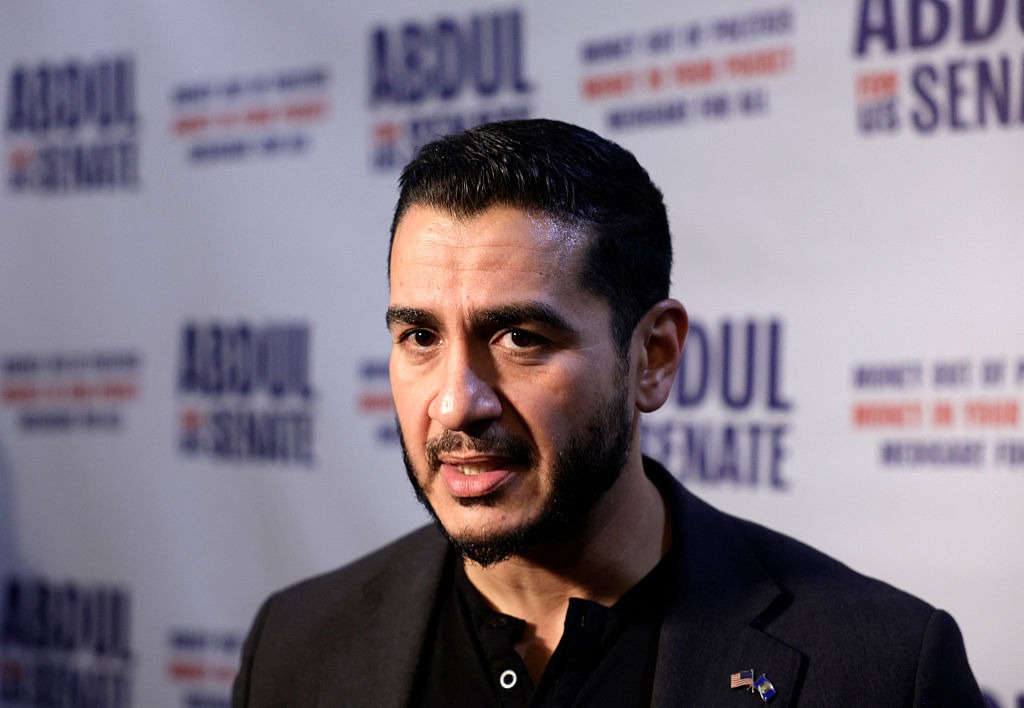
The most concrete illustration of tax-exempt Islamist groups stepping directly into US electoral contests involves the 2026 Michigan Democratic Party primary for the US Senate. Abdul El-Sayed prevailed on August 4 by roughly 13,800 votes — a margin under one percent. In the preceding weeks, imams at several tax-exempt Michigan mosques urged support for him from the pulpit, and two of them brought the candidate onto the pulpit during services. Pictured: El-Sayed speaks with reporters in Port Huron, Michigan on October 6, 2026. (Photo by Jeff Kowalsky/AFP via Getty Images)
Growing up in Islamic societies in Iran and Syria, all of us could see that there is not even an iota of chance that any Islamist organization or mosque could exist as truly non-political or apolitical.
In schools and at university, we were taught that Islam differs fundamentally from other religions and spiritual practices. Whereas Christianity and Judaism allow for private faith and a separation between religion and state, Islam does not. From its inception in the seventh century, Islam was political. It was not a private spiritual matter. It was about creating a universal government run by Allah. Everything in society must be ordered by Sharia — what they call Allah's law or God's law.
"Witnesses said Ahmad confronted Siddique and objected to his drinking water from the same cooler because he was a Christian.... Ahmad... grabbed Siddique from behind and slit his throat." — Morning Star News, June 24, 2026, Pakistan.
"Sadique's murder is another example of how Muslims in Pakistan look down on Christians and treat them as 'Achhoot,' or untouchables. Christians in Pakistan are often forced into the back-breaking work of making thousands of bricks a day. A system of greed keeps their families trapped in these horrible conditions for generations." — International Christian Concern, July 20, 2026, Pakistan.
Ahmed Yetrib, a Muslim who converted to Catholicism, reported receiving death threats on social media, partly because he was sharing his reasons for converting. — Tribune Chrétienne, June 20, 2026, Belgium.
"[T]he court sentenced him in January, without ever allowing his defense to see his case file. He was convicted under Article 98(f) of the Egyptian Penal Code, which penalizes 'extremist thoughts....'" — International Christian Concern, June 19, 2026, Egypt.
"We reject [the construction of the church] so that nearby residents also know that if a rule is violated, then there must be an evil plan...." — Morning Star News, June 23, 2026, Indonesia.
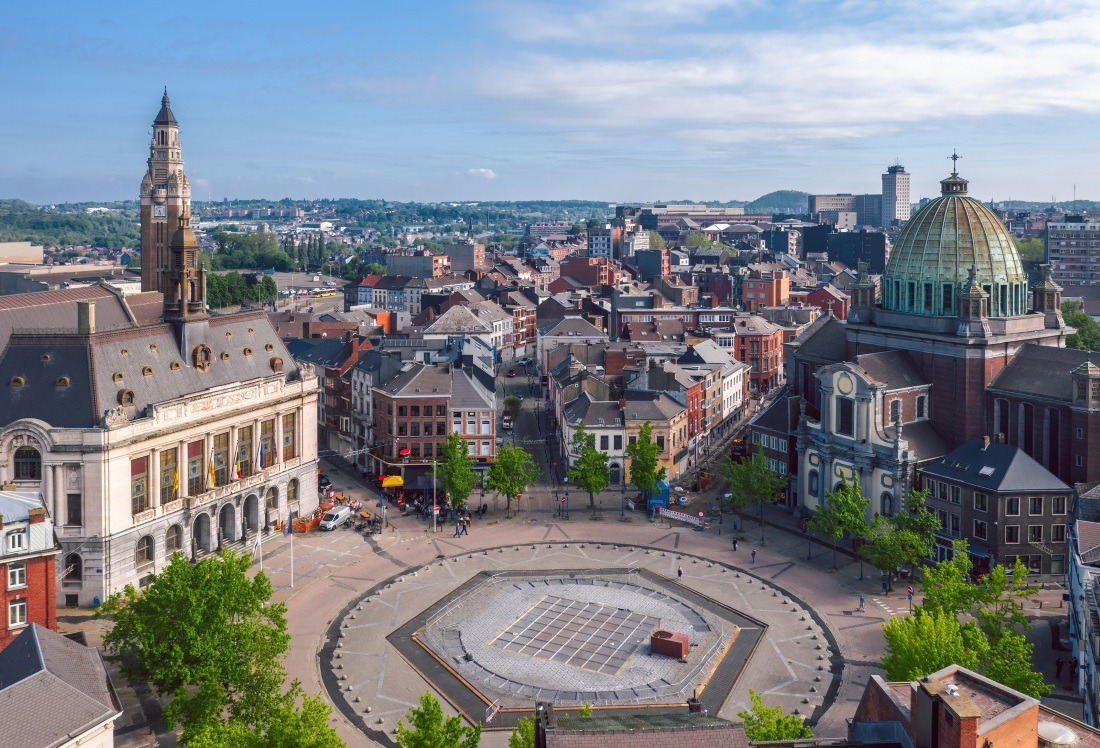
On June 30, Ahmed Yetrib, a Belgian Muslim who converted to Catholicism, reported receiving death threats on social media, partly because he was sharing his reasons for converting. His ordeal began in 2018, when he was baptized, at which point his entire family ostracized him. Pictured: Charleroi, Belgium, where Yetrib was working as a teacher when the threats began. (Image source: iStock/Getty Images)
The following are among the murders and abuses Muslims inflicted on Christians throughout the month of June 2026.
The Muslim Slaughter of Christians
Democratic Republic of Congo: Islamic terrorists slaughtered hundreds of Christians in separate attacks. Then, on June 3, and again on June 24, Muslim militants beheaded a total of 14 Christians.
Islamic State Central Africa Province (ISCAP) claimed the slayings, which took place in the village of Mungbere.
In attacks on June 11 and June 13 in Beni Territory, 11 other Christians were shot and killed, and one was beheaded in Mayangose on June 20. Also, in early June, the Muslim terrorists burned down 80 Christian homes in separate attacks in Haut-Uélé. According to the report:
by Khaled Abu Toameh • October 15, 2026 at 5:00 am
[H]olding elections under the current circumstances will almost certainly strengthen Hamas....
On the other hand, Abbas's decision cannot be mistaken for a genuine effort to reform anything in Palestinian politics.
While elections can be important, they can also be bogus, faked, or even harmful, as one can see in Russia, Turkey or Iran.
Elections do not mean there is a democracy, especially if they take place before any reforms. Elections are needed after the institutions of democracy -- freedom of speech and of the press, the separation of powers, freedom of religion or from religion, due process, equal justice under the law -- meaning accountability for everyone, property rights, rights for women, children and laborers, an independent judiciary, and so on -- have been set in place and are smoothly functioning. Only then can there be elections that mean anything.
What is really needed to help the Palestinian people, now being held hostage by corrupt and self-serving leaders in all of their parties, is not just elections but reforms, all of them, and serious international accountability, starting with shutting down funding for slow or nonexistent compliance.
So far, the international community has been funding leaders who mistreat their own people first, then their neighbors and everyone else second. For the sake of the Palestinians, this has to stop.
Will [Western governments] condition financial assistance on measurable reforms?... Will they impose consequences on Palestinian leaders who obstruct reform? Or will they issue statements of regret, continue providing financial support, and wait for Abbas to pretend he is finally instituting reforms by announcing yet another -- presumably fake -- election date?
Western governments should also avoid the mistaken assumption that an election announcement, by itself, represents progress.
The test of reform is not the number of "presidential decrees" Abbas issues promising elections. It is whether Palestinians acquire institutions that can hold their leaders accountable.
A recent poll conducted by the Palestinian Center for Policy and Survey Research found that 83% of the Palestinians believe corruption exists within Palestinian Authority institutions.
The poll also showed that Hamas leaders are more popular than Abbas and that 79% of Palestinians want him to resign.
The Palestinian political system offers no credible, nationally competitive third alternative to Fatah and Hamas.... Hamas remains an armed terrorist organization, while Fatah has presided over a system marked by authoritarianism, patronage, and corruption.
Western governments have too often treated elections as the principal answer to Palestinian political dysfunction. They are not. Palestinians need new leaders, new faces, and new political ideas. They need pragmatic, realistic, and accountable representatives who prioritize the welfare of their own people over factional interests and revolutionary slogans. They also need an overhaul of an education system that should prepare young Palestinians for peaceful coexistence, critical thinking, and economic opportunity rather than perpetuate hatred and glorify violence. They need independent institutions, financial transparency, effective anti-corruption mechanisms, and a free press capable of scrutinizing those in power.
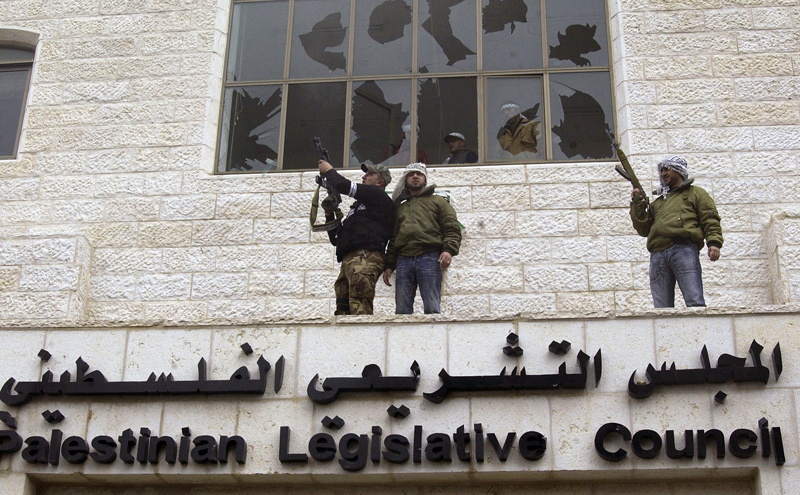
Palestinian Authority President Mahmoud Abbas has done it again. On October 10, he announced that elections to the Palestinian Legislative Council (PLC), originally scheduled for November 2026, will be postponed until September 11, 2027. Pictured: The PLC building in Ramallah on January 28, 2006, three days after its last election. (Photo by Zharan Hammad/Getty Images)
Palestinian Authority President Mahmoud Abbas has done it again. On October 10, he announced that elections to the Palestinian Legislative Council (PLC), originally scheduled for November 2026, will be postponed until September 11, 2027. No date had been set for a presidential election.
The decision came as no surprise to Palestinians familiar with Abbas's record. It was not the first time that the Palestinian leader had announced elections, raised expectations, and then postponed the vote.
The postponement of the elections presents a contradiction. On one hand, holding elections under the current circumstances would almost certainly strengthen Hamas, the Iran-backed Islamist terrorist organization that won the 2006 PLC elections and violently seized control of the Gaza Strip in 2007.
Wars of attrition are won by whoever can keep paying for them, and Vladimir Putin has spent more than four and a half years betting that Ukraine's Western partners would tire before Russia's treasury did. In three days, Washington gave that bet its best return in months. On October 9, President Donald Trump announced a deal for diesel fuel with the Kremlin. The next day, he suggested that Ukrainians find themselves a new president.
The Kremlin secured sanctions relief and an open quarrel between Washington and Kyiv without making a single verifiable commitment.
On October 10, Trump told reporters that Zelensky had "better damn well stop." He said so during a week in which Russia had carried out more than 200 strikes on Ukraine's power generation and transmission facilities and 17 more on gas and oil sites, while its attacks killed more than 150 Ukrainians. It was Russia's third major attack wave on Ukraine in four days.
A truce confined to refineries would shield Russia's principal vulnerability and leave Ukraine's electric grid open to further attacks as winter sets in. That suits Putin, who, according to sources familiar with his thinking, wants no energy truce before winter and is counting on Ukrainian suffering blackouts in the winter cold to extract concessions his army has failed to win.
An arrangement that protects Russian revenue while Ukrainians freeze in the dark would hand the Kremlin a victory dressed up as American diplomacy.
On October 11, Zelensky offered to hold elections if Russia accepted a 60-day ceasefire, thereby shifting the burden of proof onto Moscow. Moscow answered within a day. Kremlin spokesman Dmitry Peskov rejected the offer, repeating that Russia does not want a ceasefire...
Turning... against the country being invaded, while Russia faces no comparable demand -- or apparently any demands whatsoever -- reassures Putin that prolonging the war buys American restraints on Ukraine and the pathway to a Russian victory.
Trump claims that Zelensky "could have made many deals." In fact he could not -- at least not any that could assure Ukraine a shred of security, which is all he has ever asked for. If Russia gets to keep parts of eastern Ukraine, it would provide a fast track to Kiev, as well as tipping off other predators that invasions work. To Communist Chinese President Xi Jinping, half of Taiwan probably looks a lot better than no Taiwan.
Trump prides himself on recognizing a bad deal. This one supplies Putin with fresh revenue for a war he refuses to end and shields the Russian refineries that have become his weakest point, while the Ukrainian power grid remains a target as win ter approaches and Ukraine's skies still remain open. Until Russia stops striking Ukrainian homes, hospitals, and the electric power grid, every American concession amounts to an advance payment on a war that only Putin wants.
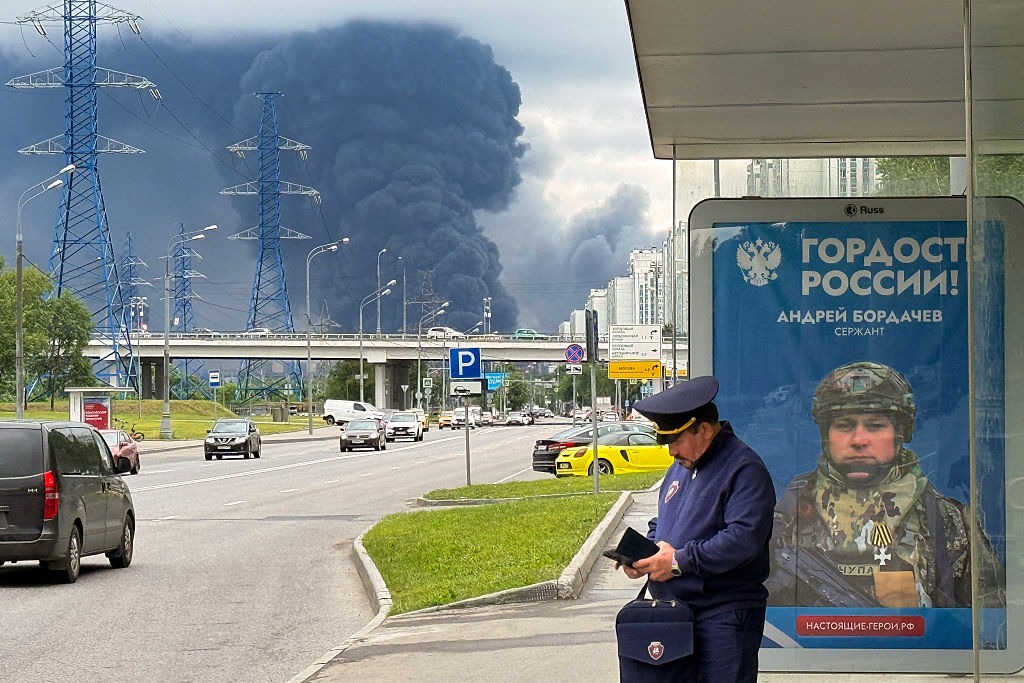
A truce confined to refineries would shield Russia's principal vulnerability and leave Ukraine's electric grid open to further attacks as winter sets in. That suits Putin, who, according to sources familiar with his thinking, wants no energy truce before winter and is counting on Ukrainian suffering blackouts in the winter cold to extract concessions his army has failed to win. Pictured: Smoke rises from Gazprom Neft's oil refinery on the outskirts of Moscow on June 18, 2026. (Photo by AFP via Getty Images)
Wars of attrition are won by whoever can keep paying for them, and Vladimir Putin has spent more than four and a half years betting that Ukraine's Western partners would tire before Russia's treasury did. In three days, Washington gave that bet its best return in months.
On October 9, President Donald Trump announced a deal for diesel fuel with the Kremlin. The next day, he suggested that Ukrainians find themselves a new president. On October 11, he proclaimed an "ENERGY CEASEFIRE" that Kyiv had not been told about and that Moscow declined to confirm; within hours, Russian strikes hit the CHP-5 power plant in Ukraine's Kharkiv.
The Kremlin secured sanctions relief and an open quarrel between Washington and Kyiv without making a single verifiable commitment.
The real horror in Trump's jackpot to Putin, which will certainly be used toward further attacks on Ukraine, is that this bonanza will satisfy America's diesel fuel usage for only nine days.
The founder and leader of France Unbowed, Jean-Luc Mélenchon, is a Trotskyist who, already in his youth, embraced the concept of "permanent revolution".
Mélenchon, over the years, has made no secret of his desire for a radical transformation of France. He supports the Islamization of the country and advocates a "great replacement" of the native French population with a new demographic from the Muslim world that would constitute what he calls the "new France."
With antisemitism widespread among young Muslims living in France's 751 "no-go zones" — suburban enclaves where police no longer venture and where Muslim gangs and radical imams hold sway — Mélenchon, like other representatives of his party, now publicly makes antisemitic remarks.
High school students seeking better educational conditions have no reason to wave Palestinian flags or shout "Free Palestine", "We are children of Gaza," or write "October 7. Day of Celebration" on walls.
The rioters express support for not only the Palestinian cause but also for Islamic terrorism.
The French government has basically appeared impotent and weak.
The only leaders who pointed out that the events were primarily an Islamist and leftist insurrection were those from Marine Le Pen's National Rally party and a few other right-leaning politicians. MEP Marion Maréchal stated that an "Islamist spirit of revenge" is at work. Revenge for what? For the French welcoming Islamists into their country and showering the immigrants with benefits?
Meanwhile, France's riots have been spreading across Europe to Belgium, Greece, Italy, Ireland and Austria. Behind France's riots, according to investigative journalist Asra Nomani, are "Communists, unions and a global propaganda network."
"From France to the United States, the United Kingdom, Brazil, Greece and India, adults with deep pockets are tapping France's school protests and turning a domestic education dispute into a platform for broader political and ideological confrontation." — Asra Nomani, Fox News, .
"The communist Red and the Islamist Greens have nothing in common but a common enemy, the Judeo-Christian, capitalist, free West, led by the U.S. Their goal is to dismantle us." — Mike Gonzalez, senior fellow at the Heritage Foundation, quoted by Asra Nomani, Fox News, .
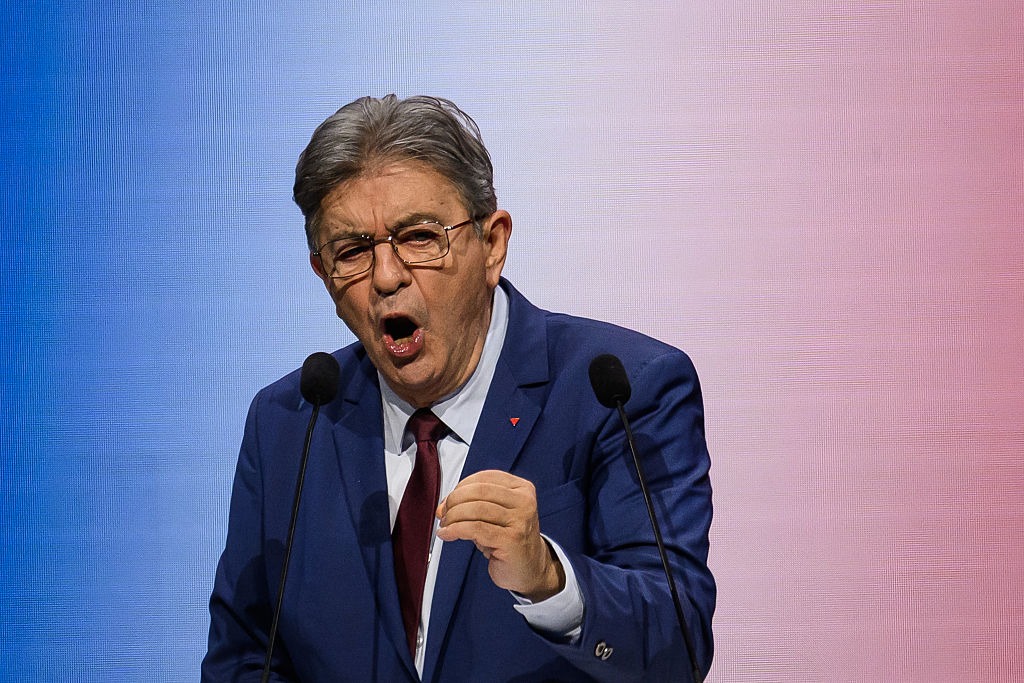
The founder and leader of France Unbowed, Jean-Luc Mélenchon, is a Trotskyist who, already in his youth, embraced the concept of "permanent revolution". Over the years he has made no secret of his desire for a radical transformation of France. He supports the Islamization of the country and advocates a "great replacement" of the native French population with a new demographic from the Muslim world that would constitute what he calls the "new France." Pictures: Mélenchon speaks at a campaign rally in Cournon d'Auvergne, France, on October 11, 2026. (Photo by Jeff Pachoud/AFP via Getty Images)
The recent riots in France have mainly been described as a revolt of high school students, stemming from deteriorating conditions, overcrowding and understaffing in French high schools (lycées). That presentation is largely inaccurate. Although students were incited by a few agitators to voice grievances, political leaders, primarily from the political left, immediately stepped in to urge them to go further and resort to violence.
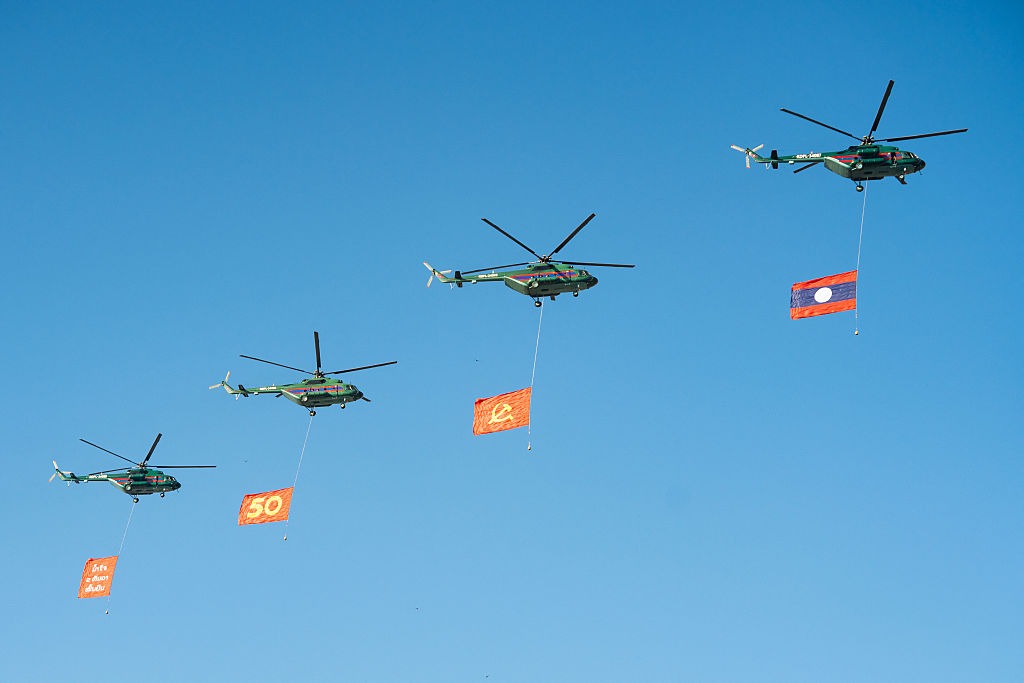
Communist China continues to pursue a deliberate and calculated military strategy designed to gain global dominance at a time and place of its choosing. It is now placing its military aircraft on an air base in neighboring Laos. Pictured: Lao People's Liberation Army Air Force helicopters carry flags celebrating 50 years of communist rule, on December 2, 2025, in Vientiane. (Photo by AFP via Getty Images)
The United States has long known that projecting the power of its democracy abroad requires access to air bases far beyond our borders.
Like many other things, China is a focused student of America, so it should come as no surprise that the Communist giant is now placing its military aircraft on an air base in a neighboring country.
Last month, China revealed what it is describing as a joint flight training center in Laos. No one believes for a moment that it is for flight training, given that the Lao People's Liberation Army Air Force has no modern fighters. Any private airport in the United States probably has more airplanes based there than the entire Laotian air force. Moreover, why would a training center now require lengthened runways and new hangar facilities?
The Middle East... remains far from stable. Hamas continues to resist disarmament, Iran remains a major threat, and Hezbollah's armed presence in Lebanon continues to undermine the authority of the Lebanese state. The future of Gaza, including who will govern it and who will control its weapons, stands unresolved.
Can Gaza really have a new beginning while the organization that launched the October 7, 2023 massacre retains the ability to obstruct the transition and launch more massacres -- not just of Israelis but of its own citizens and other neighbors?
The achievements of recent months could be weakened, or even reversed, if the remaining challenges are left unresolved.
The question is no longer simply what Washington and Jerusalem have achieved together. It is whether they can turn those achievements into lasting security.
A ceasefire without disarmament, a transitional administration without operational authority, and military victories without a strategy for the future will leave the region exposed to endless instability.
The task ahead is therefore clear: turn the gains already made into a strategic reality in which Palestinians in Gaza can live under civilian government rather than an armed factional rule; in which Israel's security is strengthened, and in which Iran and its Middle Eastern allies can no longer threaten its own people or the region in any way.
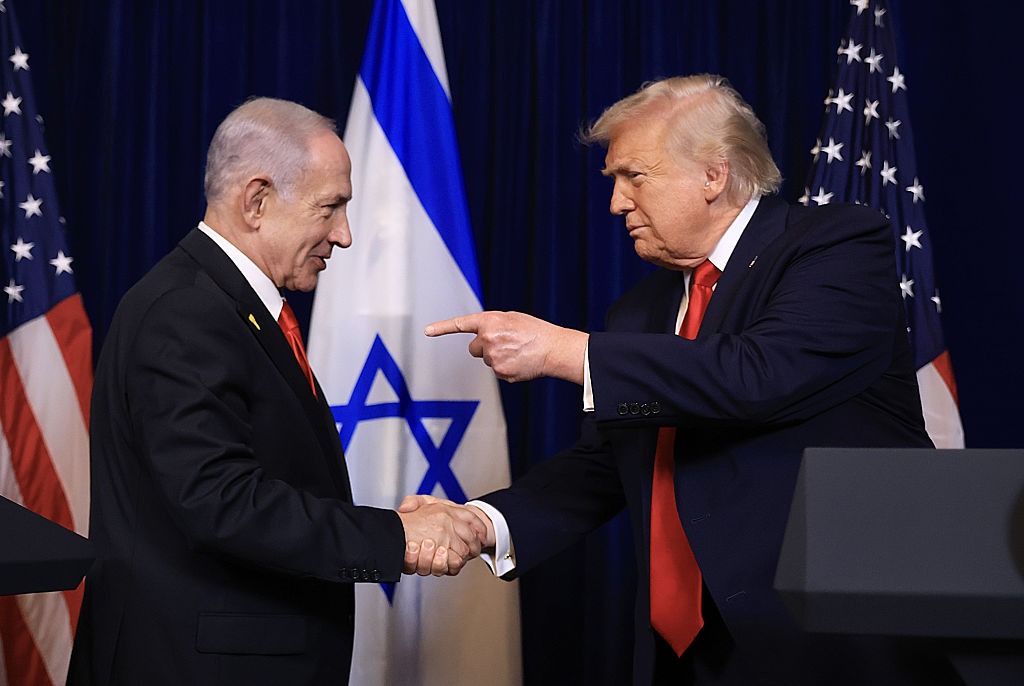
The question is no longer simply what Washington and Jerusalem have achieved together. It is whether they can turn those achievements into lasting security. Pictured: U.S. President Donald Trump shakes hands with Israeli Prime Minister Benjamin Netanyahu during a press conference on December 29, 2025 in Palm Beach, Florida. (Photo by Joe Raedle/Getty Images)
Over the past year and a half, the Middle East has undergone dramatic changes. Israel, increasingly encircled for decades by an Iranian "noose of fire" on seven fronts, inflicted severe damage on its enemies' military capabilities; the United States finally demonstrated its willingness to use military force against the Islamic Republic of Iran, and a US-backed agreement brought home all the Israeli hostages still held by Hamas.
President Donald J. Trump and Israeli Prime Minister Benjamin Netanyahu played central roles in these developments. Their partnership combined America's diplomatic leverage and military power with Israel's intelligence capabilities and military operations.
Europe... watches a technological revolution begin elsewhere, writes the rules for it, builds the authorities to supervise it, imposes the reporting — and only then wonders why so little of it is happening in Europe.
Meta AI launched in the United States in 2023. Europeans did not receive even a stripped-down chatbot until March 2025. Meta said the delay had lasted longer than it wanted because it had to navigate Europe's "complex regulatory system." The European version arrived without image generation, without multimodal features, and without training on European public content — the Irish Data Protection Commission having frozen that plan in 2024.
For years, EU policymakers congratulated themselves on becoming a "regulatory superpower." They succeeded. The question is whether this ambition is sane for a continent with weak productivity, poor technological scaling, shallow capital markets and a widening income gap with the United States.
The stack of regulations that a firm must clear is not one law. It is the General Data Protection Regulation, the Digital Markets Act, the Digital Services Act, the AI Act, cybersecurity rules, consumer law, competition law, sustainability reporting, and then twenty-seven national implementations.
IMF analysis puts EU income per person, in purchasing-power terms, nearly 30 percent below the United States, with around three-quarters of the gap explained by lower productivity.
A fragmented capital market is less attractive when investment must finance compliance before it expands.... A technology sector is less competitive when the release of every model must be cleared through privacy law, platform law and an AI statute whose high-risk regime has already been postponed because the machine could not digest its own rules.
France's contribution is the burden on the innovator to prove safety before anything can be permitted to exist, and a conception of public power as the author of economic life rather than its referee. This principle was written into EU environmental law and has since migrated, in practice, into digital regulation.
A continent that measures success by the rules it writes for other people's inventions should not be surprised when the inventions keep being launched somewhere else.
[T]he IMF's tariff-equivalent barriers are.... the residue of twenty-seven national licensing regimes, professional cartels and administrative procedures that Paris and Berlin never seriously surrendered and that smaller states copy.
France and Germany did not become European. Europe became Franco-German in its treatment of data and risk.
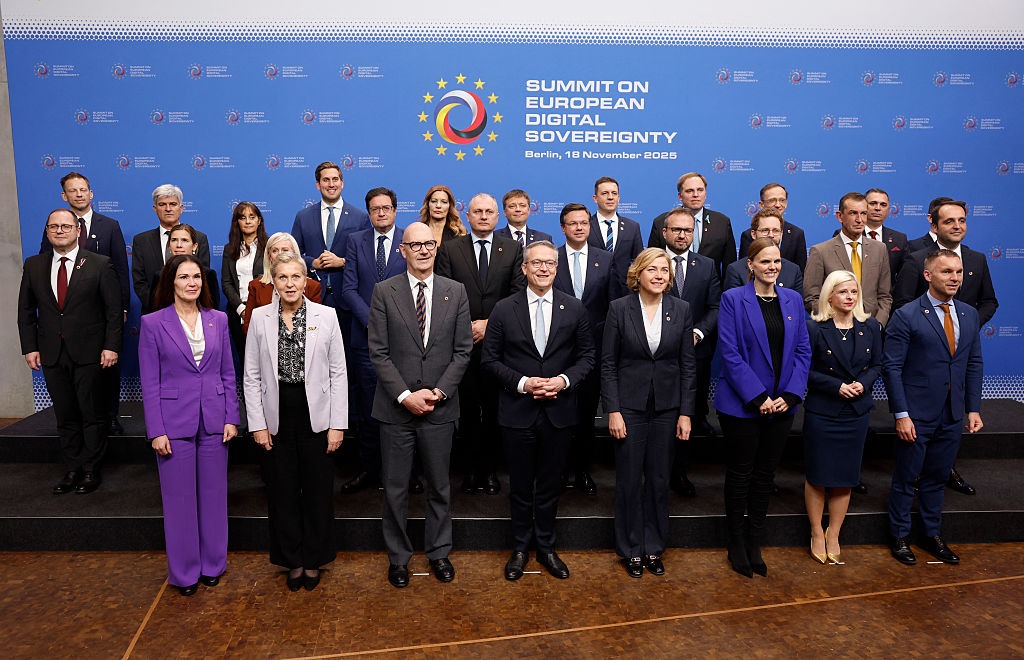
Europe has developed an extraordinary economic talent: it watches a technological revolution begin elsewhere, writes the rules for it, builds the authorities to supervise it, imposes the reporting — and only then wonders why so little of it is happening in Europe. Pictured: A "family photo" during the "Summit on European Digital Sovereignty," on November 18, 2025 in Berlin, Germany. (Photo by Odd Andersen/AFP via Getty Images)
Europe has developed an extraordinary economic talent: it watches a technological revolution begin elsewhere, writes the rules for it, builds the authorities to supervise it, imposes the reporting — and only then wonders why so little of it is happening in Europe. Artificial intelligence (AI) has made the habit impossible to ignore. The habit is not an accident of Brussels. It is the Franco-German regulatory reflex, written into the treaties and then imposed on everyone else.
The train has left...
On September 8, 2026, Meta launched Muse, a personal agent with its own secure virtual computer. It does not merely answer questions. In Meta's own words, it "actually does the work": emails, travel plans, forms, customer service, tasks across applications. Within weeks it was available in the United States, Canada and Mexico. Europe was not on the list, and Meta offered no date for release there.
For four decades, reunification was a unifying dream; now that it is reality, it feels like a hangover.
That millions of Germans, especially those from the former Communist East, feel unhappy cannot be denied. That, however, doesn't mean we are witnessing the return of the dark days either of Nazism or Communism, or a cocktail of both.
The latest electoral shock must be treated as a political electric shock that reignites the lethargic organs of the system. And remember: what doesn't kill you makes you stronger.
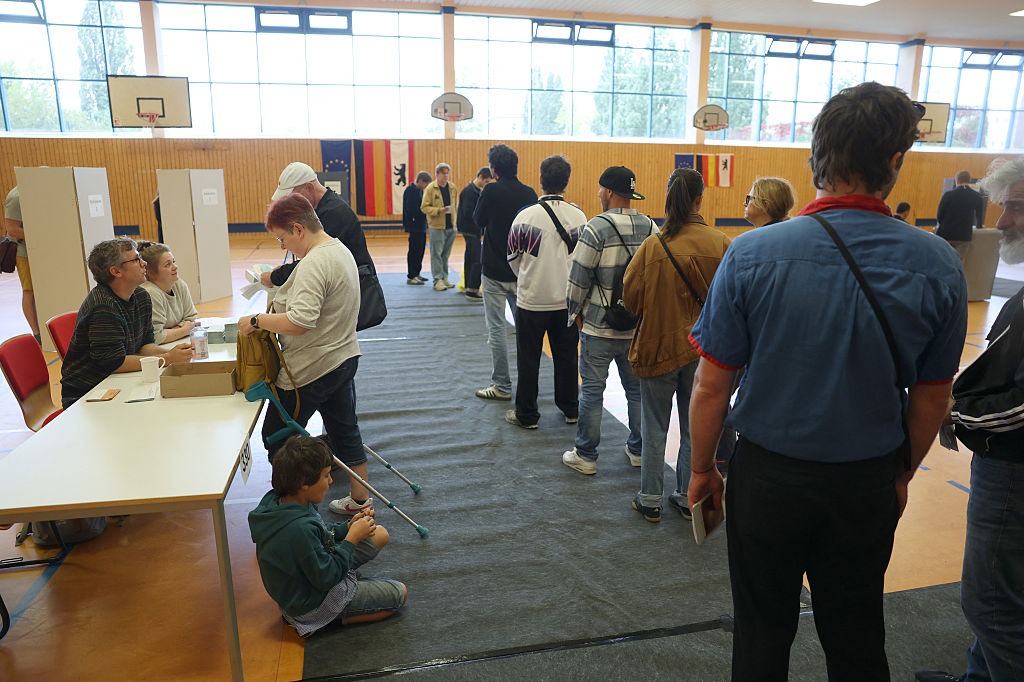
Pictured: Voters line up to cast their ballots at a polling station in Berlin, Germany during regional elections, on September 20, 2026. (Photo by Odd Andersen/AFP via Getty Images)
Whither Germany?
Even a year ago that question would have raised eyebrows in political circles round the globe. The Federal Republic was an economic miracle and a paragon of democratic stability. Its financial prudence and culture of hard work and innovation made it the guarantor of stability in Europe.
Today, however, clouds of doubt are gathering across Germany's once clear skies. An anemic economy, rising national debt, the shadow of war spreading from Ukraine and dicey relations with the United States under President Donald Trump shape some of those clouds.
But the darkest and perhaps most expanding cloud is what many observers see as the return of some of Germany's old demons in the shape of the Alternative für Deutschland (AfD) party with significant victories in three state-level elections and emergence as the nation's third largest political force after the Christian Democratic and Social Democratic parties.
Trump... rescued the Panama Canal from China, liberated Venezuela, peacefully secured Greenland to protect the Western Hemisphere, and especially his ongoing commitment to ensure that the Islamic Republic of Iran will never possess a nuclear weapon. Think for a minute what it otherwise will be able to do to any American (or European) city: Boston, Miami, Washington, New York....
For years, Iran's regime has been closing in on having nuclear weapons. Under then President Barack Obama's 2015 Joint Comprehensive Plan of Action (JCPOA) "nuclear deal" and its sunset clauses, Iran's regime could already legitimately have as many nuclear weapons as it liked – beginning last October.
A nuclear-armed Iran would have faced little pushback in attempting to wipe not only Israel but also Europe and anyone else off the map. As President Trump put it, if Iran had a nuclear weapon, it would, "without question," use it.
President Trump, unlike seven other presidents, did not just talk -- he acted. Through his administration's sustained economic pressure, military operations and a refusal to accept the regime's usual stalling, Iran's nuclear infrastructure has been significantly degraded, with the possibility of more on the way.
If you think gasoline is expensive now, he noted, the other party has been trying to eliminate fossil fuels, thereby producing a scarcity that raises prices. – Marc Thiessen, Washington Post columnist, Fox Business Channel, Kudlow, October 7, 2026.
Those determined to defeat even the most constructive policies of President Trump -- rather than seeing them as a win for Americans -- appear to see any victory of his as a defeat for themselves, threatening their chances of being elected. They have to reframe his achievements as catastrophes to criticize and oppose.
Trump has been neutralizing a potentially nuclear-armed, revolutionary Iran; trying to strengthen the Israel-Arab alignment; and sidelining Iran's terrorist proxies. These accomplishments in just two years represent a triumph in rolling back a nearly half-century threat not only to regional stability but also -- through oil and geographic realignment -- weakening Russia and China, reclaiming Western interests, and rescuing the survival of the Free World.
For that, at a minimum, President Trump deserves at least a small, semi-audible thank you rather than unremitting hostility. So: Thank you, Mr. President. Ignore the haters. The stakes — American national security, the survival of Israel and Western civilization, global peace, and the prevention of nuclear catastrophe in the hands of a messianic regime — are too crucial to be bent into distractions.
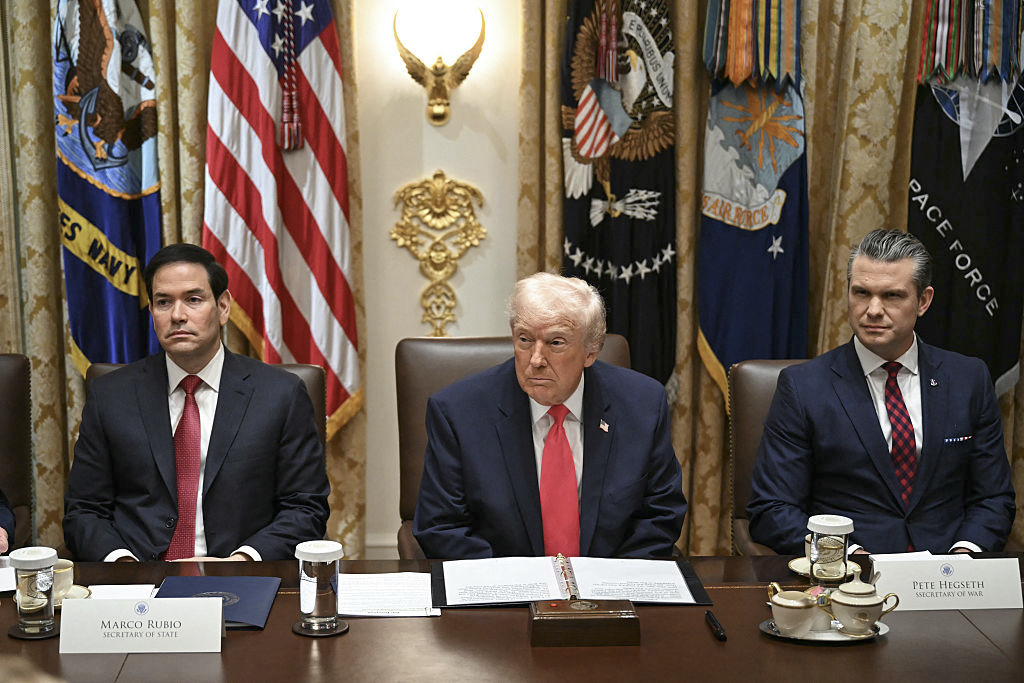
US President Donald Trump has been neutralizing a potentially nuclear-armed, revolutionary Iran; trying to strengthen the Israel-Arab alignment; and sidelining Iran's terrorist proxies. These accomplishments in just two years represent a triumph in rolling back a nearly half-century threat not only to regional stability but also -- through oil and geographic realignment -- weakening Russia and China, reclaiming Western interests, and rescuing the survival of the Free World. Pictured: Trump, alongside Secretary of State Marco Rubio and Secretary of Defense Pete Hegseth, at a cabinet meeting in the White House in Washington, DC on December 2, 2025. (Photo by Andrew Caballero-Reynolds/AFP via Getty Images)
Americans, please ignore the media outlets and the politicians scrambling for votes. Instead, kindly look at a few facts?
President Donald J. Trump has not only been strengthening America; through his basically unyielding policies in the Middle East, the Indo-Pacific and the Western Hemisphere, he has been safeguarding Western civilization, the free world, and ultimately global peace.
First, please consider Trump's having rescued the Panama Canal from China, liberated Venezuela, peacefully secured Greenland to protect the Western hemisphere, and especially his ongoing commitment to ensure that the Islamic Republic of Iran will never possess a nuclear weapon. Think for a minute what it otherwise will be able to do to any American (or European) city: Boston, Miami, Washington, New York....
Russian President Vladimir Putin has rediscovered the vocabulary of peace at the precise moment his army is taking Ukraine apart, one bridge and one power station at a time.
On September 25, addressing Russian journalists, he said that every proposal for settling the four-and-a-half-year war remained on the table, then attached the condition that empties the offer of content. "We are ready for talks and to wrap them up as soon as possible, but on conditions acceptable for the Russian people," Putin said. Moscow would first assess what served its own interests.
US President Donald J. Trump would do well to read that statement as a description of Putin's method. A leader preparing to end a war does not reserve for himself both the calendar of diplomacy and unrestricted freedom of fire. Putin, in a single appearance, claimed both, In doing so, he put negotiation where the Kremlin has always kept it, among the instruments of his war.
Washington was asked to hold its fire for the sake of diplomacy; then, in early October, Russia returned to bombing Kyiv's bridges six times in an apparent attempt to cut the capital city in two and sever its supply routes.
The error would be to read Putin's presence at the negotiating table as a decision to stop the war. In 1994, Russia signed the Budapest Memorandum, assuring Ukraine that if it gave up its nuclear weapons, Russia would not attack it. Ukraine, tragically, kept its part of the bargain.
Eight years of playing at process had cost Putin nothing and had given him time, which is what diplomacy without enforceable consequences reliably gives an aggressor.
A further development calls for serious caution. According to reporting published on October 3, the American-Russian discussions have widened to include a redolent multibillion-dollar sale of the international assets, refineries, oil fields and gas stations of Russia's Lukoil, which are currently under American sanctions. Putin raised the transaction himself at the Kremlin on September 5, in his meeting with US envoys Steve Witkoff and Jared Kushner, as proof that Russians could again do business with the United States!
So, commercial "normalization" was placed on the table during the same weeks as the bombardment intensified.... [F]or Moscow, prolonging talks is the perfect course, and a settlement can remain one meeting away indefinitely.
Russian, Iranian, Chinese, North Korean and Palestinian conduct should be rewarded only after sustained changes in behavior.
Ceasefires can exist just for press statements that protect no one and for talks that supply one side with time, money and freedom of action to lengthen the fighting. Putin likely counts on Western impatience, on US presidents who want breakthroughs and on publics who want images of the war off their screens. The law Trump signed on September 18 gives him the means to raise the price of delay. The weeks since Putin's statement supply the reason to use it.
Until Russian strikes on Ukraine stop, Putin's offers to talk remain just part of his plan for his war.
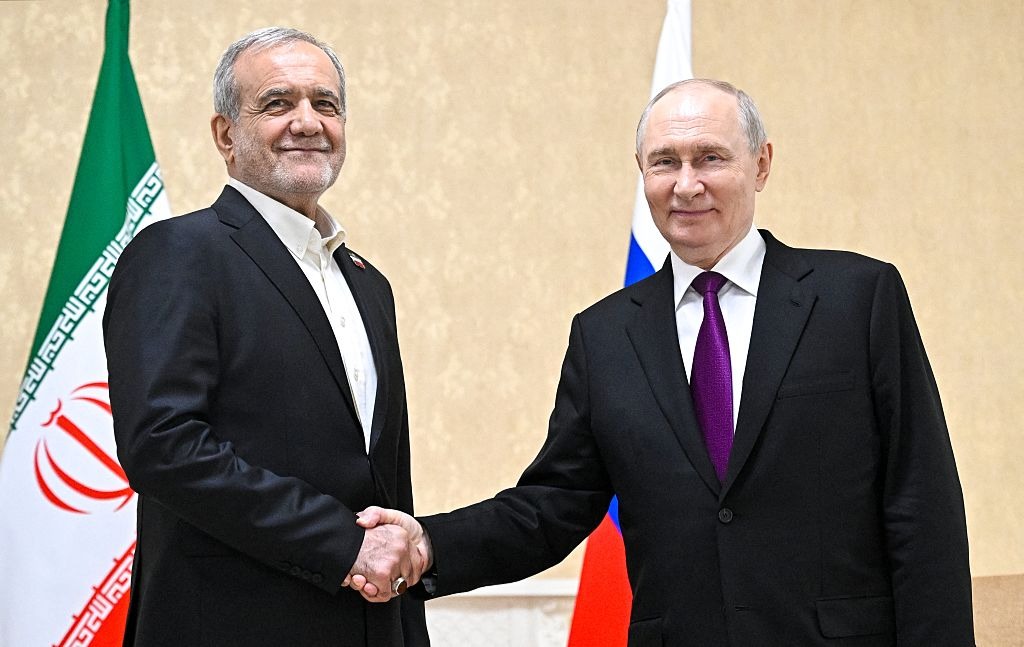
Russian President Vladimir Putin has rediscovered the vocabulary of peace at the precise moment his army is taking Ukraine apart, one bridge and one power station at a time. Pictured: Putin and Iranian President Masoud Pezeshkian shake hands during a meeting in Turkmenbashu, Turkmenistan, on October 8, 2026. (Photo by Sergei Bobylyov/Pool/AFP via Getty Images)
Russian President Vladimir Putin has rediscovered the vocabulary of peace at the precise moment his army is taking Ukraine apart, one bridge and one power station at a time.
On September 25, addressing Russian journalists, he said that every proposal for settling the four-and-a-half-year war remained on the table, then attached the condition that empties the offer of content. "We are ready for talks and to wrap them up as soon as possible, but on conditions acceptable for the Russian people," Putin said. Moscow would first assess what served its own interests.
He added that Russia had been prepared to resume talks after its parliamentary elections, that Ukrainian drone attacks on Moscow had changed the calculation, and that Kyiv would have to be "made to feel" Russian retaliation before anything else could be discussed.
Bahareh Hedayat is a human rights activist who has spent over six years in an Iranian prison for "insulting" Supreme Leader Ali Khamenei and then-President Mahmoud Ahmadinejad, and for "actions against national security, propagation of falsehoods, mutiny and illegal congregation." Hedayat is the longest serving female prisoner of conscience in Iran.