








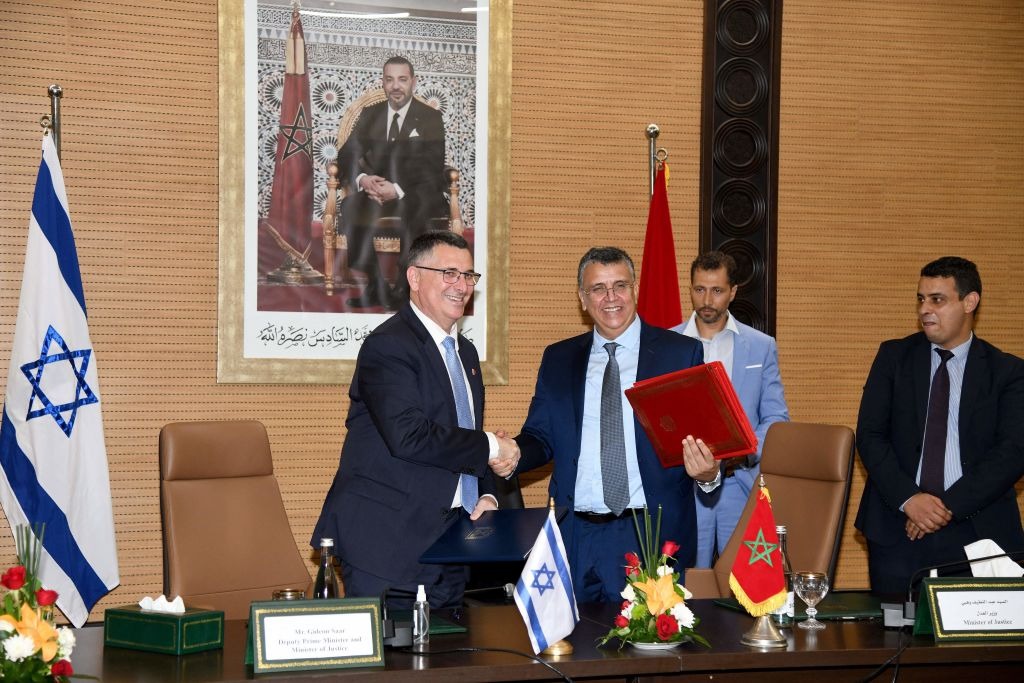
Ever since the mutually beneficial normalization of the Abraham Accords in 2020, the alliance between Morocco and Israel has been rapidly developing -- in diplomatic relations, economic relations, and defense. In addition, full embassy relations, investments and defense cooperation seem signs of a clear move towards cementing relations.
While Morocco and Israel deepened their relationship, however, some neighboring countries in the Middle East and North Africa (MENA) region, as well as other parties such as NGOs and activists in the region, appear to be observing these developments with concern, if not alarm. For traditional allies of the Palestinian cause, Morocco's deepening ties with Israel appear as a destabilizing fracture in the region's "solidarity." At the same time, rivals for supremacy in the region have apparently been viewing this strengthening alliance with suspicion over the balance of power in the region. It is no surprise that Morocco has been looked on poorly by leaders who seem to desire a more prominent role in shaping events.
In a culture where taking sides is the rule, as in the Middle East, painting anything or anyone in a bad light –and especially demonizing them -- is the easiest, go-to thing to do. Since 2020, MENA's different political and activist communities have given Morocco the side-eye for daring to cross a "red line". Many of those other MENA countries, however -- at least the ones that claim not to approve of Morocco's ties with Israel; not those that wish to see Israel eliminated -- do not seem to be doing anything much different.
In the Arab states, the stance on the Israeli-Palestinian conflict consists mainly of not recognizing the existence of the Jewish state. This rejection is accomplished by refusing to have diplomatic relations with Israel, flights to Israel or other means of trying to reinforce Israel's invisibility.
Despite these endeavors, Israel concretely exists, backed up by economic, military technological, financial, and cultural power.
Ironically, some of these countries that make a point of "ignoring" Israel are also those actively seeking to get closer to that dazzling American ally by purchasing advanced weapons and other Israeli inventions.
One of the leaders in the region strong enough to break free of this adolescent mentality was Morocco's farsighted leader, King Mohammed VI. In his October 9, 2026 address to Parliament, he rooted national pride in a "sense of belonging to this nation" rather than the clichéd -- and basically non-existent -- pan-Arab conformity. Regarding their beloved Palestinian "brothers," for instance, not one Arab or Muslim country -- most of which had gladly taken in thousands of refugees from Iraq, Syria and other conflicts -- would accept a Palestinian from Gaza. They were right. Everywhere Palestinians have been welcomed, all that followed was trouble: in Tunisia, Jordan, Kuwait and Lebanon. Israel is just the last country in a very long list.
Morocco's gradual transformation toward independent thinking and forward-looking policies is the fruit of a long-term effort and patience, and what led to Morocco "crossing the Rubicon" in the historic step it took signing the Abraham Accords with Israel. Observers might wonder what Morocco offered for the benefits and privileges it gained from these agreements.
Although silent, Morocco's work to pave the way for this event had been proceeding for a while. Ensuring the security of the Jewish community in Morocco is a measure that Morocco's authorities have been overseeing for some time. Three years ago, on the way to Marrakech, all of us could hear a woman talking openly on the phone about how she was looking forward to being with family on the Sabbath. Later, in one of Rabat's neighborhoods, you could see Hasidic Jews in their religious clothes walking down the street. In this safe environment -- apparently safer than London or Paris! -- Jews can enjoy their religion in peace. Morocco offers the Jewish community freedoms lacking in most of the MENA countries and, it seems, some countries in the West.
Despite these diplomatic advances, there is, unfortunately, still a degree of domestic tension from protests led by opposition parties, such as the Moroccan Front for Supporting Palestine and various Islamist movements. These demonstrations, though, usually take place in the context of recent elections. In spite of the Hamas War, generally Morocco's achievement has remained wonderful and undeniable. The benefits and accomplishments gained in the Abraham Accords have proven irrevocable.
What sparked the MENA public opinion's outrage was Morocco's decision to change its stance without prior consultation. Instead, Morocco – fortunately for its people and the entire Middle East – chose the positive, constructive path ahead.
Mohammed Said is an Arab Muslim currently covering the Middle East.
