









Much is being made of the recent launch pad explosion of Blue Origin's massive rocket, an event that to some suggests we may have lost our way in seeking the high ground of space.
Those who believe this have forgotten their American history. Our nation's first response to the Soviet Union's Sputnik success in the 1950s was Vanguard, which promptly fell back on the pad after launch and exploded in a fireball.
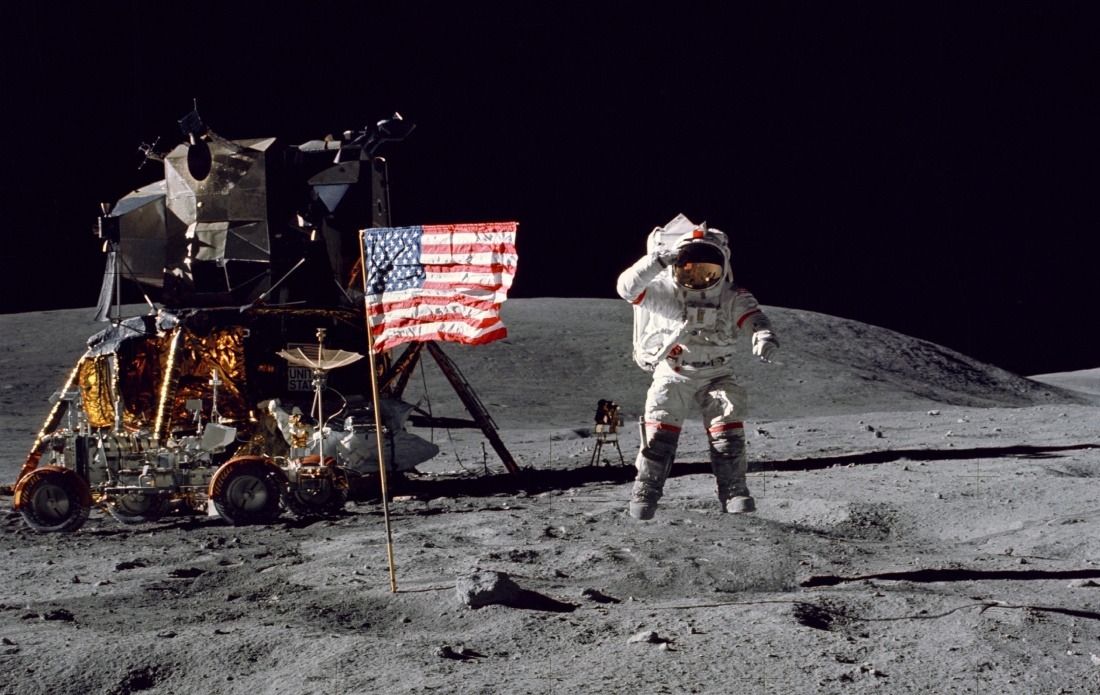
Yet we would go on to be the only nation to land men on the Moon. Repeatedly.
America, when challenged, has always come back stronger, more focused, and better prepared to defend our future. As China accelerates its ambitions beyond Earth's atmosphere — launching its own space station, landing rovers on the far side of the moon, and targeting a crewed lunar mission by 2030 — the United States faces the same intense competition that our nation did when the Soviet Union confronted us in that arena generations ago.
Blue Origin will figure out their failure much the way SpaceX and NASA have overcome their own failures over the years. It is important to recognize that dominating space is not for the faint of heart, nor is it about bragging rights. It is about national defense and protecting critical infrastructure. The satellites orbiting Earth today underpin the GPS system that guides our military assets, the communications networks that power our economy, and the weather-monitoring that protects civilian lives. Whoever dominates space increasingly dominates the strategic high ground on Earth as well.
China understands this. Its military space program frames "orbital dominance" as essential to winning modern warfare. Beijing has tested anti-satellite weapons, developed jamming capabilities, and invested heavily in its own version of a GPS navigation system.
If the United States allows China to establish superior capabilities in space, it risks having its own technological advantages neutralized in any future conflict. US President Donald J. Trump fully understands this and has made America's strategic dominance in space a priority of his administration.
Under his orders, our military has created a dedicated branch of the service that deals with space; in addition, our nation's commercial space sector, driven by companies such as SpaceX, Blue Origin, and others, has given the United States a genuine competitive edge. Nevertheless, this edge requires sustained government partnership, funding, and strategic vision. History shows that technological leads, once lost, are rarely reclaimed.
The Apollo era proved that America, when united by purpose, can achieve the seemingly impossible. That same vision and resolve are needed now. By doing so, we will see the next chapter of human history in space written by a nation committed to freedom, innovation, and the courage of those who continue to push beyond our earthbound frontiers.
Lawrence Kadish serves on the Board of Governors of Gatestone Institute.