








On February 14, 2026, US Secretary of State Marco Rubio delivered a laudatory speech about Europe and its legacy at the Munich Security Conference. He noted, however, that Europe is weakening. "We don't want our allies to be weak," he said.
His remarks initially were well received by the European political leaders and journalists in the room; not for long. Several journalists soon mentioned that, while Rubio appeared friendlier toward Europe than US Vice President J.D. Vance's had been a year earlier, he was still "arrogant" in presuming that Europe needed advice on how to be stronger.
Some recalled that the Trump administration's November 2025 National Security Strategy had warned that Europe faces the "prospect of civilizational erasure" — a claim they described as an "insult" to Europe.
Political leaders were also quick to express their rejection of what Rubio had said. The European Union's foreign affairs and security policy chief, Kaja Kallas, in her own speech in Munich, declared: "Contrary to what some may say... Europe is not facing civilizational erasure."
German Chancellor Friedrich Merz made a point of emphasizing that "European values" were not those championed by the Trump administration.
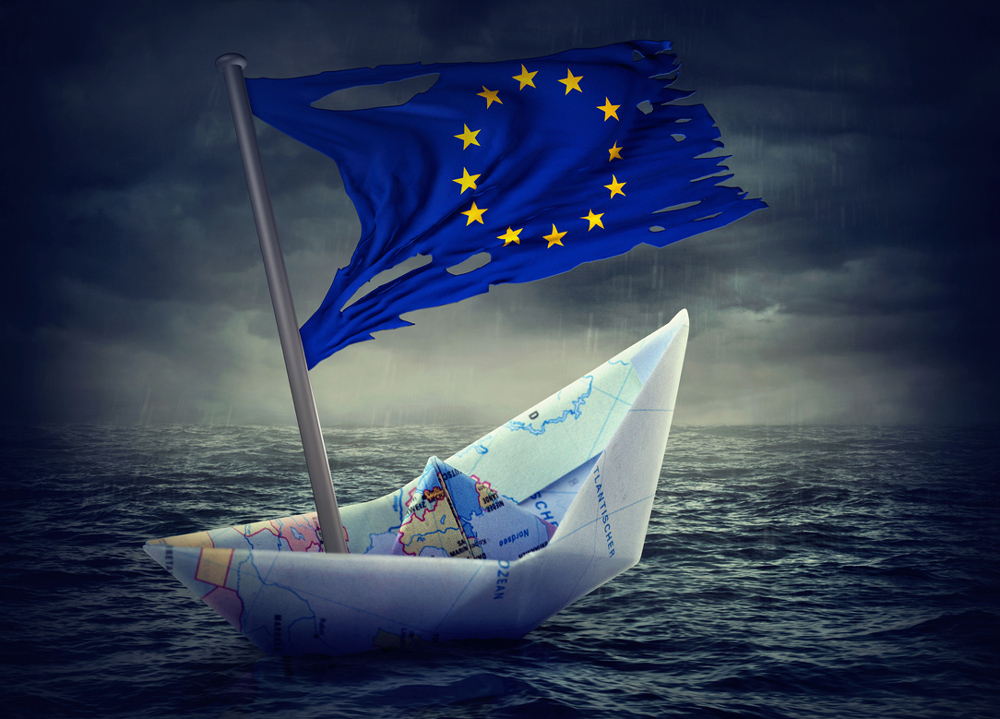
These reactions unfortunately have not changed the terrifying fact that Europe's erasure as a civilization is underway. Europe is on a path toward rapid, widespread decline — potentially irreversible. It is already extremely late in the day. Unless drastic actions are taken to reverse firmly entrenched trends, European civilization, simply demographically, will soon be part of the past.
Economically, Europe is in ghastly shape. In 1980, the nine member states of the European Economic Community (today's 27-member European Union) accounted for approximately 27% of global GDP, according to the IMF. By the end of 2025, the figure for the same nine countries (plus the former East Germany) had fallen significantly to just 15.5% of global GDP. Some European economists explain this disparity by citing the rapid development of China and the East Asian nations. A look at the US economy, however, shatters that explanation: in 1980, the United States accounted for 25.3% of global GDP — less than the EU's share. By the end of 2025, the United States accounts for approximately 26% of global GDP -- slightly more than in 1980.
For nearly five decades, the European Union's economic growth and productivity rates have lagged behind those of the United States. Statistics also show that the total general government tax revenue as a percentage of GDP has increased in almost all member countries of the European Union — a trend not seen in the United States. Today, general government tax revenue accounts, on average, for more than 40% of the European Union's total GDP. The figure for some countries is lower (22.4% for Ireland), but higher for several others: Denmark (45.8%), France (45.3%), Belgium (45.1%), and Italy (42.6%). The total general government tax revenue (federal, state, and local taxes plus social security) in the United States in 1980 was 25.6% of GDP. Today, it is still 25.6%. On average, populations in European Union countries pay far higher total taxes than Americans do, despite significant US investment in defense. The gap between the European Union and the United States has become immense.
European Union countries have established welfare states that have steadily expanded since 1980 and stifle economic growth. Today, social spending accounts for nearly 40% of total government budgets across the European Union — a figure far higher than that of the United States. Social insurance mandatory contributions in Europe are 2 to 2.5 times higher than in the United States for the same gross salary. This burden significantly increases labor costs for European companies and explains why employee take-home pay is lower in Europe than in the US. On average, in Europe, paying a monthly salary of €2,000 ($2,300) costs a company €3,800 ($4,375). In the US, paying a monthly salary of $2,000 costs a company only $2,200 to $2,800, depending on the state where it operates. The difference is considerable, and helps explain why unemployment in Europe is higher than in the United States.
The European Union has also proliferated stifling regulations that place a heavy encumbrance on businesses. Restrictions on gas and electricity production, combined with a drive for a rapid and extremely costly transition to "renewable energy", have resulted in natural gas prices in Europe that are now three to five times higher than in the US, and electricity prices that are 2 to 4 times higher than in the US. To survive, many European companies have relocated production outside Europe.
International investment is turning away from Europe. Nine of the world's top ten tech companies are American; the tenth is Taiwanese. There are no major European players in this crucial sector, and Europe is almost entirely absent from the field of artificial intelligence.
Although heatwaves have been affecting Europe for more than two decades, the continent remains resistant to air conditioning, viewing it as an expensive luxury (AC consumes costly electricity). On average, only 20% of households in EU countries have air conditioning. In 2003, a heatwave in Europe killed more than 20,000 people. Almost nothing was done to prevent a recurrence, so in 2026, another heatwave has already claimed 25,000 lives.
Other factors are also contributing to Europe's decline.
Pessimism about the future — fueled by the questionable narrative berating "man-made global warming" and the hyped-up fear that the planet may become uninhabitable — is on the rise in Europe. Polls show that 63% of Europeans now believe their best years are behind them, and 77% believe that life in their country will be harder for the next generation. This pessimism is accompanied by a sharp drop in birth rates, with figures indicating that the population is rapidly aging. The average birthrate in the European Union now stands at 1.34 live births per woman, well below the generational replacement level of 2.1. This reflects an accelerating aging process that places an increasingly heavy obligation on pension and healthcare systems. In Spain, the figure is 1.10 live births per woman; in Italy, it is 1.14, and in Poland, it is also 1.10. Without major changes, Spain, Italy, and Poland will experience rapid population decline. Figures show that there were 3.46 million births and 4.81 million deaths in the European Union in 2025.
A trend toward downplaying traditional family roles is gaining ground in Europe, further exacerbating the problem of demographic replacement. In several European countries — Spain, Sweden, France, and the UK — sex education goes hand in hand with school textbooks explaining "gender identity," "the possibility of sex reassignment" and "diverse family structures," including having two mothers or two fathers. Across Europe, the number of same-sex and single-parent families is rising, and statistics show that such families generally have fewer children than families with both a father and a mother.
Europe's population is decreasing, but mass migration, at this stage anyway, might be more of a burden on Europe's finances than a contribution to its workforce or economic growth. Bureaucratic reports rosily predict "long term" gains. Even if mass migration were an economic benefit, it nevertheless is leading the European continent to cultural death.
Most new immigrants in Europe come from the Muslim world and appear to have no interest whatever in assimilating or becoming more westernized. Many are emphatically discouraged from doing either by the leaders of their communities, for instance, by "honor killings." In addition, Muslim women have more children than non-Muslim women. In the UK, Muslim men may have up to four wives if married abroad, each of whom receives extra social welfare benefits. Muslims are doctrinally directed to despise Europe's tolerance of the gay way of life; reject what is taught to their children regarding both history and sex education; see Europe as decadent and contemptible, and to openly reject the new societies in which they chose to live. There appears to be a growing demand among immigrants, in fact, to make Europe more like the Third World countries they abandoned.
The proportion of Muslims in the United Kingdom, France, Belgium, the Netherlands, and Sweden has been increasing decade after decade – with consequences that anyone even slightly versed in history could have expected. Warnings have gone unheeded.
Most Muslims arriving in Europe come from countries where antisemitism and hatred of Israel are widespread. Once settled in Europe, they remain antisemitic and hateful toward Israel, and contribute aggressively to the sharp rise of Jew-hate and anti-Israel bias in the countries where they now live. Many native Europeans ally themselves politically with them, declare themselves "anti-Zionist" (hostile to the existence of Israel), and show immense tolerance for Muslim antisemitism.
In the UK, the Equality and Human Rights Commission established in an October 29, 2020 report that the Labour Party was guilty of "inappropriate political interference" by Jeremy Corbyn's office in several antisemitism cases. Corbyn was suspended from party membership and, in 2024, expelled from the party. He created a separate party with another former Labour member, Zarah Sultana, an "anti-Zionist" Muslim. Both were reelected in 2024 and are still MPs.
In France, the main left-wing party, La France Insoumise (France Unbowed) is "anti-Zionist," openly supports Palestinian organizations, and refuses to define Hamas as a terrorist organization. Some of its leaders who have made antisemitic remarks have been prosecuted but not convicted.
Starting immediately with the terrorist group Hamas's invasion of Israel and massacre of October 7, 2023, and throughout Israel's war against Hamas in Gaza, anti-Israel demonstrations chanting slogans in support of Hamas were on the march in all major Western European cities. Appallingly, since the massacre, antisemitic attacks have seen a sharp increase across Western Europe, while Jews continue to leave Europe.
A poll conducted for the European Jewish Congress (EJC) shows that a majority of Jews still in Europe would like to leave. Ariel Muzicant, the president of EJC said in 2024, "We're losing the battle. 57% of European Jews are considering leaving. In a few years, 50% of the communities may no longer exist."
Political parties defending Western civilization and values — while asserting their opposition to the Islamization of Europe and "civilizational erasure" — are gaining electoral momentum. Meanwhile, political leaders across major European nations and at the helm of the EU appear determined to prevent those parties from governing (such as here, here and here).
In Germany, Alternative für Deutschland (AfD) leads in polls of voter intentions but faces a boycott by other parties known as the Brandmauer ("firewall"), with all other national and state parties forming alliances that exclude the AfD to prevent it from forming or even participating in governments.
In the United Kingdom — no longer part of the EU — Reform UK won many recent local elections and might be positioned to eclipse the Conservative Party. Meanwhile, a national poll conducted on July 26-27, 2026, revealed that the Labour Party had reached a record low among potential voters: 22%, the worst results for a British governing party since the 1940s. With no general election due until 2029, Keir Starmer resigned as prime minister, and his successor, Andy Burnham, was appointed by the Labour Party, apparently trying to avoid a new general election as long as it can.
In France, the National Rally (NR) has been the country's most popular party for years. During the 2024 legislative elections, the NR appeared poised to win an absolute majority. Just before the election's second round, President Emmanuel Macron urged all other parties to form a "Republican Front." Their leaders called for votes to go to whichever candidate stood the best chance of defeating the NR contender: leading moderate right-wing voters to vote for far-left candidates, and left-wing and far-left voters to vote for moderate right-wing parties. The result was a fragmented National Assembly, unable to form a government cohesive enough to make policy decisions.
France's economic situation was already concerning; it has since worsened. Unemployment is at 8% and is rising. Bankruptcies among small and medium-sized enterprises are increasing (in 2025, 69,957 businesses went bankrupt). National Rally's Marine Le Pen has been leading the polls for the 2027 presidential election. She had been sentenced to three years in prison and 45 months (with 30 months suspended) of a public office ban, for actions that had previously led to dropped charges for Jean-Luc Mélenchon, the leader of France Unbowed. The alleged crime was that Le Pen and Mélenchon allowed parliamentary assistants to Members of the European Parliament to work in Paris for the MEPs they served. Le Pen appealed the case to the Court of Cassation, France's supreme court of appeal, which suspended the sentence.
Le Pen's conviction has not diminished her popularity. The Court of Cassation has stated it will issue its ruling before the 2027 presidential election, and the court's president has hinted that the conviction will be upheld — meaning that if elected, Le Pen would become the first French president to win office while under a prison sentence. Mathilde Panot, president of the France Unbowed group in the National Assembly, declared that her party would not recognize the legitimacy of Le Pen's election should she win, and would call for an uprising.
The "offense" of those political parties disfavored by Europe's "elites" consists of defending the values of the West, fighting the Islamization of Europe, and opposing the erasure of European civilization. These political parties are consequently subjected to exclusionary maneuvers and are relentlessly harassed by rival political leaders who not only seem to disagree but are also dragging the continent into a free fall and a possible cultural death.
Dr. Guy Millière, a professor at the University of Paris, is the author of 27 books on France and Europe.
 tiki
tiki