








Over the past year and a half, the Middle East has undergone dramatic changes. Israel, increasingly encircled for decades by an Iranian "noose of fire" on seven fronts, inflicted severe damage on its enemies' military capabilities; the United States finally demonstrated its willingness to use military force against the Islamic Republic of Iran, and a US-backed agreement brought home all the Israeli hostages still held by Hamas.
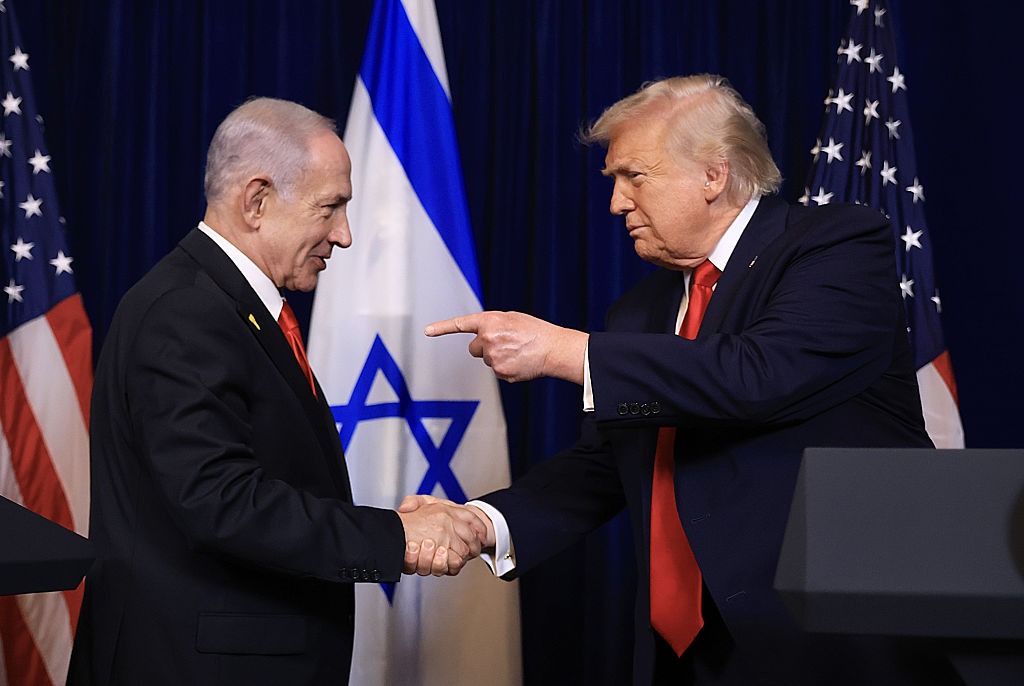
President Donald J. Trump and Israeli Prime Minister Benjamin Netanyahu played central roles in these developments. Their partnership combined America's diplomatic leverage and military power with Israel's intelligence capabilities and military operations.
The Middle East, nevertheless, remains far from stable. Hamas continues to resist disarmament, Iran remains a major threat, and Hezbollah's armed presence in Lebanon continues to undermine the authority of the Lebanese state. The future of Gaza, including who will govern it and who will control its weapons, stands unresolved.
The question is no longer simply what Washington and Jerusalem have achieved together. It is whether they can turn those achievements into lasting security.
One of the most consequential developments was the US-backed Gaza ceasefire agreement reached in October 2025. The agreement ended the period of large-scale fighting and led to the return of all the remaining living Israeli hostages held by Hamas.
For the families who endured months of uncertainty and suffering, the return of their loved ones was an enormous achievement. It also demonstrated the potential of American diplomatic pressure, regional mediation, and Israeli military pressure to produce results that years of negotiations had failed to secure.
Trump's 20-point plan subsequently provided a framework for a different future for Gaza. It envisioned an end to Hamas's rule, the disarmament of armed factions, a transitional Palestinian administration, an International Stabilization Force (ISF), and reconstruction.
In January 2026, the Board of Peace was formally launched, with Trump as its chairman. Its mandate was to help oversee the transition and create the conditions for Gaza to be governed without the political or military domination of the terrorist group Hamas.
There has been progress in building the institutional framework. The National Committee for the Administration of Gaza has been established, preparations have been made to recruit and train Palestinian police, and the international community has developed a roadmap for disarmament.
The most difficult tasks, however, remain unfinished.
A report submitted by the Board of Peace to the UN Security Council in May acknowledged that negotiations over the implementation roadmap had not been finalized. The proposed ISF was still preparing for deployment, while the disarmament of Hamas and other armed terrorist factions remains a central obstacle.
Hamas has suffered substantial military loses, but as a political and armed force, it has not disappeared. Its continued presence raises a fundamental question: Can Gaza really have a new beginning while the organization that launched the October 7, 2023 massacre retains the ability to obstruct the transition and launch more massacres -- not just of Israelis but of its own citizens and other neighbors?
The answer will determine whether the ceasefire becomes the foundation of a lasting settlement or merely an interval before another round of fighting.
The other historic development was the military confrontation with Iran in June 2025.
Israel, on June 13, 2025, launched Operation Rising Lion, striking Iranian nuclear infrastructure, missile production facilities, air defenses, military headquarters, and senior military commanders. On June 22, the United States struck three Iranian nuclear facilities at Fordow, Natanz, and Isfahan.
The operations demonstrated a level of US-Israeli military coordination with massive implications for regional security. They inflicted damage on important elements of Iran's military and nuclear infrastructure and demonstrated that Iran's geographical distance and extensive defensive preparations could not guarantee the protection of its most sensitive facilities.
The main challenge is still to prevent Iran from restoring the capabilities that made it such a serious threat to Israel and other countries in the region. This objective requires sustained intelligence cooperation, effective monitoring, credible deterrence, and a clear response to attempts to rebuild prohibited or threatening capabilities.
The challenge extends beyond Gaza and Iran.
Hezbollah's decision to build an extensive military infrastructure outside the authority of the Lebanese state has contributed to decades of instability along Israel's northern border. Hezbollah's relationship with Iran was what gave the country the means of projecting military power beyond its own territory.
Efforts to strengthen the Lebanese state's authority and dismantle Hezbollah's independent military capabilities -- as well as those of Iran's other terrorist proxies, Hamas and the Houthis -- remain essential to any durable regional settlement.
A Lebanon in which the rightful government exercises unobstructed control over the country's armed forces and territory would be in the interests of both Lebanese citizens and their neighbors.
The same principle applies to Gaza. Civilian institutions cannot function effectively when an armed faction retains the power to threaten and overrule them.
The Trump-Netanyahu partnership has also operated against the background of the Abraham Accords, which established diplomatic relations between Israel and several Arab states during Trump's first administration. These agreements remain an important foundation for the possibility of broader regional cooperation.
Trump and Netanyahu have helped bring about long-sought-after changes in the regional balance of power. Military success and diplomatic breakthroughs, however, are not ends in themselves. Their significance ultimately depends on what follows.
The opportunity is significant, but it is not guaranteed. The achievements of recent months could be weakened, or even reversed, if the remaining challenges are left unresolved.
A ceasefire without disarmament, a transitional administration without operational authority, and military victories without a strategy for the future will leave the region exposed to endless instability.
The task ahead is therefore clear: turn the gains already made into a strategic reality in which Palestinians in Gaza can live under civilian government rather than an armed factional rule; in which Israel's security is strengthened, and in which Iran and its Middle Eastern allies can no longer threaten its own people or the region in any way.
Bassam Tawil is a Muslim Arab based in the Middle East. His work is made possible through the generous donation of a couple who wish to remain anonymous. Gatestone is most grateful.