








As the Trump administration's attempts to agree to a lasting ceasefire with Iran drag on, it is vital that the White House not lose sight of a key objective -- one originally highlighted but then abandoned in the Iran conflict -- namely that the war result in the overthrow of Iran's brutal dictatorship.
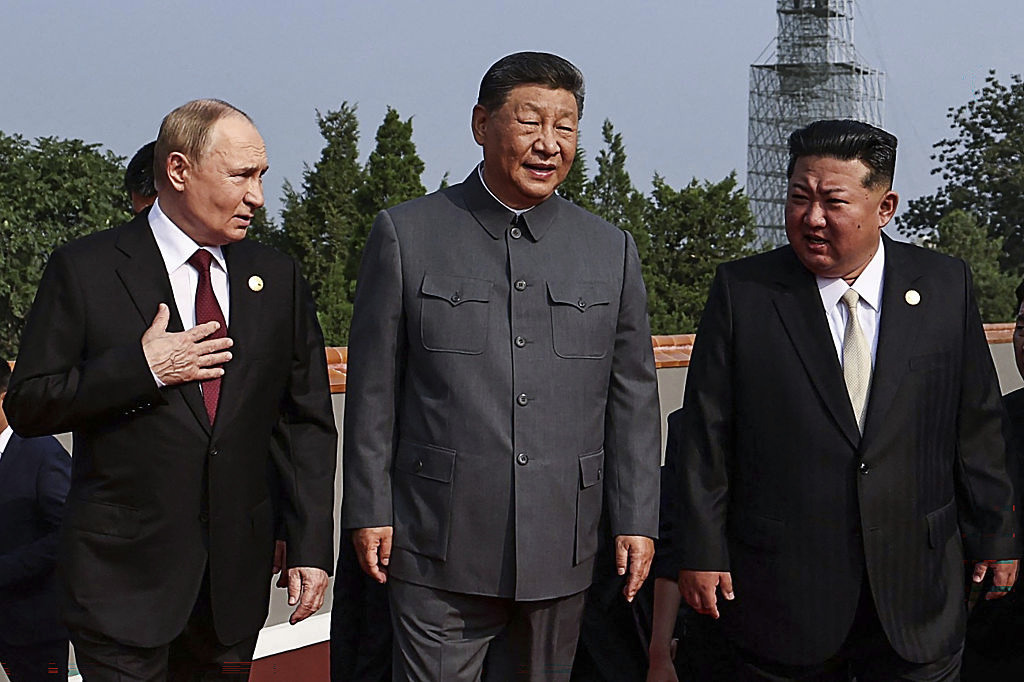
What would be unpardonable is if US President Donald J. Trump simply replaced a brutal Islamic dictatorship with an equally brutal non-Islamic dictatorship -- as seen in other adversaries of the West such as Russia, China, and North Korea.
From the start of the year, when Iran's security forces killed more than 36,500 civilians in attempts to crush anti-government protests, Trump had made no secret of his desire to achieve regime change in Tehran.
At the height of the violence in mid-January, Trump memorably told the Iranian protesters that "HELP IS ON ITS WAY", while calling on the anti-regime activists to "seize control of your destiny."
On February 28, the US Department of State posted on Truth Social and X:
"PRESIDENT TRUMP's message to the great people of Iran:
When we are finished, take over your government. It will be yours to take. America is backing you with overwhelming strength. Now is the time to seize control of your destiny and unleash the prosperous and glorious future that is close within your reach."
As if to demonstrate his commitment to ending Iran's brutal dictatorship, one of Trump's first acts following the launch of Operation Epic Fury in late February was to authorise a strike on the compound housing Iranian Supreme Leader Ayatollah Ali Khamenei, as well as a number of senior regime security officials who had convened to discuss the deepening crisis with Washington.
At one point, the American president even told Fox News that his administration had attempted to covertly arm Iranian protesters through Kurdish intermediaries based in neighbouring Iraq, claiming, "We sent guns to the protesters -- lots of them."
Trump later said the plan had failed because the Kurds had apparently decided to keep the guns for themselves.
Now, with the Iranian negotiators trying to run out the clock –- presumably until the US midterm elections in November, when Iran's military -- with the recently appointed Ahmad Vahidi, Commander-in-Chief of the Islamic Revolutionary Guard Corps (IRGC), reportedly now in charge -- Iran is still drawing out negotiations as it reconstructs its nuclear and missile sites.
Meanwhile, concerns are growing that Trump is losing interest in the plight of ordinary Iranians. He has recently been stating that he no longer regards regime change in Iran as one of his major objectives. His message has regrettably "gone wobbly" to ensuring only that Iran must never be able to have a nuclear weapon, that the Strait of Hormuz must remain an independent waterway in accordance with freedom of navigation, and that Iran must no longer support terrorist proxies.
While commendable, such an attitude, if true, would represent an unforgivable betrayal of the Iranian people, the majority of whom are desperate to see an end to the crushing dictatorship that has brutalised their lives for nearly five decades since Iran's 1979 Islamic Revolution.
Such backtracking on the part of the US president -- the beacon of freedom to the world -- would leave the Iranian people at the mercy of pitiless thugs who would simply replace one form of state-sponsored repression with another, thereby denying the Iranian people their hopes of finally achieving freedom from their oppressors.
Iranian discontent with their corrupt and ruthless rulers is not just confined to the protests that swept the country at the turn of the year, which were primarily prompted by the country's dire economic position.
The country has experienced regular waves of anti-regime demonstrations since the failed Green Movement in 2009, which initially started over the country's rigged presidential elections and quickly developed into a nationwide movement.
Then, as now, the regime crushed the protests by resorting to extreme violence, with tens of thousands of protesters killed and wounded as the IRGC and Basij militia forcefully crushed dissent.
The fear now, with the Trump Administration appearing to back away from its original demand of total regime change in Iran, is that history is likely to repeat itself and that the regime's hardliners will resort to acts of extreme violence to ensure their new dictatorship's survival.
With the Trump administration's focus concentrated on reopening the Strait of Hormuz, through which sails about 20 percent of the world's seaborne oil and gas trade, and resolving the long-running dispute over Iran's nuclear programme, which Western intelligence believes is again aimed at producing nuclear weapons, little attention is being paid to the type of regime that will govern Iran once the fighting has ended.
Regime loyalists and members of the IRGC, who reportedly control roughly 80 percent of Iran's economy, have certainly lost no time trying to re-establish their iron control of the country. Human rights groups are still reporting an upsurge in secret executions and arrests as the IRGC and Basij seek to reassert their authority after the numerous setbacks they suffered at the hands of the US and Israeli military operations.
At the same time, the regime has imposed a nationwide internet blackout that has been in place since the first protests took place at the start of the year, to prevent anti-government groups from coordinating their activities or communicating with the outside world.
Attempts by regime hardliners to reassert control, moreover, are having a direct impact on negotiations between Washington and Tehran to end the conflict. Each Iranian strongman currently seems to be trying to secure his own power. As Trump has assured the hardliners that there will be no regime change, they know their power is secure -- under no threat -- so they are under no pressure to comply with Trump's demands. All they need to do is remove whatever so-called "moderates" might still be around and in their way. There are, in fact, no moderates in the Iranian government, any more than there were in Nazi Germany's government. As Iranian scholar Dr. Majid Rafizedeh points out:
"Softer rhetoric has emerged when the regime needed economic rescue or a diplomatic opening. Once the pressure recedes, the underlying strategic behavior remains unchanged.
"In many ways, so-called 'moderates' have historically served as the most effective guardians of the system: they are able to secure concessions from the outside world while preserving the internal order. They present hope abroad while maintaining continuity and deeper control at home. Trump appears aware of this pattern but, perhaps concerned about the political pressure on him at home, has sometimes, alarmingly, looked tempted to settle for it."
The hardliners' increasing influence in the negotiations was very much in evidence after the first round of talks in Pakistan involving Iranian Foreign Minister Abbas Araghchi and US Vice President JD Vance. The talks ended in confusion after Araghchi initially indicated he was willing to reopen the Strait of Hormuz, a move that was quickly undermined by the IRGC, which condemned Araghchi's offer as being "bad and incomplete."
The influence of the hardliners in talks to end the conflict explains why the Trump administration was forced to abandon its plans to attend a second round of talks in Pakistan. It became clear that Tehran wanted to conduct separate negotiations with the White House about its nuclear programme only after agreement had been reached on reopening the Strait of Hormuz.
The Trump administration, quite rightly, has refused to accept such preconditions, with reports that the president told a meeting of national security officials that Iran was not negotiating in good faith and did not appear willing to meet his key demand: ending nuclear enrichment and vowing never to make a nuclear weapon.
The diplomatic standoff between the US and Iran should, at the very least, lead Trump to conclude that, so long as the IRGC and its hardline supporters have a say in the negotiations, the prospect of reaching an acceptable deal remains remote. If the American president is really serious about securing a deal, then he needs to deny the hardliners any say in Iran's destiny and, as he originally promised, to help the Iranian people achieve a true regime change. It is the only way to achieve a peace that will last.
Con Coughlin is the Telegraph's Defence and Foreign Affairs Editor and a Distinguished Senior Fellow at Gatestone Institute.
