








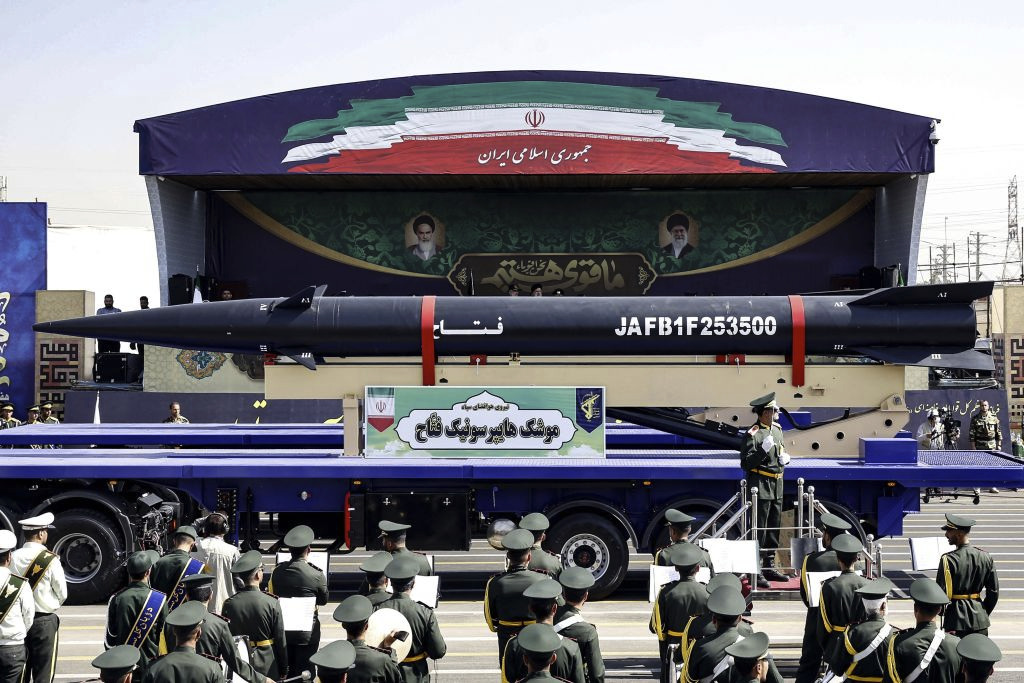
Yesterday, the Islamic Republic of Iran launched a new wave of drone and missile attacks on the United Arab Emirates, a close American ally and a country not at war with Iran. This attack came despite the ceasefire agreement agreed on April 8.
By striking the UAE, Tehran has made one point unmistakably clear: it does not respect ceasefires, international law, or restraint.
America has given Tehran many opportunities. The regime has failed every test. It lied about its nuclear ambitions, armed terrorist proxies, destabilized the Middle East, threatened shipping lanes, repressed its own people, and built a regional war machine under the cover of diplomacy.
The question is whether the United States and Israel are prepared to destroy the regime's ability to wage war, finance terror, intimidate the Gulf, and blackmail the world.
The objective is not war against the Iranian people. The Iranian people are the first victims of the Islamic Republic. The objective is to destroy the regime's military, financial, political, and coercive architecture.
The strategic mistake of past policy has been to treat Tehran as a difficult but ultimately manageable negotiating partner. In reality, the regime is a revolutionary security system. Its priority is survival, regional intimidation, and ideological expansion. Weakness encourages it. Concessions finance it. Delay makes the next confrontation more dangerous.
A regime that attacks the UAE today will continue to threaten shipping lanes tomorrow. A regime that survives every crisis with its command structure intact can later test American forces more directly. Each incomplete response teaches Tehran that escalation works.
The United States must therefore move beyond crisis management. Reopening the Strait of Hormuz is necessary but not sufficient. Hormuz is the only instrument of Iranian coercion. The core problem is the regime that uses Hormuz, proxies, missiles, drones, terrorism, and ceasefire violations as tools of pressure.
The Islamic Revolutionary Guard Corps (IRGC) is the regime's central operating system. It commands domestic repression, exports terrorism, manages proxy warfare, controls strategic industries, and protects the ruling elite. Its missile infrastructure, drone production, naval harassment capabilities, command centers, weapons pipelines, and links to foreign militias must be disabled. Temporary degradation is not enough. The regime's ability to rebuild must also be targeted.
The second pillar is the economic architecture that sustains the regime. The Islamic Republic is kept alive by banks, ports, shipping networks, exchange houses, oil smuggling, front companies, gold channels, foundations, privileged merchants, and commercial collaborators. Individual sanctions against commanders are no longer sufficient. Washington must shift to network destruction: mapping, exposing, sanctioning, seizing, and disrupting the commercial universe that feeds the IRGC and the ruling class.
The third pillar is the proxy network. Iran often avoids direct accountability by fighting through militias, terrorist cells, cyber units, and regional clients. That model must be broken. Any Iranian-backed group that threatens American forces, Israel, the Gulf states, or the Abraham Accords countries must understand that the cost will not stop with the proxy. It must reach the regime that arms, trains, funds, and directs it.
The fourth pillar is internal repression. A regime that jails women, executes protesters, tortures dissidents, and silences students cannot be trusted to honor international agreements. The Iranian people must hear a clear message: America's conflict is not with them, but with the system that has stolen their country and converted its national wealth into missiles, militias, corruption, and fear.
The attack on the UAE is a warning. Tehran is testing whether America will defend its allies, protect global commerce, and impose costs beyond symbolic retaliation. It is testing whether President Donald Trump will allow the regime to violate a ceasefire, attack a US ally, and still survive another crisis with its essential machinery intact. That cannot happen.
The job is not finished when Hormuz reopens. It is finished when Iran's regime can no longer threaten Hormuz. The job is not finished when sanctions are announced. It is finished when the regime's financial arteries are cut. The job is not finished when one missile launcher is destroyed. It is finished when the regime can no longer rebuild the missile, drone, and proxy networks that allow it to threaten the region.
The United States has tried patience, warnings, diplomacy, and restraint. Iran has answered with deception, missiles, drones, proxy warfare, and now an attack on the UAE in violation of the ceasefire understanding. Now the answer must be strength.
The Islamic Republic must not be managed, rescued, or rewarded. It must be defeated as a military machine, dismantled as an economic network, isolated as a political regime, and weakened psychologically until the architecture of terror that sustains it collapses.
Ahmed Charai is the publisher of The Jerusalem Strategic Tribune and serves on the boards of directors of the Atlantic Council, the International Crisis Group, the Center for Strategic and International Studies, the Foreign Policy Research Institute, and the Center for the National Interest.
This article originally appeared in The National Interest and is reprinted here by the kind permission of the author.