









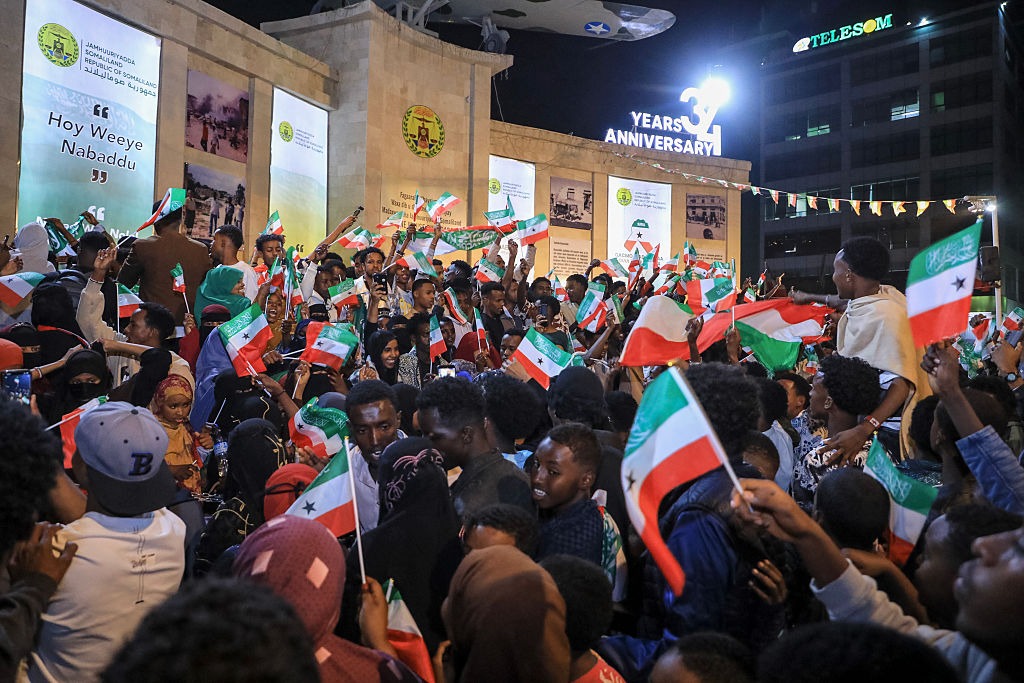
Israel's December 2025 diplomatic recognition of Somaliland as an independent state may indicate significant improvements in Middle East security.
Somaliland, which originally seceded from Somalia in 1991, had not been granted diplomatic status by any other member of the United Nations prior to Israel's recognition.
Israel's initiative in recognizing Somaliland potentially raises the level of threat from the Houthis, an Iranian-supported terrorist militia that occupies most of northern Yemen. Somaliland is located directly across from Yemen. The Houthis, also known as Ansar Allah ("Friends of Allah"), have proven their durability by having survived many US and Israeli airstrikes. If Somaliland allows Israel or the US to construct air and naval facilities on its Red Sea coast, the prevalence of terrorism throughout the Middle East -- including Houthi aggression against oil and gas shipping -- could enjoy a welcome revision.
It is certain that any resumption of Houthi drone and missile attacks on Israel will invite punishing retaliatory IDF attacks from any future Somaliland-based launch sites.
The November 2025 visit to Somaliland by US Africa Command head General Dagvin Anderson suggests that Washington is also fed up with Houthi terrorist operations. Possible future joint US-Somaliland military projects could include an upgrade to the Red Sea deep port of Berbera. Anderson also toured the Red Sea port of Boasso in neighboring Somalia's autonomous state of Puntland.
High-level American and Israeli diplomatic and military interests appear to indicate a joint commitment to protect the region, as well as its vital commercial checkpoints, such as the Strait of Bab al-Mandeb, a chokepoint at the mouth of the Red Sea, separating Africa and Asia.
Israel's diplomatic initiative in recognizing Somaliland independence elicited the expected negative criticism. In Somalia, the most offended party, the response has been mostly rhetorical. Somalia has long sought to deny the legitimacy of Somaliland's secession.
Somalia's indignation will most likely not move beyond rhetoric. Somalia is already under threat from the Islamic terrorist network, al-Shabaab.
Most of the outrage by international organizations and regional institutions consists of the typical virtue signaling. The opposition to the recognition of Somaliland by the African Union may reflect concern that Israel's initiative has set an impertinent international diplomatic precedent.
The Israeli initiative is particularly irksome to African countries that are merely colonial constructs of ethnically diverse societies, which may feel threatened by the rise of irredentist violence within their own societies.
By contrast, some pro-Western African states, such as Ethiopia and Kenya, could actually benefit from increased regional security. Ethiopia, a landlocked northeast African state, might explore the possibility of lobbying the government to construct a canal across Somaliland allow Ethiopia access to Red Sea shipping lanes.
Currently, Ethiopia, like Israel itself, is surrounded by hostile Islamic countries. In Ethiopia's case, it is bounded by Eritrea and Somalia. By allying with Somaliland, Ethiopia would give its majority Christian people an opportunity to end their cultural isolation.
Kenya's national sovereignty is also under threat by Islamic terrorist penetration of its national borders, and the country's pro-Western orientation is already highlighted by its participation in US-sponsored counterterrorist operations against Al Shabaab.
Israel's search for regional allies such as Somaliland serves as a hedge against any sudden dissolution of the Abraham Accords, a fate not improbable in the Middle East's mercurial environment. Israel's "small state alliance" model offers it an alternative to its "eternal alliance" with the US, as there may exist instances where Washington and Jerusalem's national interests do not fully coincide.
Dr. Lawrence A. Franklin was the Iran Desk Officer for Secretary of Defense Rumsfeld. He also served on active duty with the U.S. Army and as a Colonel in the Air Force Reserve.
 Ron
Ron