








Cyber-enabled terrorism has become a critical national security issue for countries in the Indo-Pacific region, especially in India's Jammu and Kashmir, the wider Indian Subcontinent and Southeast Asia, where end-to-end encrypted messaging platforms and online recruitment have connected a substantial percentage of Muslim youths to Islamist terror networks.
Purveyors of radical content, to reach a wider audience, have overtaken the non-confrontational format through memes, commentary video reels and influencer content. Extremist propaganda is being repackaged in local languages. Algorithms on these social media platforms serve as amplifiers for radical content. This has led to so-called "self-radicalisation," in turn giving birth to "lone wolf " attackers who carry out political violence without direct support or instruction from an established terrorist network.
Fake news and propaganda serve as powerful tools that coax vulnerable individuals to violence, often in the name of religion or a dystopian agenda. Terrorist groups have traditionally relied on disseminating extremist and violent ideologies. The influence of social media cannot be overstated.
Social media -- low-cost, fast, globally connected -- have enabled terrorist organisations to leverage the internet for ideological propaganda, recruitment, mobilisation, and executing terror attacks.
Propagating extremist ideology through social media with the aim of mass-radicalisation has been carried out by utilising emotional and psychological manipulation to target children as young as 12.
In the Indo-Pacific, the Islamic State (ISIS), its sympathisers, and other fringe groups are at the forefront of running such campaigns. Global events like the Hamas-Israel war, triggered by the October 7, 2023 invasion of Israel, have become a powerful catalyst for extremist narratives. Contrary to popular perception, the Islamic State is not just active in the region; it is getting stronger. It has modified its operating framework and now delegates operational autonomy to local terrorist groups while retaining ideological authority and a degree of oversight.
This pattern could be seen both in Australia's Bondi Beach attack on December 14, 2025 and the Red Fort attack in New Delhi, India on November 10, 2025: social media platforms were systematically weaponised to radicalise individuals to launch terrorist attacks. Although concealed as individual efforts, they were systematically planned and organised.
Rising Online Extremism
The Indian subcontinent is one region that has witnessed the dramatic fallout of this radicalisation. By 2024, ISIS online networks had expanded to include countries such as India and Bangladesh, enabling ISIS to influence populations through secure communication channels. India has been gravely affected by the expansion of the ISIS's radicalisation efforts, especially by Pakistan-based terror organisations, such as the Resistance Front (a proxy of Lashkar-e-Taiba) and the People's Anti-Fascist Front (a proxy of Jaish-e-Mohammad). Islamist radicalisation also expanded in Bangladesh under the 2024-2026 regime of President Muhammad Yunus, who tacitly promoted radical Islamic ideology and organisations that persecute minorities. Even though Yunus was replaced by Tarique Rahman in the February 2026 elections, the threat of cross-border terrorism remains high.
Terrorist organisations such as Jamaat-e-Islami have deeply penetrated Bangladeshi society -- aided and abetted by Pakistan's Inter-Services Intelligence.
In Afghanistan, Islamic State-Khorasan Province (ISIS-K, or ISKP) and Al-Qaeda resurfaced when the Taliban regime took over the country after the United States fled. The entire region is plagued by the online propaganda of terrorist organisations.
A similar trend of online radicalisation can also be observed in Southeast Asia. According to a report by the Reuters Institute for the Study of Journalism, nearly a quarter of Malaysians and 22% of Indonesians rely on social media platforms such as TikTok for news. Terrorist groups in Southeast Asia are increasingly utilizing this online ecosystem to propagandise and raise funds. Encrypted messaging platforms such as Telegram, WhatsApp, TamTam, Threema and Hoop are being used by extremists to communicate and plan activities.
According to media reports, 54% of terrorism-related arrests in Malaysia involve support for Islamic State via online platforms. ISIS-K has used Malaysia's digital landscape to disseminate radical ideology throughout Southeast Asia. In Indonesia alone, the National Counter-Terrorism Agency recorded over 180,000 items of extremist content circulating online just in 2024.
Pro-ISIS media networks, such as the At-Tamkin Malay Media Foundation have apparently been using digital platforms to incite violence and recruit supporters. In February 2024, the Al-Aan Foundation created a recruitment video openly calling on Malaysians to "rise up" for oppressed Muslims. In Indonesia, around 181 terror-linked non-profit organisations are known to channel money to these groups.
Use of Online Platforms in the Red Fort Attack
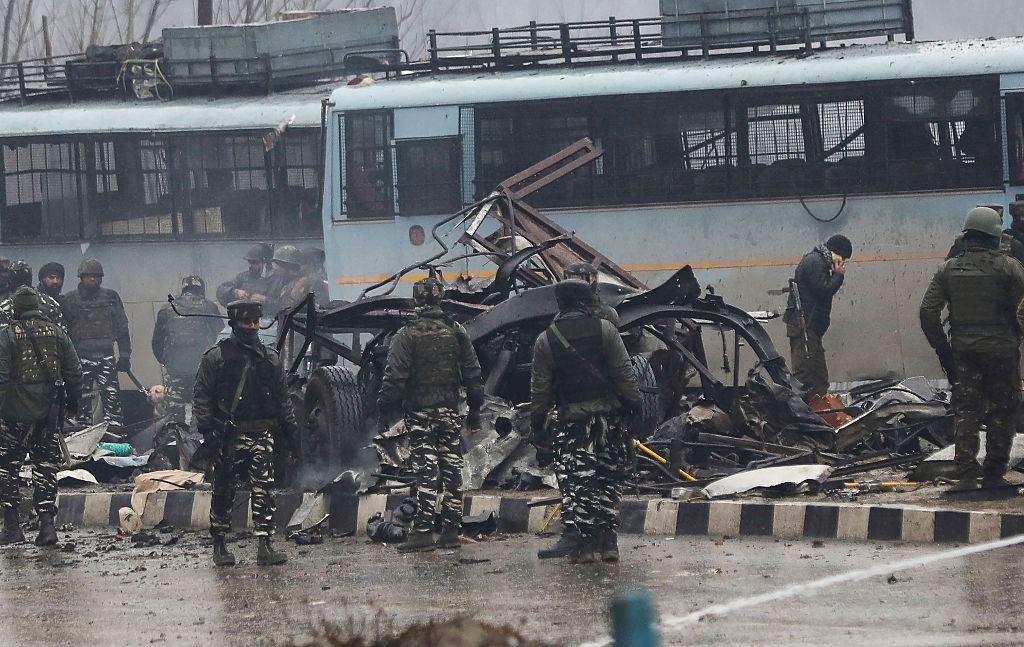
According to media reports, the terrorists involved in the Red Fort attack in India were radicalised by social media. As the perpetrators were all well-educated, the attack has been called "white-collar terrorism" -- as if that makes it acceptable.
Social media platforms also appear to have played a crucial role in executing the attack. The terrorists reportedly relied on the Swiss messaging app Threema for secure communication. Threema is known for its strong privacy features, including end-to-end encryption, no metadata storage, and message deletion on both ends – presumably so that forensic investigators will find it hard to determine the communication chain. To share information, the terrorists also use "dead drop mail," which involves writing drafts but not sending them, thereby leaving minimal digital movement.
The Way Forward
The good news is that many countries in the region might finally be waking up to the danger of uncontrolled social media platforms. Australia recently introduced a new law to protect young adults from social media exploitation. Malaysia's Online Safety Act 2025 went into effect on January 1, 2026. Singapore's Maintenance of Racial Harmony Bill, tabled in 2025, aims to curb race-based hatred and divisions, while Indonesia's 2024 SAMAN System & Child Protection has provisions to penalise those who do not remove terrorism-related content after it is reported. A new chapter to the law has been recently added to strengthen its provisions. India, for its part, blocked 9,845 URLs promoting radicalisation and terrorist agendas in 2025 alone.
It is important that governments focus not only on known extremists, but also on patterns of online behaviour and long-duration radicalisation trajectories. The UN-led "Media and Information Literacy" initiative, and civil society group-led campaigns such as India's Media Information Literacy Awareness and Action Program (MILAP), meant to combat the spread of online radicalisation, extremist ideology, and misinformation, are crucial in disrupting the pathway to radicalisation. Governments need to cooperate with technology companies and non-governmental organisations to remove extremist material and address algorithm issues.
In the region, to address the threat of cross-border terror finance and radicalisation on private social media platforms, countries urgently need to develop region-wide legal and cybersecurity frameworks.
At the global level, like-minded countries need deeper cooperation with intelligence and law enforcement agencies, and stronger collaborative efforts that cut across government agencies, non-governmental organisations, tech companies and civil society organisations.
Dr. Rahul Mishra is an Associate Professor at the Centre for Indo-Pacific Studies, School of International Studies, Jawaharlal Nehru University, New Delhi, India, and a Senior Research Fellow at the German-Southeast Asian Center of Excellence for Public Policy and Good Governance, Thammasat University, Thailand. He can be reached at rahul.seas@gmail.com X Handle: @rahulmishr_
Prisie L. Patnayak and Harshit Prajapati are doctoral candidates at the Centre for Indo-Pacific Studies, School of International Studies, Jawaharlal Nehru University, India.