








Japan, in the 1980s, was supposed to be the future. Its industrial groups, protected by dense networks of banks, suppliers and friendly shareholders, were praised as more patient, more loyal and more strategic than America's purportedly short-term capitalism. Germany, meanwhile, was sold as the humane alternative to Anglo-Saxon brutality: strong unions, worker participation, industrial discipline, export prowess and a "social market economy" that allegedly reconciled capitalism with solidarity.
Both the Japanese and German models, then, had real achievements. Both produced world-class companies and generated admiration. Both, however, also concealed the same poison: the gradual conversion of the private company into a social institution whose first duty is no longer to create value, but to preserve existing arrangements.
The results are now visible. In the IMF's 2025 results, GDP per capita, in terms of purchasing power parity (PPP), stands at about $90,000 for the United States, around $74,000 for Germany and only about $57,000 for Japan. The country once imagined as America's replacement is now far behind America. Germany, once Europe's industrial engine, has been flirting with stagnation and contraction: official German data show that GDP rose by only 0.2% in 2025, after two consecutive weak years.
The usual explanations are not false. Japan suffered a monumental asset bubble, then a banking crisis, then demographic aging. Germany suffered the energy shock after 2022, the self-inflicted damage of the Energiewende (a turn toward "renewable energy"), Chinese competition, high labor costs and suffocating bureaucracy.
Regrettably, these explanations do not go deep enough.
The Company That No Longer Belongs to Its Owners
A private company creates jobs, trains workers, pays taxes, supplies customers and sustains communities. These are consequences of its central function, not substitutes for it. Its central function is to allocate capital profitably. If that sounds cold, it is – but it is, in fact, the underlying condition of prosperity.
When profit is treated as morally suspect, the company transforms into something else: a pension office, an employment agency, a regional planning tool, a national prestige project, a union stronghold or a political theater. It may still have shareholders. It may still publish accounts. It may still use the vocabulary of business. But its "business plan" and operating principle have changed.
Japan and Germany did not abolish capitalism. They domesticated it. They surrounded it with obligations, customs and veto players until its most important goal — profit — became almost indecent.
Japan: The Price of Harmony
In Japan, socialization took the form of the keiretsu, cross-shareholdings, "main bank" relationships, lifetime employment norms, seniority-based promotion and a corporate culture that often confused loyalty with efficiency.
A recent illustration of the keiretsu system's paralyzing effects is Toshiba's prolonged decline and difficult restructuring in the 2010s and 2020s. Tied to the Mitsui group through historical cross-shareholdings, main-bank relationships, and cultural norms of loyalty and consensus, Toshiba faced massive losses from its U.S. nuclear business (Westinghouse), accounting scandals, and operational inefficiencies. Instead of swift divestitures or bold pivots, the group's emphasis on stability and internal support delayed decisive action. The Mitsui keiretsu's attempt to rescue it ultimately failed, leading to delisting from the stock exchange in 2023 and acquisition by a consortium. Only under new private ownership has Toshiba implemented aggressive job cuts (up to 4,000 domestically) and restructuring —steps that traditional keiretsu mechanisms had long resisted.
Economists have long studied Japan's "zombie firms": companies kept alive despite poor productivity and weak profitability, often with the help of banks unwilling to force restructuring. Research on Japan's "lost decades" has linked these firms to broader inefficiencies and deflationary pressures.
A zombie firm protects existing employees, managers, lenders and suppliers. It also occupies labor, capital, land, credit and attention that could have gone to new companies, new technologies and new workers. It saves the visible job today by preventing the invisible job tomorrow.
Germany: The Consensus Trap
In Germany, socialization took the form of co-determination (Mitbestimmung): labor councils, supervisory boards with forced labor representation, a political culture hostile to abrupt restructuring, and a legal framework that makes reform expensive, negotiated and slow. The words are different. The outcome is similar. The company ceases to be a vehicle for creating successful products for the marketplace. It becomes an institution for protecting insiders.
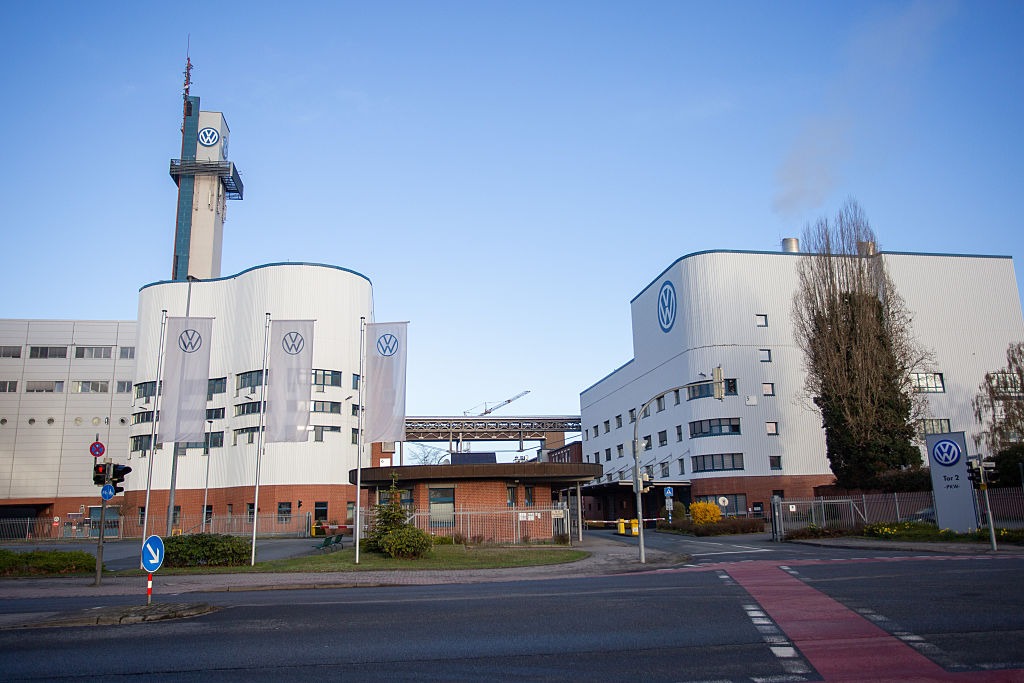
A striking illustration of Germany's Mitbestimmung system is visible at Volkswagen Group. Under German law, half of the seats on Volkswagen's 20-member supervisory board are occupied by employee representatives, including powerful union leaders from IG Metall. This structure gives workers significant influence — and often de facto veto power — over major strategic decisions. In today's intense global competition against Chinese electric vehicle makers and other agile rivals, Volkswagen needs to close or drastically downsize several high-cost German factories, reduce its oversized workforce, and accelerate restructuring.
However, Mitbestimmung forces management into lengthy negotiations with the labor council and unions. Any major factory closure, large-scale layoffs, or rapid cost-cutting measure requires union approval or expensive compromises, such as costly early-retirement schemes and job-security guarantees. This co-determination model, while protecting German workers, prevents Volkswagen from taking the swift and painful decisions required in today's hyper-competitive international environment. As a result, the company loses market share, sees its profit margins shrink, and struggles with persistent inefficiencies compared to its faster-moving competitors.
Mitbestimmung was often praised as a civilized compromise between capital and labor. Workers have representation. Management must consult. Decisions are slower, but supposedly wiser. Mediation is institutionalized, therefore conflict is moderated.
There is some truth in this. In periods of stability, the German model can produce high-quality incremental improvement. It is well suited to perfecting a combustion engine, optimizing a machine tool, or coordinating suppliers around an established industrial process.
The world economy, bluntly, no longer rewards only incremental improvement. It rewards speed, software, platforms, integration of artificial intelligence, radical capital reallocation and efficiency.
In that world, requiring consensus between all the so-called "stakeholders" is a liability. It causes the purpose of the firm gradually to shift from winning the future to distributing pain as slowly as possible.
When a company must close a plant, abandon a technology, write off an investment or move capital into an uncertain new field, every veto bottleneck matters. Every protected constituency matters. Every negotiated delay matters.
Reuters, pointing to high energy costs, weak investment, demographic pressures and low productivity, recently described Germany as "sleepwalking into permanent stagnation."
Several major German industrial groups are implementing large-scale job cuts amid the country's prolonged manufacturing crisis. Volkswagen Group, Europe's biggest carmaker, plans to eliminate 50,000 jobs in Germany by 2030 — an escalation from an earlier 35,000-job-cut agreement — following a sharp drop in profits. Bosch, a major automotive supplier, is cutting around 20,000 jobs, primarily in its transportation division, after profits nearly halved last year. In the steel industry, Thyssenkrupp Steel Europe has agreed with unions to cut or outsource approximately 11,000 jobs (about 40% of its workforce) as part of a restructuring that will also slash production capacity by roughly 25%.
These moves reflect broader pressures on Germany's industrial heartland, with the automotive sector alone already shedding over 50,000 jobs in 2025.
America is showing the way forward
The American model is frequently denounced as harsh, unequal, unstable and obsessed with shareholders. Much of this criticism is fair. Some of it is even justified.
The American model, nonetheless, retains one decisive advantage: it still allows failure to fail.
In America, companies can fire, pivot, sell assets, enter bankruptcy, restructure, attract new capital, disappoint both shareholders and employees, and start again. The process, while perhaps appearing counterintuitive, is also restorative: it is why capital moves.
The American corporation is not a miniature welfare state. If it cannot compete, its assets can be broken apart and used by someone else. A society that protects its dying firms does not become humane — it becomes a subsidized graveyard of the economically dead.
Germany and Japan will either free their businesses from the socialist myth of entrenched "stakeholders" — or, more and more, they will see their investments disappear in global competition.
Drieu Godefridi is a jurist (University Saint-Louis, University of Louvain), philosopher (University Saint-Louis, University of Louvain) and PhD in legal theory (Paris IV-Sorbonne). He is an entrepreneur, CEO of a European private education group and director of PAN Medias Group. He is the author of The Green Reich (2020).
 Max Dublin