








In the seemingly endless to and fro over the Trump administration's attempts to negotiate a peace deal with Tehran, the one red line upon which there can be no hint of compromise is US President Donald J. Trump's insistence that the ayatollahs will never be allowed to acquire nuclear weapons.
While speculation continues to mount that a deal to end the three-month conflict between Iran and the US is in the offing, it is clear that Iran is still resisting demands that it surrender the estimated 970 pounds of enriched uranium -- whose main utility is for the production of nuclear warheads.
Trump's insistence that he would not sign any deal that enabled Tehran to continue work on its nuclear programme was very much in evidence following a meeting of senior administration officials in the Situation Room last week to discuss the draft Memorandum of Understanding that has been drawn up between Washington and Tehran.
Claims that the final stages of a deal are being negotiated have already prompted the price of oil to fall below $100 a barrel in recent days, amid hopes that the months-long closure of the Strait of Hormuz, which has adversely impacted the global economy, is coming to an end.
Despite the mounting optimism a deal could soon be concluded, it is clear that Trump still remains sceptical about the deal, and remains concerned that the Iranians are indulging in their long-established custom of playing for time in the hope that they can secure a better deal.
In a sign of Trump's deepening frustration with the process to sign a deal, whereby the two sides would observe a 60-day ceasefire while other issues, such as the nuclear programme, are finalised, the president took to social media to reaffirm his key red lines.
In a post on Truth Social, Trump had said Iran "must" open the Strait of Hormuz, agree they will never have a nuclear weapon and that Tehran's stockpile of highly enriched uranium should be "DESTROYED".
A White House official confirmed the president's determination to hold for a deal that ends Iran's nuclear ambitions once and for all, commenting that Trump "will only make a deal that is good for America, satisfies his red lines, and makes sure Iran can never possess a nuclear weapon."
Treasury Secretary Scott Bessent also insisted that Trump would not agree to any deal unless Iran reopens the Strait of Hormuz, gives up highly enriched uranium and agrees not to pursue a nuclear weapon.
As he considers his next steps, Trump will also need to take into account the recent warning made by General Jack Keane (ret.) during a recent interview with Fox News that Iran has a history of making deals and then not abiding by them, as happened after Tehran signed then US President Barack Obama's flawed JCPOA "nuclear deal" in 2015.
Despite agreeing to freeze its nuclear programme, the regime continued to conduct research on producing weapons-grade enriched uranium.
To ensure Iran cannot engage in similar tactics in the event of a new deal being signed with the Trump administration, the president has asked his negotiating team to make a number of important changes to the clauses regarding Iran's nuclear programme.
In its current form, the Memorandum of Understanding merely includes a vague commitment from Iran that it will not pursue a nuclear weapon, an undertaking that hardly inspires confidence that Iran is serious about ending its nuclear ambitions for good.
A senior Trump administration official told Axios that Trump had asked his team to amend the timetable of the nuclear talks, in which the US seeks to remove about 10 warheads' worth of highly enriched uranium that Iran has amassed. Trump wants "more specifics about how the US gets the material and the timing," the official was quoted as saying.
The material is thought to have been buried after the US hit key Iranian nuclear sites during the June 2025 Israel-Iran war.
According to the official, the Iranians would need about three days to get back to Trump because "they're literally in caves and they're not using email."
Washington is "willing to wait so the president gets what he asks for," the official said. "It could be a week. It could be less. It could be more. At the turn of the week, we hope to have something."
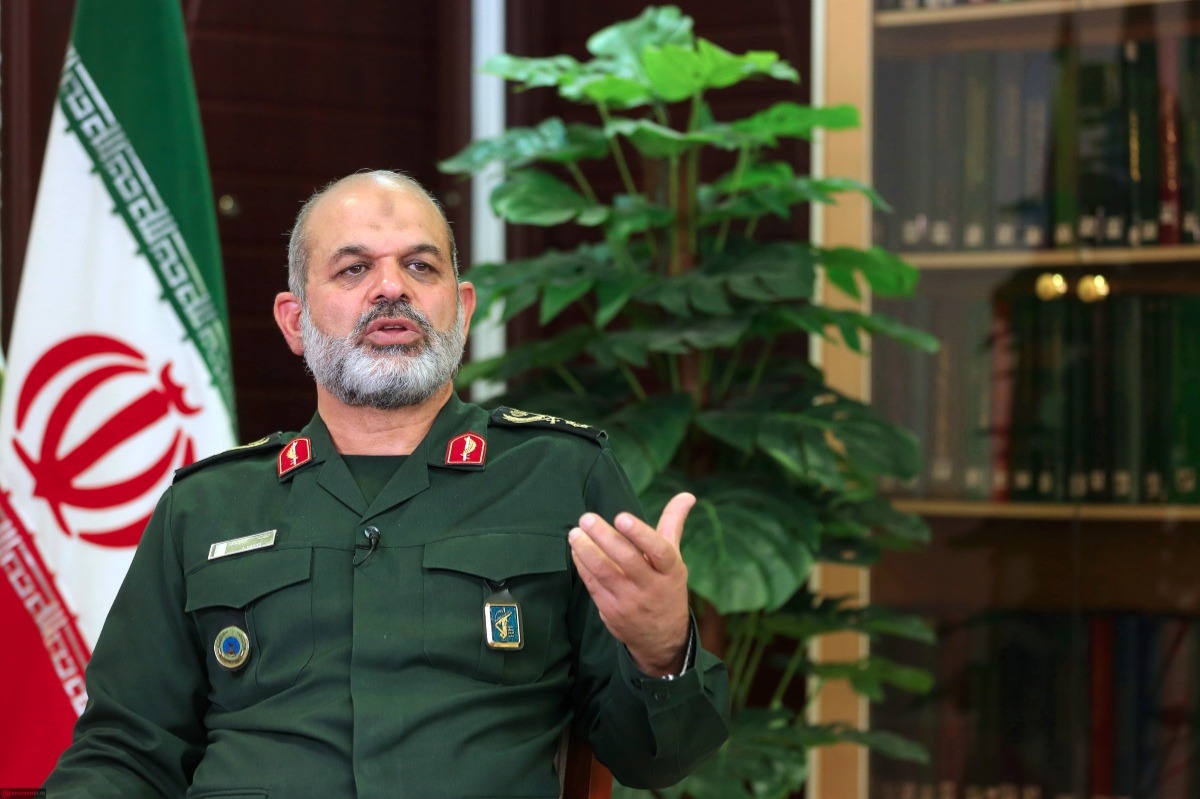
American military historian Victor Davis Hanson, however, regretting that the US has already lost two months, suggested that Iran's excuses might actually be an ever-extending "good cop-bad cop" routine, whereby the good cops, the negotiators, make acceptable proposals -- to be shot down immediately by the bad cops, General Ahmad Vahidi and other members of Iran's ruling Islamic Revolutionary Guard Corps (IRGC).
Above all, Hanson stressed, the current rulers appear determined to remain in power at any "level" to be able to claim victory over Trump and the American "Great Satan."
Other issues that are said to be holding up the negotiations are disputes over Iranian attempts to control shipping in the Strait of Hormuz, as well as Tehran's insistence that a ceasefire in Lebanon be included in any deal to end the Iran war.
The prospects of any deal being concluded quickly, though, remain open to question in view of statements made by Iranian officials, who insist that the Memorandum of Understanding contains no demands for Tehran to make nuclear concessions, nor a commitment for Tehran to reopen the Strait of Hormuz.
With the American president continuing to insist he is under no pressure to reach a deal with Tehran, the intransigence of Iranian leaders could ultimately persuade him that, in order to ensure the Iranians have no chance of resuming their nuclear and ballistic missile programme, he has no alternative but to resume military action against the regime.
Con Coughlin is the Telegraph's Defence and Foreign Affairs Editor and a Distinguished Senior Fellow at Gatestone Institute.
 Joe Fernandez