








Nearly three years after the October 7, 2023 Hamas-led massacre in Israel, led by the Palestinian terrorist group Hamas, that Iran-backed terror group remains as defiant as ever. Far from showing any willingness to disarm, abandon terrorism, or relinquish control of the Gaza Strip, Hamas leaders are once again issuing threats, glorifying jihad (holy war) and promising more violence.
Their statements should serve as a wake-up call not only for Israel, but also for Washington and the wider West.
The message emerging from Hamas -- and Iran -- is unambiguous: Hamas and Iran believe they are winning.
Iran has been dictating to Washington when and with whom it will negotiate. Washington apparently never insisted upon face-to-face negotiations with Iran. Why not? By discontinuing talks with the US, Iran also succeeded in maneuvering the Trump Administration into two huge victories for the current regime. First, as the Wall Street Journal pointed out in "Iran Gets Trump to Rescue Hezbollah," US President Donald J. Trump demanded that Israel stop defending itself against attacks from another proxy of Iran: Hezbollah in Lebanon. Second, Iran -- as a result of a much-publicized shouting -- match between Trump and Israeli Prime Minister Benjamin Netanyahu -- masterfully created "daylight" between its two main adversaries: Israel and the United States.
Even though Iran's weapons have been decimated, the current regime, run by the Islamic Revolutionary Guard Corps (IRGC), has reportedly been using its leisurely, ever-extending ceasefire to rebuild them. The IRGC has been calling the shots and has stood up to the "Great Satan," the US. No wonder the regime thinks it is winning.
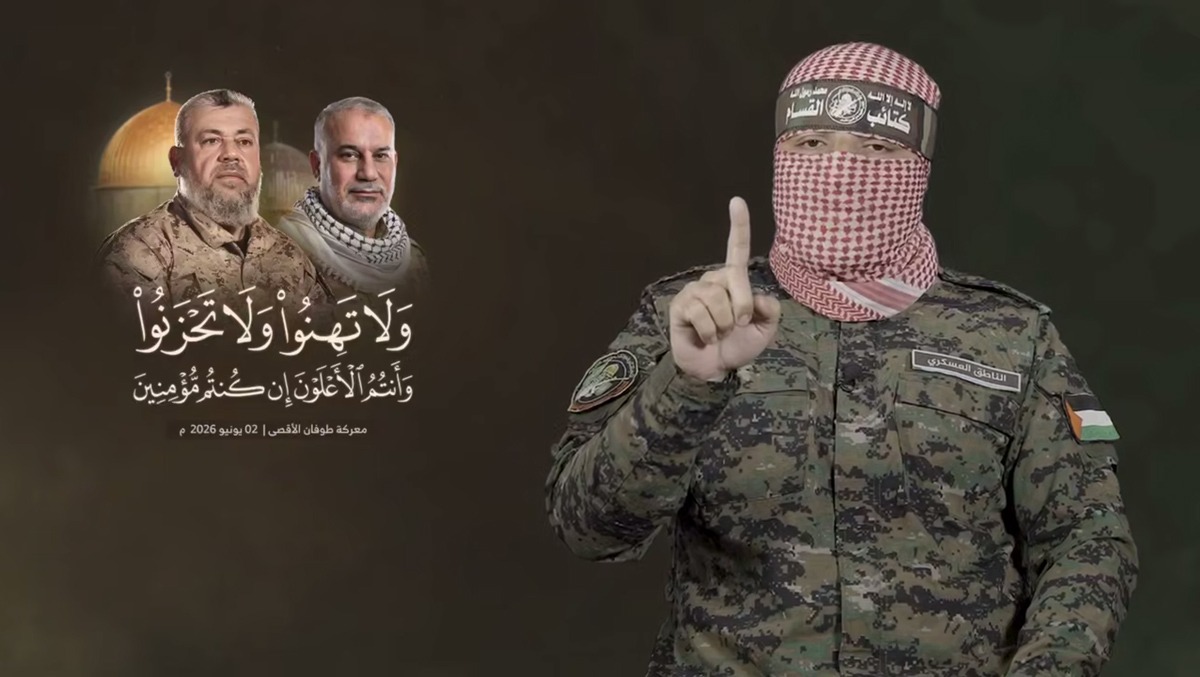
As for Hamas, in a video statement this week, Abu Obeida, spokesman for Hamas's military wing, the Izz ad-Din al-Qassam Brigades, declared that despite the deaths of many senior commanders, Hamas remains strong and determined to continue the fight against Israel.
"The bill will remain open until the [Israeli] enemy pays it," Abu Obeida vowed. He boasted that Israel "has not achieved anything by assassinating [Hamas] leaders and insisted that Hamas has produced "a generation of leaders who will continue the path of those who came before them."
These are not the words of a defeated terror organization. These are the words of a group that believes time is on its side.
Abu Obeida's remarks are particularly alarming because they come after nearly three years of war, the elimination of many top Hamas leaders, and countless declarations by international mediators that Hamas would eventually be removed from power.
Instead, Hamas is still standing. Hamas, like Iran, appears increasingly confident.
Another senior Hamas figure, Osama Hamdan, recently insisted that Israeli assassinations of top Hamas commanders "will not break the steadfastness and determination of the Palestinian people" and stressed that his terror group would continue its "resistance" campaign against Israel.
Meanwhile, Hamas spokesman Hazem Qassem has openly attacked members of the so-called "Board of Peace" and accused them of spreading "misleading lies." He also complained that the Board had failed to pressure Israel and force implementation of its plans for the Gaza Strip.
The irony is striking. The "Board of Peace" was supposedly created to bring stability to the Gaza Strip, end Hamas rule, and establish a new political reality after the war. Yet Hamas leaders now seem to feel comfortable enough not only to reject its demands but also to publicly mock its efforts.
The truth is that the "Board of Peace" has failed in its central mission. Six months after Trump's ceasefire initiative and almost three years after the October 7 atrocities, Hamas remains in power. It continues to control large parts of the Gaza Strip, maintains its military infrastructure, and openly refuses to disarm.
Hamas's confidence is not emerging in a vacuum.
Hamas leaders are carefully watching developments throughout the region. They see the US conducting endless negotiations with Iran's regime. They see repeated diplomatic initiatives that produce few tangible results. They see Iran continuing to arm and finance its terrorist proxies across the Middle East.
Most importantly, they see Hezbollah in Lebanon continuing its attacks on Israel. Recent reports that the Trump Administration pressured Israel to cancel a planned strike against Hezbollah targets in Beirut's Dahiya district sent a troubling message throughout the region. The reported decision to restrain Israel, even as Hezbollah continues launching drone attacks and other provocations, is undoubtedly being studied carefully in Hamas and Iranian headquarters.
To Hamas, Hezbollah and Iran's regime, such developments can easily be interpreted as signs of hesitation and weakness.
The same skewed outlook also applies to persistent reports of disagreements between Trump and Netanyahu.
Whether these reports are exaggerated or not is almost irrelevant. What matters is how America's and Israel's enemies perceive them.
For Hamas and Hezbollah, any indication of friction between the US and Israel is good news. Terrorist organizations thrive on the perception that their adversaries are divided.
A united American-Israeli front creates deterrence. Public disputes create opportunities.
Hamas leaders appear convinced that the regional balance is shifting in their favor. That conviction helps explain why they have renewed their threats and escalated their rhetoric.
The problem extends beyond Hamas. Hezbollah is also carefully monitoring Washington's actions. If the Iranian-backed Lebanese terrorist group concludes that Israel's freedom of action has been restricted, it may become even more aggressive.
The Iranian regime is undoubtedly drawing similar conclusions.
Across the Middle East, jihadist organizations are constantly searching for signs of weakness among their enemies. They interpret restraint differently from the way Western policymakers do. What many Western leaders describe as diplomacy, patience, or de-escalation is frequently interpreted by Islamists as surrender, fear, or exhaustion.
This misunderstanding has repeatedly produced disastrous results.
The October 7 massacre was partly the result of Hamas's belief that Israel had become weak, divided, and vulnerable. Today, Hamas appears once again to be reaching similar conclusions. This expectation should deeply concern policymakers in Washington.
There are no magical formulas that can transform jihadist organizations into peaceful political actors.
Western policymakers, especially Americans, tend to seek quick solutions and rapid successes.
Defeating radical Islamist movements requires strategic patience, consistency, and a willingness to sustain pressure.
Groups such as Hamas, Hezbollah, and their patrons in Iran view conflict not in terms of election cycles or news cycles, but in terms of generations.
A united American-Israeli front creates deterrence. Public disputes create opportunities.
Weakness, hesitation, and public divisions send exactly the wrong message to Hamas, Hezbollah, and Iran. Every appearance of indecision only encourages further aggression, and convinces terrorist leaders that persistence will eventually bring victory. Discord puts smiles on the faces of those who still openly dream of destroying Israel and expanding Iran's influence throughout the Middle East.
The latest Iranian and Hamas statements are not merely propaganda. They are a warning. The question is whether decision-makers in Washington are listening.
Khaled Abu Toameh is an award-winning journalist based in Jerusalem.
 Joe Fernandez