








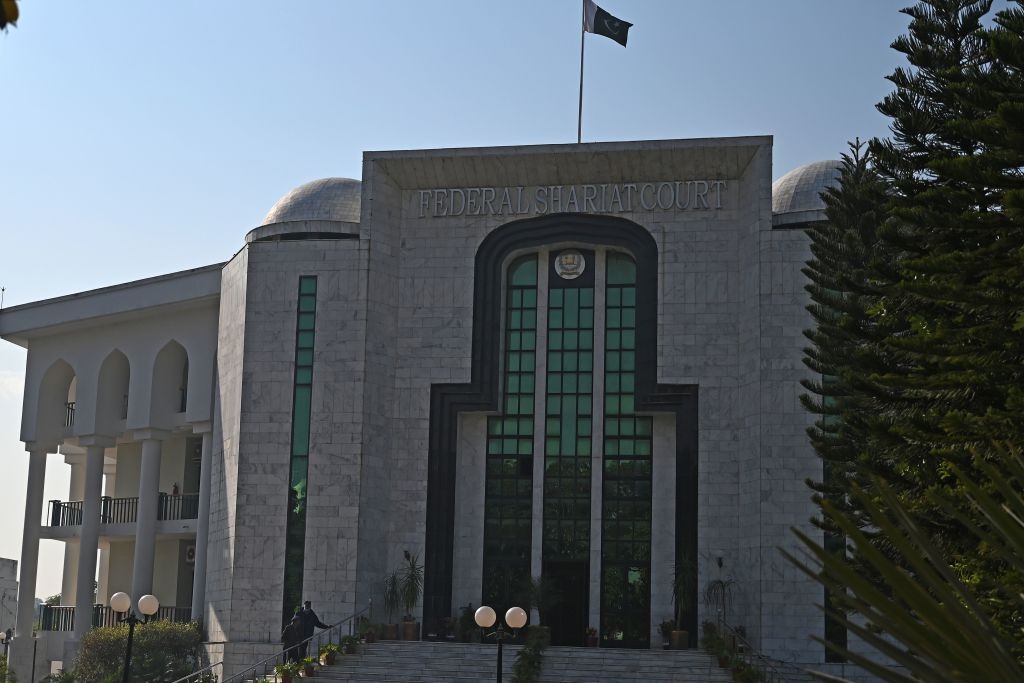
A constitutional challenge now before Pakistan's Federal Shariat Court will determine far more than the minimum legal age of marriage. At stake is whether Parliament's statutory definition of childhood — or judicial interpretations of Muslim personal law, rooted in classical Islamic jurisprudence — will provide the principal legal framework through which Pakistan protects children from early marriage. The Court's judgment could reshape child protection law and have profound consequences for Christian and Hindu underage girls whose cases have exposed the tension between legislation and judicial precedent.
"All citizens are equal before law and are entitled to equal protection of law." — Article 25, Constitution of the Islamic Republic of Pakistan
Who Decides When Childhood Ends?
Who has the constitutional authority to decide when childhood ends in Pakistan? That question lies at the heart of one of the country's most significant constitutional challenges, now before the Federal Shariat Court.
The proceedings arise from a petition filed by Mufti Muhammad Aslam, challenging the Punjab Child Marriage Restraint Ordinance 2026, which establishes eighteen as the minimum legal age of marriage for both boys and girls. Filed under Article 203-D of the Constitution, the petition argues that provisions of the Ordinance criminalising marriages involving individuals below the age of eighteen are repugnant to the Injunctions of Islam, because classical Islamic jurisprudence has traditionally associated marital capacity with puberty rather than chronological age. It asks the Court to declare the age limit "un-Islamic," to annul the provisions that make underage marriage an offence, and to restrain the government from implementing the Ordinance in the meantime.
A closely related challenge is proceeding in parallel. The Jamiat Ulema-e-Islam-Fazl (JUI-F) has filed a separate petition against the Islamabad Capital Territory Child Marriage Restraint Act 2025, asking the Court to go further still: to overturn its own 2023 ruling in Ali Azhar v Province of Sindh, which upheld a similar minimum-age law. Together, the two petitions mean the Federal Shariat Court is now being asked, from two directions at once, to revisit ground it has already covered.
Although the petitions appear to concern the legal age of marriage, they raise a much broader constitutional issue: who has the authority to define childhood in Pakistan? Should Parliament's statutory definition prevail, or may judicial interpretations of Muslim personal law, rooted in classical Islamic jurisprudence, continue to determine the validity of marriages involving children whom Parliament has defined as underage?
The Court's decision will not merely determine the legality of one provincial ordinance. It will define the constitutional relationship between Parliament, the superior judiciary and the Federal Shariat Court in determining how Pakistan protects children from early marriage—and for thousands of vulnerable children, particularly Christian and Hindu underage girls, whether Parliament's statutory definition provides the governing legal standard.
In most constitutional democracies, the answer appears straightforward: Parliament defines childhood through legislation, and the courts apply that law. In Pakistan, however, the interaction between statutory child-protection legislation and judicial interpretations of Muslim personal law has produced one of the most significant constitutional debates in the country's recent legal history.
A Century of Legislation—and a Persistent Legal Tension
Pakistan's efforts to regulate child marriage are not new. The Child Marriage Restraint Act of 1929, inherited from British India at independence, represented one of South Asia's earliest legislative attempts to discourage child marriage by prescribing minimum marriage ages and criminal penalties for adults arranging or facilitating such marriages.
Yet from its inception, the legislation contained an important limitation. Although it criminalised the conduct of those responsible for child marriages, it did not expressly declare such marriages void. Consequently, statutory child-protection legislation coexisted with judicial interpretations of Muslim personal law governing the legal validity of marriage.
In many reported cases involving underage Christian and Hindu girls who were allegedly abducted, converted to Islam and married, Pakistani courts were required to determine whether statutory child-protection legislation should prevail, or whether judicial interpretations of Muslim personal law should determine the validity of the marriage. Under long-established judicial precedents, particular importance was often attached to whether the girl had attained puberty and whether she had stated before a court or magistrate that she had embraced Islam and entered the marriage voluntarily. Consequently, the statutory minimum age prescribed by Parliament did not always become the decisive legal standard. It is this legal tension that provincial and federal lawmakers have sought to address through recent legislation, including the Punjab Child Marriage Restraint Ordinance 2026.
This constitutional debate is therefore not occurring in a legal vacuum. It has developed through years of litigation involving vulnerable children and competing interpretations of statutory law and judicial precedent.
When Constitutional Principles Meet Real Lives
For many years, litigation involving underage Christian and Hindu girls allegedly abducted, converted to Islam and married has exposed the practical consequences of competing legal standards.
Parents have frequently relied upon birth certificates, school records and National Database and Registration Authority (NADRA) records demonstrating that their daughters were minors under Pakistani law. Respondents, by contrast, have relied upon conversion certificates, marriage documents and statements recorded before magistrates in which the girls declared that they had converted to Islam and married voluntarily. In one widely reported case, a 13-year-old Christian girl was allegedly abducted and forcibly converted, and her marriage certificate recorded her age as eighteen.
Human rights organisations, United Nations treaty bodies and minority-rights advocates have repeatedly expressed concern that this interaction has, in some categories of cases, weakened the practical protection intended by Parliament, particularly for Christian and Hindu underage girls alleging abduction, forced conversion and child marriage. In April 2024, a group of UN special procedures experts said publicly that they were alarmed by the lack of protection for minority girls from forced conversion and forced marriage, citing specific cases and calling on Pakistan to meet its obligations under Article 18 of the ICCPR to prohibit forced religious conversion. Whether these outcomes represent isolated judicial decisions or broader structural challenges remains a matter of continuing legal debate. What is beyond dispute is that these cases have fuelled public concern, attracted international attention and prompted renewed calls for legislative reform.
Among the most influential judicial authorities in this area is PLD 2021 Lahore 21, in which the Lahore High Court reaffirmed the established judicial position that, under Muslim personal law, a Muslim girl who has attained puberty may possess the legal capacity to contract a marriage without the consent of her guardian. Reviewing Pakistan's record in January 2026, the UN Committee on the Rights of the Child specifically raised concern about Lahore High Court and Islamabad High Court judgments that had validated the marriages of fifteen-year-old girls on the basis of puberty, even as it welcomed the new child marriage laws in Islamabad and Balochistan as legislative progress. Subsequent Lahore High Court decisions have continued to distinguish between criminal liability under child marriage legislation and the legal validity of marriages determined through judicial interpretations of Muslim personal law.
For supporters of legislative reform, this distinction created continuing legal uncertainty: lawmakers had repeatedly legislated to discourage child marriage, yet judicial precedent meant the legal validity of certain marriages could still be assessed by reference to Muslim personal law rather than solely by the statutory minimum age. It was against this background that Punjab, following Sindh, Islamabad and Balochistan, concluded stronger statutory protection was necessary.
The Federal Shariat Court's Own Precedent
What distinguishes the present challenges from earlier ones is that the Federal Shariat Court has already ruled on this exact question—twice.
In 2021, in Farooq Omar Bhoja v Federation of Pakistan, the Court examined a challenge to the Child Marriage Restraint Act 1929 itself. It held that the State has the power to prohibit any act that may cause harm to society, however "minor" in Islamic legal terms that act might be, and found that setting a minimum age for marriage was not against the Quran and Sunnah. In 2023, in Ali Azhar v Province of Sindh, the Court considered a more direct challenge to the Sindh Child Marriages Restraint Act 2013, which set eighteen as the minimum age for both sexes. The Court held that marriage requires more than physical puberty; it requires rushd, a concept of mental and emotional maturity recognised in Islamic jurisprudence, which does not necessarily arrive at the same time as puberty. It found that a state setting a minimum age to protect people until that maturity is reached falls within masalih mursalah, the safeguarding of public interest, and is consistent with the Quran and Sunnah.
Both petitions now before the Court engage directly with this precedent. Notably, JUI-F's petition against the Islamabad Capital Territory Act does not merely distinguish Ali Azhar—it asks the Court to declare its own 2023 reasoning per incuriam, arguing that the judgment wrongly conflated rushd, a precondition for a minor's property rights under the Quran, with a precondition for the validity of marriage. Whether the Court is prepared to revisit its own recent precedent, or will treat Farooq Omar Bhoja and Ali Azhar as settled law, is likely to be central to the outcome of both cases.
Parliament's Legislative Response
Supporters of legislative reform argued that child-protection laws should establish a single, objective legal definition of childhood applicable to every child, irrespective of religion, gender or social background. They contended that legislatures possess both the constitutional authority and the public responsibility to define childhood through legislation, and that objective statutory age limits provide greater legal certainty than case-by-case judicial assessments of puberty or maturity.
These arguments gathered momentum following repeated recommendations from child-rights organisations, legal experts and United Nations treaty bodies. As early as 2020, the CEDAW Committee recommended that Pakistan amend the Child Marriage Restraint Act to set the minimum age at eighteen for both sexes, without exception, throughout the country—a recommendation substantially acted upon since, as Sindh, Islamabad, Balochistan and now Punjab have each legislated eighteen as the minimum age.
Defending the Islamabad legislation after it was signed into law in May 2025, Federal Law Minister Azam Nazeer Tarar argued that protecting children from early marriage is fully consistent with the objectives of Islamic law and reflects the State's constitutional responsibility to protect children from demonstrable harm. He noted that Sindh had operated under an equivalent law since 2013, and urged all provinces to adopt uniform child marriage legislation, maintaining that lawmakers had not sought to redefine Islamic doctrine but to fulfil their constitutional duty to safeguard children through legislation enacted in the public interest. He also pointed to the frequency with which thirteen- and fourteen-year-old girls appear in Darul Aman shelters as evidence of the psychological toll of early marriage.
The Challenge Before the Federal Shariat Court
Supporters of the new laws argued they resolved a long-standing legal uncertainty by establishing eighteen as the minimum legal age of marriage for all children, creating a single legal standard applicable to every child. Their opponents viewed the legislation very differently.
Mufti Muhammad Aslam's petition argues that provisions of the Punjab Ordinance criminalising marriages involving individuals below eighteen are repugnant to the Injunctions of Islam. According to the petition, fixing a statutory minimum marriage age conflicts with classical Islamic jurisprudence, which has traditionally associated marital capacity with puberty rather than chronological age. The petition asks the Court to declare the relevant provisions inconsistent with Article 227 of the Constitution, which requires all existing and future laws to conform to the Injunctions of Islam, and to stay implementation of the Ordinance in the meantime.
The dispute before the Federal Shariat Court is therefore not a disagreement over whether children should be protected. Rather, it concerns the constitutional source of the legislature's authority to determine how that protection should be provided within Pakistan's Islamic constitutional framework.
The central constitutional question is whether elected legislatures possess the authority to establish a uniform statutory definition of childhood for the purposes of marriage, when judicial interpretations of Muslim personal law have historically attached legal significance to puberty instead. That distinction goes beyond child marriage: it concerns the respective constitutional roles of Parliament, the superior judiciary and the Federal Shariat Court in defining the legal rights and protections afforded to children.
Muslim Personal Law and Constitutional Interpretation
The present controversy should not be reduced to a simplistic choice between Islam and human rights. Such an approach misunderstands both Pakistan's constitutional structure and the diversity of Islamic legal thought.
Classical Islamic jurisprudence has never been entirely uniform. Muslim jurists have historically differed on questions concerning public welfare, state authority and the application of legal principles to changing social conditions. While many classical jurists regarded puberty as an important indicator of marital capacity, Islamic legal thought has also recognised concepts such asrushd (maturity and sound judgment) and maslahah (public interest), which permit governments to legislate to prevent harm and promote the welfare of society—concepts the Federal Shariat Court itself invoked in Ali Azhar.
Supporters of the recent legislation therefore argue that legislatures have not attempted to redefine Islamic doctrine. Instead, they contend that the State is exercising its constitutional authority to regulate marriage in order to protect children and advance the public interest. From this perspective, establishing eighteen as the minimum legal age of marriage represents a regulatory safeguard rather than a departure from Islamic principles—a view the Federal Shariat Court has itself endorsed twice, in 2021 and 2023.
A Constitutional Question Beyond Child Marriage
The implications of this litigation extend far beyond family law. Every constitutional democracy must decide how childhood is defined and which institution possesses the authority to make that determination. The Court's judgment will therefore define more than the legality of a single provincial ordinance—it will clarify the constitutional relationship between legislative authority, judicial interpretations of Muslim personal law and the supervisory jurisdiction of the Federal Shariat Court, and whether the Court's own recent precedent will hold.
Whatever the outcome, the decision is likely to become one of the most significant constitutional judgments on child protection in Pakistan for many years.
Pakistan's International Commitments
Pakistan's international obligations also provide important context. As a State Party to the Convention on the Rights of the Child (CRC) since 1990, the Convention on the Elimination of All Forms of Discrimination against Women (CEDAW) since 1996, and the International Covenant on Civil and Political Rights (ICCPR), Pakistan has undertaken obligations to protect children from harmful practices and to ensure that marriage is entered into only with the free and full consent of both parties.
United Nations treaty bodies have repeatedly encouraged Pakistan to harmonise child marriage legislation, remove inconsistencies between different legal frameworks and strengthen legal protections against child marriage. Although international treaties do not determine the outcome of proceedings before the Federal Shariat Court, they provide important context for lawmakers' objectives and demonstrate Pakistan's broader commitment to protecting children through domestic law.
Conclusion
Ultimately, this case is about far more than the legal age of marriage.
It concerns the constitutional relationship between Parliament, the superior judiciary and the Federal Shariat Court. It concerns the interaction between statutory child-protection legislation and judicial interpretations of Muslim personal law, rooted in classical Islamic jurisprudence. And it concerns whether a single statutory definition of childhood should apply to every child in Pakistan—and whether the Federal Shariat Court's own recent rulings affirming that standard will stand.
For many families—and particularly for Christian and Hindu families whose underage daughters have been at the centre of these legal disputes—the significance of the Court's decision will be measured not only by constitutional doctrine but by whether the promise of equal protection under Article 25 can be translated into practical legal protection.
Nasir Saeed is a freelance writer and Director at the Centre for Legal Aid Assistance and Settlement (CLAAS-UK).