








We have seen in the last few weeks — and for the last 47 years — that Iran's regime is not one with which any responsible actor should seek a deal. Iran's rulers might sign a piece of paper -- as Palestine Liberation Organization (PLO) Chairman Yasser Arafat did with Israeli Prime Minister Yitzhak Rabin with the 1993 Oslo Accord – but, like the PLO, its fundamental goals will not change.
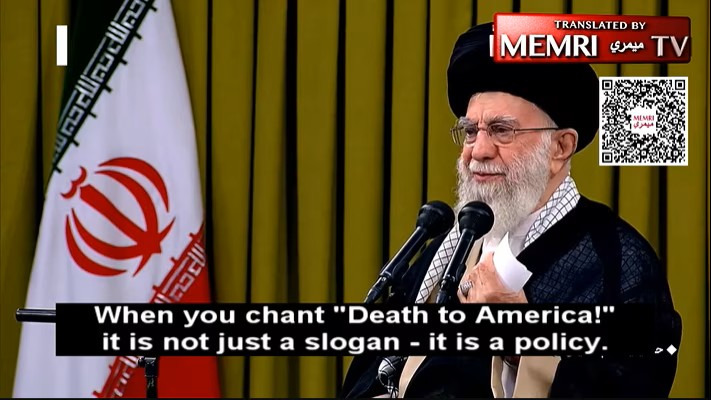
Iran's regime is fundamentally revolutionary. It seized power in 1979 with an identity rooted in anti-Americanism, anti-Semitism, and the suppression of Iranians seeking liberty. This identity defines it. Even if individual figures shift or new "moderates" appear at the negotiating table, the underlying revolutionary structure endures. The regime cannot abandon "Death to America" or "Death to Israel" without dissolving its own reason for being. Leaving it in place only ensures that it will dig its hooks in even deeper -- especially after President Donald J. Trump leaves office and his successor possibly turns to interests more enjoyable than "enforcement."
For 47 years, through multiple U.S. administrations and various agreements, chants of "Death to America" and "Death to Israel" have continued, as have, to this day, repression and mass executions inside Iran. Past deals, such as the JCPOA in 2015, empowered Iran's Islamic Revolutionary Guard Corps (IRGC) to grow stronger and expand the terrorism of its regional proxies.
Its anti-Americanism, its hatred toward Israel -- and its hatred toward the Iranian people who yearn for freedom -- remain, in the minds of their rulers, the very reason for the country's existence ever since it began its reign by holding 66 Americans hostage, most of them for more than a year. The regime will pursue its goals as long as the core system of the Supreme Leader and the IRGC remains in place.
Despite efforts, including Trump's, to pursue diplomatic deals and avoid broader war, the Iranian regime has continued its belligerent actions, including the recent downing of a U.S. helicopter and strikes on targets linked to U.S. interests in Bahrain, Kuwait, and Jordan.
Iran's regime will not change -- especially not for "infidels." Deals simply buy time for the regime to rebuild its power. Deals do not alter core behavior.
If the regime wanted reform, it could easily have renounced those slogans and stopped sponsoring terrorism. Any negotiations or deals that leave the current system intact simply grant it "oxygen," resources, and time to rebuild capabilities aimed at annihilating its perceived enemies, foreign and domestic.
We have witnessed so-called moderates or negotiators making promises, while the IRGC directs policy, launches attacks, and consolidates power.
Half-measures and endless negotiations have failed – for nearly half a century. Any new policy should rest on four pillars:
First, unwavering solidarity with Israel. As a frontline state sharing the same existential threats -- but even more immediately -- from the regime, Israel possesses unparalleled intelligence networks within Iran and a profound understanding of its operations. The US and Israel share aligned strategic interests against a common adversary that views both countries as enemies to be destroyed.
Second, any attempts by the regime to rebuild nuclear energy or missile capabilities should be met with immediate, decisive force to degrade those assets.
Third, intensify economic pressure. Sanctions, blockades, and targeted financial restrictions must remain robust and, where possible, expand. By denying the regime revenue from oil and other resources, its ability to fund nuclear and missile development, terrorist proxies, and domestic security forces can be curtailed. Economic isolation will weaken the pillars that sustain the theocracy's hold on power.
Finally, genuine support for the Iranian people themselves offers the most promising lever for change. Millions of Iranians reject the fundamentalist rule and long for freedom, but face a heavily armed, crushing apparatus that mows down protesters and stifles dissent. Empowering these voices that seek freedom through material assistance, weapons, communications support, and defensive capabilities help the population -- once armed and organized -- to successfully challenge its oppressive regime, just as in America's founding fathers' struggle against British colonial rule. The Iranian people, however, need to be generously aided with the tools to level the playing field.
The West's -- particularly the United States' -- most important decision is recognizing that the Iranian regime simply cannot be reformed. No deal will essentially alter it. It will continue its objectives, its terrorism, and its oppression. We should not be deceived by tactical "moderates" fronting for the IRGC.
The regime's revolutionary identity has brought only suffering -- for Americans, for Iran's neighbors in the Gulf, for Israelis, and especially for the Iranian people. Ending this regime is the only path to peace.
Dr. Majid Rafizadeh is a political scientist, Harvard-educated analyst, and board member of Harvard International Review. He has authored several books on the US foreign policy. He can be reached at dr.rafizadeh@post.harvard.edu
 Rob Porter