









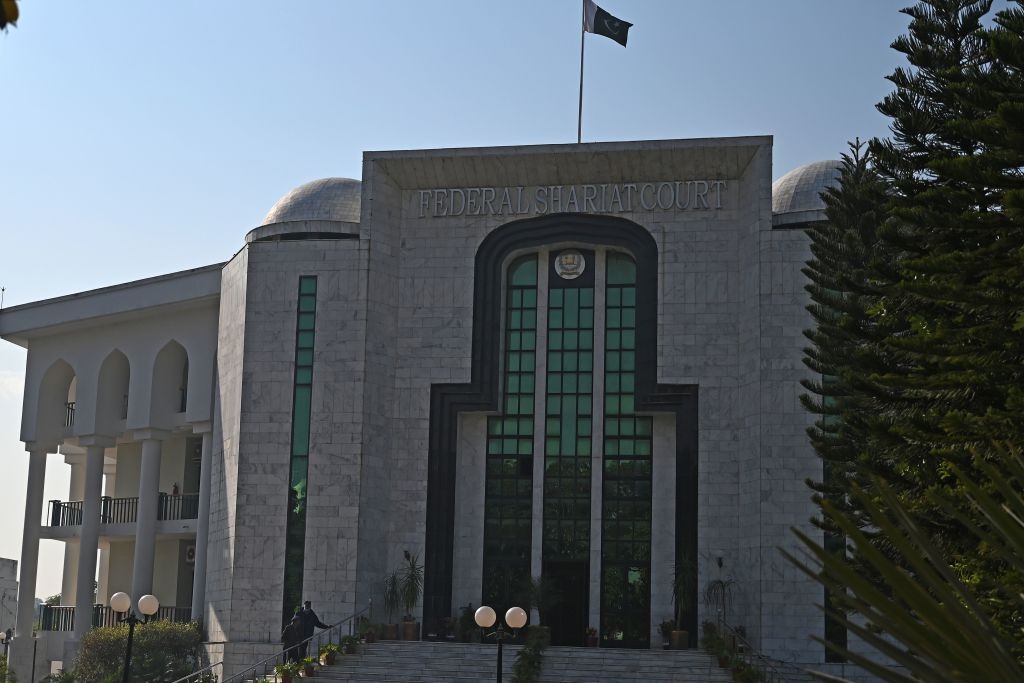
The recent judgment of Pakistan's Federal Constitutional Court in the case of 12-year-old Christian girl Maria Shahbaz has triggered protests, concern, and deep unease — not only within Pakistan but across the international human rights community. For many, this is not simply a controversial ruling; it is a test of whether the law can truly protect the most vulnerable, or whether it can be manipulated to legitimise their exploitation.
Maria disappeared from her home on July 29, 2025. Her family reported her abduction, and alleged that she had been kidnapped, forcibly converted to Islam, and married off to an adult man. Like many similar cases involving girls from non-Muslim minorities, events moved quickly. Within two days, Maria appeared before a magistrate, recorded a statement under Section 164 of the Criminal Procedure Code, and claimed that she was 18 years old, had converted willingly, and had married of her own free will.
That statement became the foundation upon which the entire case was built.
Her father sought her recovery through legal proceedings before the District Sessions Court and later the Lahore High Court. Both courts dismissed his petitions, relying heavily on her recorded statement. The Federal Constitutional Court has now upheld those decisions, validating the marriage and her continued custody with the man she allegedly married.
At first glance, the judgment may appear to rest on technical legal reasoning. But its implications are far-reaching — and deeply troubling.
The Shahbaz case is not an isolated incident. It reflects a broader pattern repeatedly reported in Pakistan, particularly involving girls from Christian and Hindu communities.
The pattern is disturbingly consistent: A minor disappears. A delayed or ineffective police response follows. Within days, a certificate emerges attesting that the girl converted to Islam. A marriage is claimed. A statement is recorded before a magistrate asserting consent. Courts then rely on that statement to validate the marriage and dismiss allegations of coercion.
This sequence transforms what begins as an allegation of abduction into a legal narrative of voluntary marriage. The Shahbaz judgment reinforces this pattern rather than challenging it.
When Consent Becomes a Legal Fiction
At the heart of the judgment lies the concept of "consent." The Court treated Maria's statement as sufficient proof that she acted of her own free will. But this raises the question: can a 12-year-old meaningfully consent to religious conversion and marriage?
International law — and basic principles of child protection — say no.
A child lacks the legal and psychological capacity to make such a life-altering decision, particularly in circumstances involving abduction and isolation from family. Consent, in such contexts, cannot be assumed simply because it is stated. It must be examined, tested, and understood within the broader reality of vulnerability.
By elevating a single statement above all other considerations, the Court risks turning "consent" into a legal fiction—one that obscures rather than reveals the truth.
Child Marriage Law and Its Misinterpretation
The Federal Constitutional Court held that even if Maria were a minor, the marriage would not be void under the Child Marriage Restraint Act, 1929. Instead, the law merely criminalises the act without invalidating the marriage itself.
This interpretation may reflect the technical wording of the statute, but it undermines its protective purpose. A law designed to prevent child marriage becomes ineffective if the marriage it seeks to prevent is still recognised as legally valid.
In effect, the judgment creates a contradiction: the law punishes child marriage yet simultaneously allows its consequences to stand. This weakens the deterrent effect of the law and sends a dangerous signal that legal recognition may still follow unlawful conduct.
Criminal Law and the Missing Dimension
Perhaps the most serious omission in the judgment is its limited engagement with criminal law. Under Section 365-B of the Pakistan Penal Code, kidnapping or abducting a woman to compel marriage is a criminal offence. This provision exists precisely to address situations where marriage is used as a cover for coercion.
This matters because the case did not begin as a family arrangement. It began as an allegation of abduction. Yet in Maria's case, the existence of a marriage claim — and a statement recorded shortly after her disappearance — became the mechanism through which the abduction complaint was effectively neutralised.
The police's First Information Report for the case itself invoked Section 365-B PPC, which criminalises kidnapping or abduction to compel marriage or illicit relations and is punishable with life imprisonment. However, the Court's habeas corpus analysis effectively bracketed these criminal realities behind the language of "marital custody."
Likewise, Pakistan's rape law has historically treated sexual intercourse with a girl under 16 as rape "with or without her consent" (PPC s.375, clause v), clearly establishing that consent is legally constrained by age. This statutory principle is difficult to reconcile with a judicial approach that treats a minor's asserted consent as decisive.
Even more strikingly, the lower court acknowledged that questions existed over the nikahnama (marriage certificate), including claims that it was unregistered or forged, and that such matters could not properly be determined in summary proceedings. That should have prompted judicial caution. Instead, the marriage claim was still allowed to do decisive work.
The judgment also reflects deeper procedural failures: the alleged cancellation of the case by police following the Section 164 statement, disputed documentary proof due to delayed registration, and unresolved concerns regarding the authenticity of the marriage certificate). These are precisely the conditions where Article 19 of the CRC requires active state intervention to investigate, protect, and prevent abuse — not judicial deference to contested claims.
A kidnapping case was turned into a custody case. So, a proceeding meant to test unlawful custody became, in effect, a proceeding that legitimised the very custody under challenge.
Constitutional Questions
The judgment also raises important constitutional questions, particularly under Article 227, which requires that laws be consistent with the injunctions of Islam.
Some may argue that the Court's reasoning reflects Islamic jurisprudence on marriage. However, Article 227 provides a structured constitutional framework for such matters, including the role of the Council of Islamic Ideology. If a law such as the Child Marriage Restraint Act is believed to be inconsistent with Islamic principles, the Constitution provides mechanisms for its review.
What the Court has done instead is effectively weaken the law through interpretation in an individual case, without engaging in that broader constitutional process.
Moreover, Article 227 explicitly protects the personal laws of non-Muslim citizens. Applying religious reasoning in a way that affects a Christian minor raises serious concerns about whether this protection has been fully respected.
International Obligations Ignored
Under general treaty law, a state may not invoke its internal law to justify failure to perform treaty obligations (Vienna Convention on the Law of Treaties, Article 27). This principle is critical here: Pakistan cannot defend non-compliance with its international obligations by arguing that its domestic law — such as the Child Marriage Restraint Act, 1929 — does not invalidate such marriages. International obligations remain binding regardless of domestic statutory limitations.
Pakistan is a signatory to key international human rights treaties, including the Convention on the Rights of the Child (CRC) and the Convention on the Elimination of All Forms of Discrimination Against Women (CEDAW). These are not symbolic commitments — they impose clear legal obligations.
Under the CRC:
- Article 3 requires that the best interests of the child be a primary consideration. The judgment does not meaningfully engage with this principle.
- Article 19 obligates the state to protect children from abuse and coercion. Allegations of abduction demanded careful scrutiny, not reliance on a single statement.
- Article 34 requires protection from sexual exploitation, a category widely understood to include child marriage.
Under CEDAW:
- Child marriage is recognised as a harmful practice and a form of gender-based violence.
- States are required to take active steps to eliminate such practices — not validate them.
The Court's decision appears to stand in direct tension with these obligations. By recognising a marriage involving a minor, it risks normalising a practice that international law requires states to abolish.
Why This Judgment Matters
The Shahbaz ruling is not merely controversial; it is deeply concerning. It risks becoming a template for future impunity — one that alleged perpetrators may exploit through a familiar sequence of abduction, conversion, and coerced statements.
This is why Pakistan's Christian community, along with human rights advocates, has expressed serious concern and continues to challenge the judgment. Their response is not simply emotional; it is rooted in lived experience and repeated patterns that suggest systemic gaps in protection.
At a broader level, the case raises fundamental questions about the role of the judiciary. Should courts prioritise formal legal procedures, or should they actively safeguard vulnerable individuals — especially children — against exploitation?
The answer should not be difficult. A legal system derives its legitimacy not only from its adherence to rules, but from its ability to deliver justice.
For international readers, the Shahbaz case should not be reduced to a familiar headline about religion or culture. It is about legal method.
A court faced with a child-protection crisis chose form over substance, declaration over context, and marital status over vulnerability. It treated "consent" as a conclusion rather than a question. It interpreted a child-marriage law in the narrowest possible way. It allowed a criminal complaint of abduction to be overshadowed by a marriage claim. And it deployed constitutional-Islamic language without adequately respecting the constitutional protection of non-Muslim personal law or the Constitution's own structured mechanisms.
For Pakistan, this is a moment of reflection.
The law already contains the tools needed to address such cases: criminal provisions against abduction, statutory protections against child marriage, constitutional guarantees of dignity and equality, and international commitments to child protection.
What is needed is not new law, but better interpretation—one that places the child at the centre of the legal inquiry, rather than at its margins.
Courts must look beyond formal declarations of consent and examine the reality in which those declarations are made. They must treat allegations of coercion with seriousness, not scepticism. And they must ensure that legal processes are not used to legitimise harm.
The Shahbaz case is more than a legal dispute. It is a test of whether the law can fulfil its most basic purpose: to protect those who cannot protect themselves.
If a 12-year-old girl can be removed from her family, presented before a court, and her statement treated as decisive proof of consent — without deeper scrutiny — then the legal system risks failing those it is meant to serve.
The judgment deserves careful, sustained legal scrutiny — not only within Pakistan, but globally. Because at its core, this case is not just about one child. It is about the principle that no legal system should allow vulnerability to be mistaken for choice.
Nasir Saeed is a freelance writer and Director at the Centre for Legal Aid Assistance and Settlement (CLAAS-UK).
 Chris Coles FRSA