








Perhaps not since President Franklin D. Roosevelt established the Advisory Committee on Uranium in October 1939, whose mission would eventually lead to the creation of the atomic bomb, have the actions of a president regarding energy been so crucial to America's future.
As November of this year came to a close, President Donald J. Trump established a dedicated Office of Fusion within the Department of Energy. It represents a pivotal shift in America's approach to energy independence and leveraging unlimited energy to ensure global leadership. By elevating nuclear fusion energy from a research-focused effort hidden within the Office of Science to its own office, the president has publicly recognized that the most transformative energy technology of the 21st century needs to be American "born."
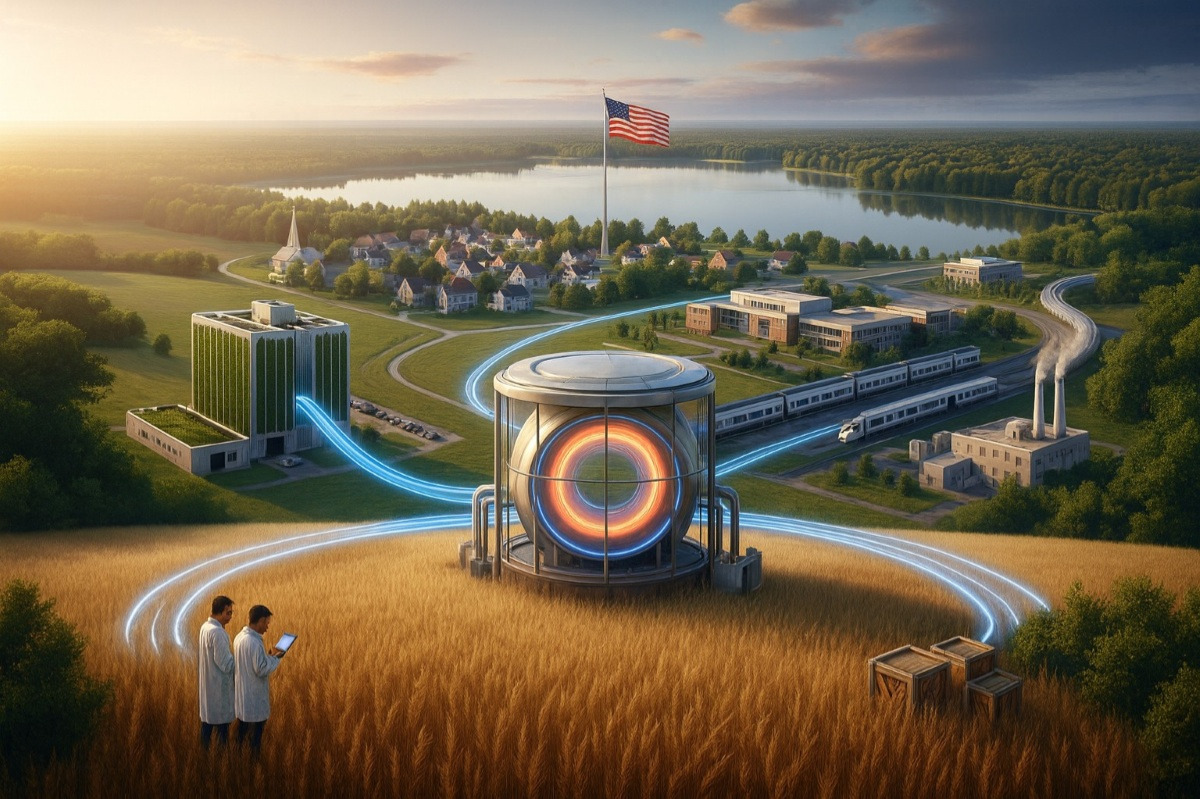
Fusion energy offers unparalleled advantages that protect America's strategic interests. Unlike fossil fuels, fusion produces zero carbon emissions. Furthermore, unlike current nuclear fission reactors, there is no radioactive waste. A single fusion plant could generate enormous amounts of electricity from plentiful fuel sources such as hydrogen, effectively ending the threat of energy shortages in a world demanding more power every day.
Critics have long sought to diminish the arrival of nuclear fusion energy, but recent breakthroughs have made its progress inevitable. Experts say the National Ignition Facility's achievement of creating a net gain in energy output has moved fusion from theoretical science to simply an engineering challenge. As a result, significant private investment is being made in this technology, with companies promising viable commercial fusion reactors within five years.
By creating a dedicated office focused on commercialization rather than pure research, the president aims to not only accelerate America's path to operational fusion power plants but to lead the world in harnessing this crucial source.
The reader may ask, "Why the urgency?"
Whichever nation first commercializes nuclear fusion technology has an enormous strategic advantage. That is why China is racing to win this contest. The Chinese recognize that the nation that succeeds in harnessing fusion energy will dominate global energy markets and create millions of jobs. Fusion energy will also reduce dependence on foreign energy imports, so the nation that succeeds has much to gain.
The president's reorganization directive reflects his appreciation of what is at stake. Rather than supporting incremental advances in this field, he wants breakthrough innovations that could create energy dominance. That success requires sustained commitment, and this White House is sending a message to the public and private sectors: we intend to win this race; coming in second place endangers America's future.
Lawrence Kadish serves on the Board of Governors of Gatestone Institute.