









For President Donald J. Trump, it doesn't take another 9/11 attack on the United States to strike at the head of a snake.
His preemptive assault on the world's leading state sponsor of terrorism, Iran, recognizes the stark reality that the ruling ayatollahs and their Islamic Revolutionary Guard Corps have not only sworn to destroy the State of Israel but seek to dominate the entire Middle East, from Yemen to Syria and beyond. They have slaughtered their own citizens, murdered American military personnel, and encouraged and funded acts of terror worldwide.
Despite Trump's efforts to engage in diplomacy, it was clear from the start that the terrorists of Tehran were never going to accede to peace. They would not have stopped until their nuclear-tipped ballistic missiles had left a smoking mushroom cloud over Tel Aviv, and Riyadh would probably have been not far behind.
While the world has been riveted by the strikes and counterstrikes across the Middle East, what has not received sufficient attention is what previous presidential administrations left Trump: an aging U.S. Navy fleet that should be far stronger to confront America's adversaries. Fortunately, it is the extraordinary bravery and professionalism of our sailors and aviators that make up the difference.
Yet here is a chilling fact about America's ability to project military power. The U.S. Navy's Nimitz-class aircraft carriers are about to turn 50 years old. While there have been crucial upgrades over the decades, the "tip of the spear" of our naval fleet is half a century old. With it taking years to fund, design, and build a nuclear-powered aircraft carrier, previous administrations had a responsibility to recognize the threats facing our nation and act accordingly.
Not surprisingly, the Obama White House offered a confusing vision for America's aircraft carriers.
One analysis reports:
"When the Obama administration in 2014 proposed prematurely to retire Truman's sister ship USS George Washington, Congress overrode the decision and added billions of dollars to the Navy's budget to keep Washington in service."
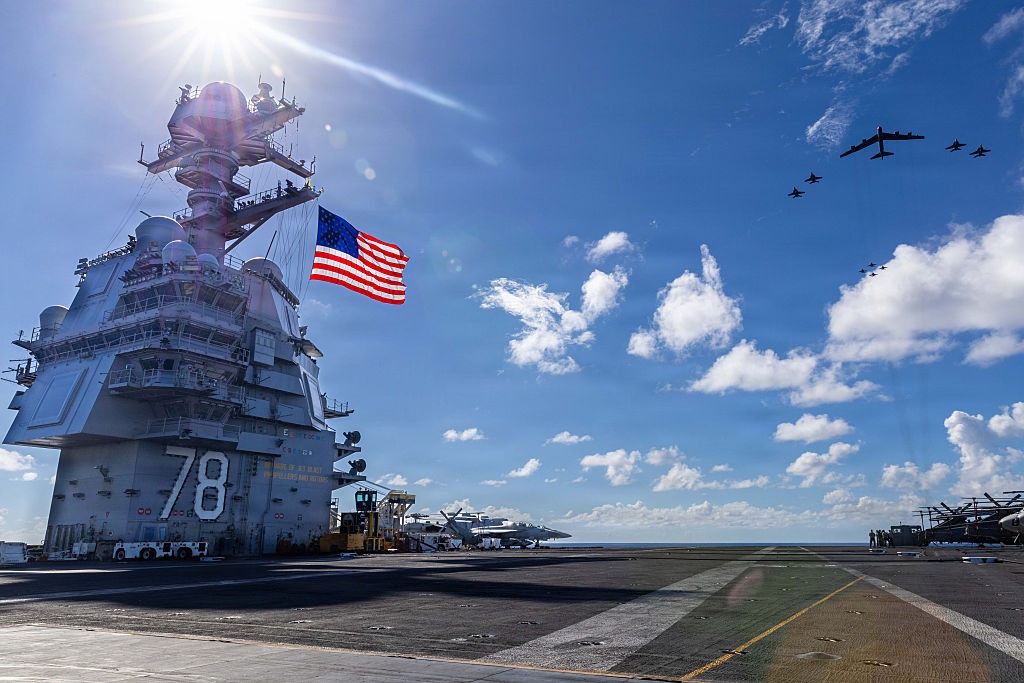
Then the Obama administration finally authorized a new class of carrier named for President Gerald Ford, but the management allowed for a carrier design so flawed that some sailors have told reporters they are disgusted with the USS Gerald R. Ford's chronic issues to the point where they would rather leave the service than reenlist. A second Ford-class is still under construction, which means the aging Nimitz-class carriers will continue to shoulder the full weight of our national interests for the foreseeable future.
Military analysts will continue to debate the role of the carrier in 21st-century warfare, as they are enormously expensive to build and equally expensive to operate. Still, Rear Admiral Michael Donnelly was recently quoted as saying that "carriers are the linchpin of everything we do in naval aviation." One would then have to acknowledge that having half-century-old warships defend American democracy is simply unacceptable.
Lawrence Kadish serves on the Board of Governors of Gatestone Institute.