








Developing nuclear fusion energy -- which will be indispensable to generate the enormous amounts of energy that will soon be needed for AI, data centers, quantum computing, and to prevent the Communist Chinese Party from overtaking the United States as this century's global superpower –- is fast making progress. Whoever has the best AI – which realistically can only be fueled by limitless quantities of clean, inexpensive energy – will be the country able to win any war with autonomous drones and other robotics. If we do not develop them, China will – and is already well on the way.
Public–Private Partnerships for Nuclear Fusion Energy
The U.S. Department of Energy, which has launched a new stand-alone Office of Fusion, is presenting a U.S. fusion energy program to overtake China's. Energy Secretary Chris Wright recently released a "Fusion Science & Technology Roadmap," and announced plans to increase federal collaboration with the private sector while using AI to help accelerate research.
The Department of Energy announced $134 million in funding for two programs designed to secure U.S. leadership in new nuclear fusion technologies.
Washington expects to invest an additional $220 million in research.
An additional fusion program budget for FY2026 has been increased to just under a billion dollars.
The Smart Money: Public-Private Partnerships
American private companies have attracted billions in fusion energy investment. Firms such as Commonwealth Fusion Systems, TAE Technologies, Helion Energy, and others are pursuing different approaches to commercial fusion. Most are targeting commercially viable pilot fusion plants by the 2030s.
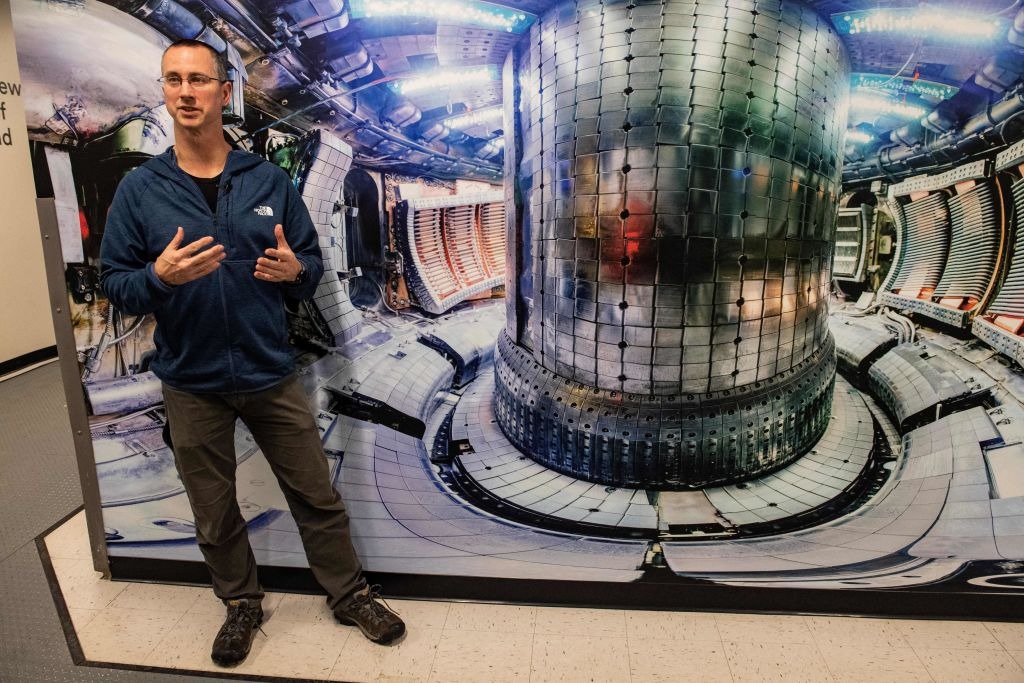
Commonwealth Fusion, a spin-out from MIT, demonstrated record-breaking high-temperature superconducting magnets, which is a critical technology, and is now building a compact tokamak.
Helion Energy, backed by a $375 million investment from OpenAI CEO Sam Altman, has signed a landmark power-purchase agreement with Microsoft, targeting delivery of fusion electricity by 2028. They are literally putting their future on the line to show real results.
Next-Gen Fusion Scientists — American universities and national research labs have put their money into expanded fusion research programs, training Next-Gen physicists and engineers, and building new test facilities. You do not do any of this unless you are serious about the huge future of fusion energy as the next great step in the 21st century's great electronic revolution.
The Fusion Agenda
In addition to the Gatestone essays that have been picked up by leading fusion advocacy groups, including the major lobbying group in Washington, D.C., many have populated the Internet with focused messaging to explain the advantages of fusion energy to the public, policymakers, and investors.
As US House Speaker Thomas "Tip" O'Neill once said, "all politics is local." There has been a special focus on those regions of the country that can provide the most exceptional opportunities for the fusion energy boom. Facebook, LinkedIn and other social media platforms have reached tens of thousands of both voters and potential investors with a call to action that urges additional federal funding to accelerate developing fusion energy in the race to beat China in achieving this goal.
Fusion energy has spent decades being written off as "always 30 years away." Not anymore. "Fusion power," the Boston Globe noted, "still may save the world. It's the Holy Grail of clean energy."
Its ascendancy is well underway.
Lawrence Kadish serves on the Board of Governors of Gatestone Institute.