








Next week, US President Donald Trump is expected to announce the Board of Peace for the Gaza Strip as part of the second phase of his 20-point plan to end the Israel-Hamas war. "The board, which will be chaired by Trump and include around 15 world leaders, will supervise a still-to-be formed Palestinian technocratic government and oversee the reconstruction process," according to the American media outlet Axios. The Board of Peace representative on the ground will be former United Nations envoy to the Middle East Nikolay Mladenov.
The Board of Peace is an international transitional body mandated by UN Security Council Resolution 2803 in November 2025 to support the administration, reconstruction and economic recovery of the Gaza Strip in the aftermath of the October 7, 2023 war, which erupted after the Hamas-led attack on Israel's southern communities. On that day, more than 1,200 Israelis and foreign nationals were murdered and more than 3,400 wounded.
The Board is empowered to establish a committee of Palestinian technocrats to manage the day-to-day governance of the Gaza Strip and a temporary multinational peacekeeping force to ensure implementation of Trump's plan. According to the UN resolution, the members of the "Board of Peace" will work to "establish a temporary International Stabilization Force (ISF) in Gaza."
"The ISF shall work with Israel and Egypt, without prejudice to their existing agreements, along with the newly trained and vetted Palestinian police force, to help secure border areas; stabilize the security environment by ensuring the process of demilitarizing the Gaza Strip, including the destruction and prevention of rebuilding of the military, terror, and offensive infrastructure, as well as the permanent decommissioning of weapons from non-state armed groups."
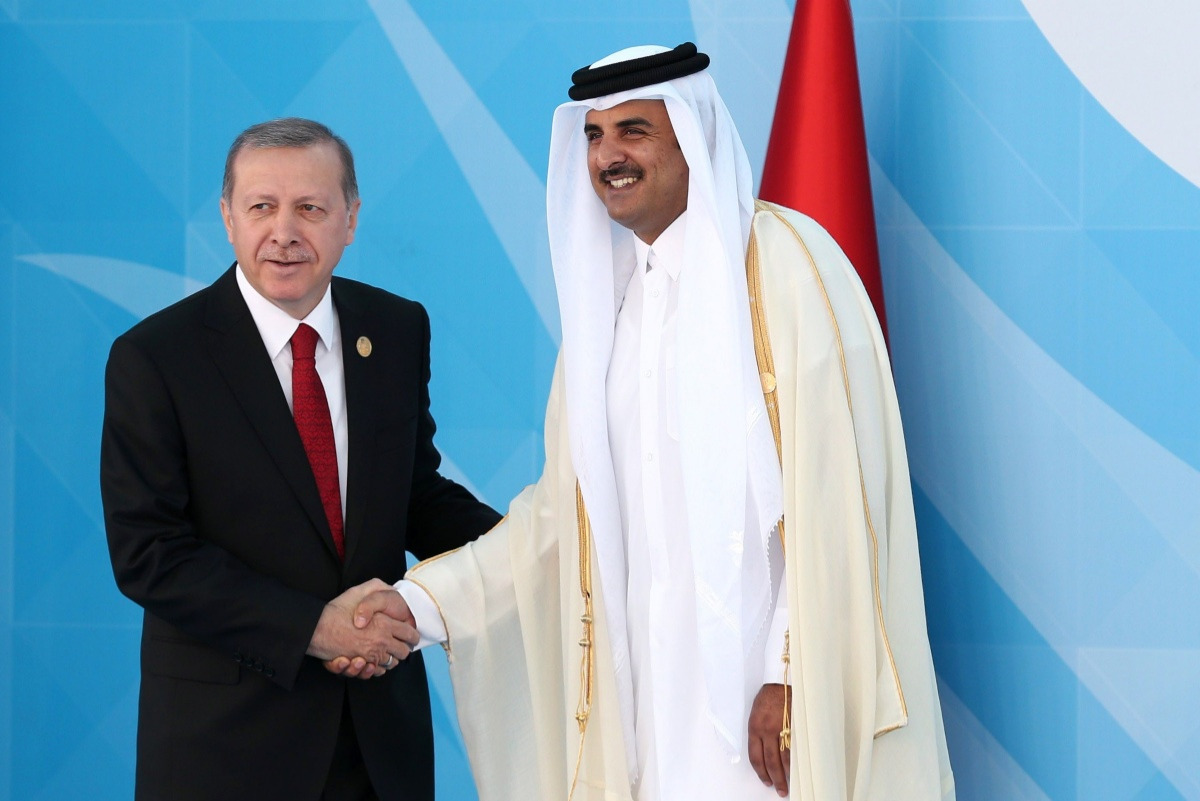
Trump's "Board of Peace" will reportedly include countries such as Turkey and Qatar. Both countries, like Hamas, are followers of the ideology of the Muslim Brotherhood. Its motto is:
"Allah is our objective; the Prophet is our leader; the Quran is our law; Jihad is our way; dying in the way of Allah is our highest hope."
Both Turkey and Qatar have long been providing financial and diplomatic aid to Hamas.
"Qatar is at the top of funding terrorism worldwide, even more than Iran," according to Udi Levy, former head of a Mossad unit dealing with economic warfare against terrorist organizations and countries that sponsor terrorism.
Many Hamas leaders and activists, who safely sat out the war in the luxurious comfort of Turkey and Qatar, have no interest in seeing Hamas removed from power. Qatar and Turkey, in addition, are hardly likely to participate in any attempt to disarm Hamas or destroy its military and terror infrastructure in the Gaza Strip.
The Meir Amit Intelligence and Terrorism Information Center noted:
"Turkey, under the leadership of President Recep Tayyip Erdogan, is one of Hamas's most important strategic allies, especially since the violent events of the Mavi Marmara flotilla in 2020. Turkey hosts senior Hamas figures, some of whom have received Turkish citizenship, and provides political, diplomatic and propaganda support, as well as economic and humanitarian assistance.
"Hamas has established one of its most important overseas centers in Turkey, primarily operated by prisoners released in the Gilad Shalit exchange deal of 2011. It uses Turkey to plan terrorist attacks and transfer funds to finance terrorist activities inside Israel, in Judea, Samaria and the Gaza Strip, and to raise and launder money in support of its terrorist operations, including the October 7, 2023, attack and massacre."
Documents seized by the Israel Defense Forces during the war revealed extensive cooperation between the Qatari government and Hamas, including secret financial support and coordinated efforts to obstruct US-led peace initiatives between Israel and the Arab states. In a 2019 communication, Hamas leader Ismail Haniyeh described Qatari funds as the group's "main artery," with financial transfers totaling millions of dollars each month. In one letter, Haniyeh informed another Hamas leader, Yahya Sinwar, the mastermind of the October 7 massacre, that the emir of Qatar had agreed to covertly fund the group's armed "resistance" efforts against Israel. "So far, $11 million has been raised by the emir for the [Hamas] leadership," the document states.
In addition, during the Gaza war, Qatar's state-owned Al-Jazeera television empire served as Hamas's propaganda platform. According to a study conducted by the Meir Amit Intelligence and Terrorism Information Center:
"Al-Jazeera gave Hamas's political and military leadership a platform for conveying their messages and promoted Hamas's psychological warfare by showing videos of hostages, exclusive broadcasts of 'ceremonies' for the release of hostages and pictures of Hamas terrorists attacking Israeli forces."
The study and comments discovered by the Israeli army also found that Hamas and Palestinian Islamic Jihad members worked as Al-Jazeera photographers and correspondents.
With members such as Qatar and Turkey, it is difficult to see how Trump's "Board of Peace" will be able to achieve even an impersonation of peace, security, and stability in the Gaza Strip.
Egypt, apparently another member of the Board, recently tried to claim that Trump's plan does not call for Hamas disarmament, but only for collecting and handing over weapons as part of understandings among various Palestinian factions, including Hamas. Egypt, in other words, opposes the use of force to disarm Hamas and other Palestinian terror groups operating in the Gaza Strip. Hamas leaders, meanwhile, have repeatedly made it clear that they will not agree to lay down their weapons unless a Palestinian state is established.
The Board of Peace announcement is planned at a time when Hamas is continuing to rearm, regroup, and quietly reassert its control over areas it governs in the Gaza Strip. The Trump administration should have conditioned the establishment of the Board and reconstruction on Hamas first laying down its weapons and relinquishing control of Gaza.
Under the current circumstances, we seem headed toward a situation where the Board of Peace and the proposed Palestinian technocratic government will operate in parallel with Hamas, not instead of it. Recall, as well, that no Palestinian would dare to join any governing body without Hamas's approval.
Meanwhile, Hamas has already rejected the idea of any international forces being deployed in the Gaza Strip, warning:
"Assigning the international force with tasks and roles inside the Gaza Strip, including disarming the resistance, strips it of its neutrality, and turns it into a party to the conflict in favor of the [Israeli] occupation."
If Hamas wanted to surrender its weapons and cede control of the Gaza Strip, it could have done so long ago. Hamas, clearly, has no plans to go away and views itself as an integral part of any post-war arrangement in the Gaza Strip.
For the Board of Peace to succeed, it must first issue a clear ultimatum to Hamas and all the terror groups in the Gaza Strip to lay down their weapons by a certain date and then disappear from the scene. These groups, like ISIS, have nothing constructive to offer as political, military, or civilian entities: their stated goal is to destroy Israel and bring more death and destruction on the Palestinians. Reminder: Hamas and its allies do not believe in any peace process with Israel. For them, according to their conditioning as well as Article 13 of the 1988 Hamas Covenant, Jihad (holy war) remains the only option on the table:
"There is no solution for the Palestinian question except through Jihad. Initiatives, proposals and international conferences are all a waste of time and vain endeavors."
No Board of Peace or International Stabilization Force will succeed so long as the Palestinian terrorists are still roaming the streets. These terrorists must be defeated, destroyed, and forced to surrender. Unfortunately, that is the only way to transform the Gaza Strip into a terror-free territory and prevent more violence and bloodshed.
From the look of the countries reportedly involved, Trump's Board of Peace seems more like an army of Israel's enemies being giddily planted on its border, and delighted to sign all sorts of accords, both for the immediate benefits and the opportunity, after Trump leaves office, to tear them up and try again to rid the world of the one country, Israel, that they never wanted near them in the first place.
Khaled Abu Toameh is an award-winning journalist based in Jerusalem.
 Bettina