








The U.S. Department of Commerce has decided to allow American data centers to buy Chinese equipment, thereby permitting Beijing to steal as much as it wants and perhaps remotely control or take down these critical facilities. Moreover, Commerce recently has not implemented a number of other obviously needed restrictions on Chinese technology and Chinese companies.
The Trump administration's effort to protect American infrastructure from China has collapsed. It now appears Beijing has a veto on American tech policy.
On February 12th, Reuters reported the Trump administration "has shelved a number of key tech security measures aimed at Beijing."
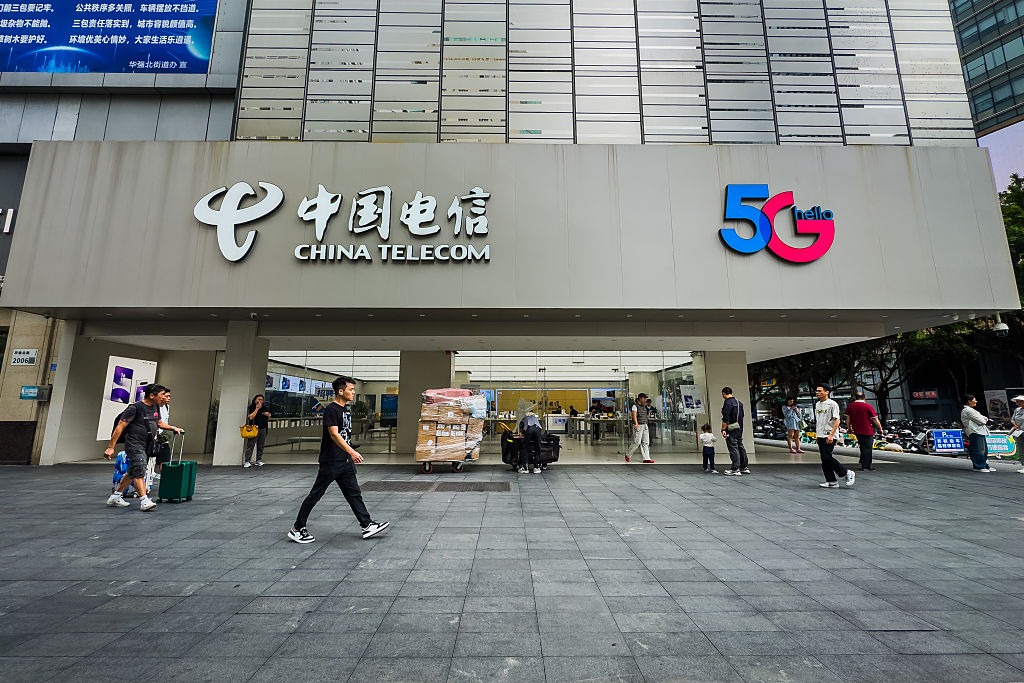
The Commerce Department, in addition to not barring Chinese equipment from data centers, has decided not to impose a ban on the U.S. operations of Chinese state-owned China Telecom.
Other measures, the news site noted, that have been put on hold include a proposed ban on the internet businesses of two Chinese giants, China Unicom and China Mobile. Moreover, the administration will not prohibit Chinese electric trucks and buses from U.S. roads.
In general, Commerce has shifted its tech-security efforts away from China. Reuters states that late last year "leadership instructed staffers in the office charged with policing foreign tech threats to 'focus on Iran and Russia.'" Last month, Commerce replaced the head of this office with a political appointee.
Similarly, last year the administration did not, as it was contemplating, place critical export controls on software.
The Commerce Department says it is using its authority to "address national security risks from foreign technology, and we will continue to do so."
Commerce, as many report, is following President Donald Trump's apparent orders to go easy on China.
"At a moment when we are desperately trying to remove ourselves from Beijing's leverage over rare-earth supply chains, it is ironic that we're actually letting Beijing acquire new areas of leverage over the U.S. economy—in telecoms infrastructure, in data centers and AI, and EVs," said Matt Pottinger, deputy national security advisor during Trump's first term, to Reuters.
As a result of the administration's inaction, America's data centers could become "remotely controlled islands of Chinese digital sovereignty," according to David Feith, who served in both Trump administrations. The administration, he says, is building "strategic vulnerabilities into our AI and energy backbone."
There is no secret why this is happening. Trump does not want to rile Chinese leader Xi Jinping before his coveted April summit in Beijing.
More important, Beijing has weaponized its position in a critical supply chain. "The United States today is in a supplicant position to the People's Republic of China because the Chinese have fixated on dominating the strategic resource bottlenecks of the global economy, specifically in rare earth mineral resources," said Brandon Weichert, senior national security editor at 19FortyFive.com, to Gatestone. "So long as modern technology relies upon these resources—and China continues to dominate them—the United States government will accommodate Beijing at all costs."
There are two solutions to reduce this critical vulnerability.
First is to end China's near-monopoly in rare earths. As Weichert says of America's failure to protect its technology, "This trend will continue until Congress and the Pentagon and Wall Street wake up, realize the old globalized system is dead, and embrace a Manhattan Project for securing rare earth minerals of our own."
To the president's credit, his administration has embarked on such a project with multiple initiatives. For instance, Trump is moving at "Trump speed" in signing rare-earth deals with others, most notably the $8.5 billion pact inked October 20 when Australian Prime Minister Anthony Albanese visited the White House, the agreements with Thailand and Malaysia signed October 26, and the one in Japan two days later. The G-7 announced a production alliance on October 31.
Moreover, America is working on technologies, such as those being developed at the University of Texas at Austin, that "increase domestic supply and decrease reliance on costly imports." James Tour and Shichen Xu of Rice University are working on recycling.
These new methods could crack Beijing's firm hold on processing: China processes 92% of the global output of these minerals.
Because of these and other developments, Treasury Secretary Scott Bessent could say late last year that China's leverage would last no more than 24 months.
The second solution involves hitting the Chinese regime harder. China has never been more trade-dependent in its history. Xi's only viable plan to rescue a quickly faltering economy is to export more, so he is critically reliant on the American market.
American consumers account for about 34% of global household consumption. In 2024, America accounted for 29.8% of China's merchandise trade surplus of $992.2 billion. Last year, this almost certainly declined — China's exports to the U.S. fell 25.2% during the first 11 months — but China's reliance on America is still so large that its economy could not survive without the profits from American trade.
Trade-surplus countries, such as China, have little ammunition in trade wars. They are the ones with everything — their surpluses — to lose. Trump should remember that the next time he refuses to keep out China's Trojan Horse products and services, such as the internet services above.
Trump does not have to allow Chinese penetration of the critical infrastructure of this century. He just needs to play the high cards.
Gordon G. Chang is the author of Plan Red: China's Project to Destroy America, a Gatestone Institute distinguished senior fellow, and a member of its Advisory Board.
 Clive Delmonte