









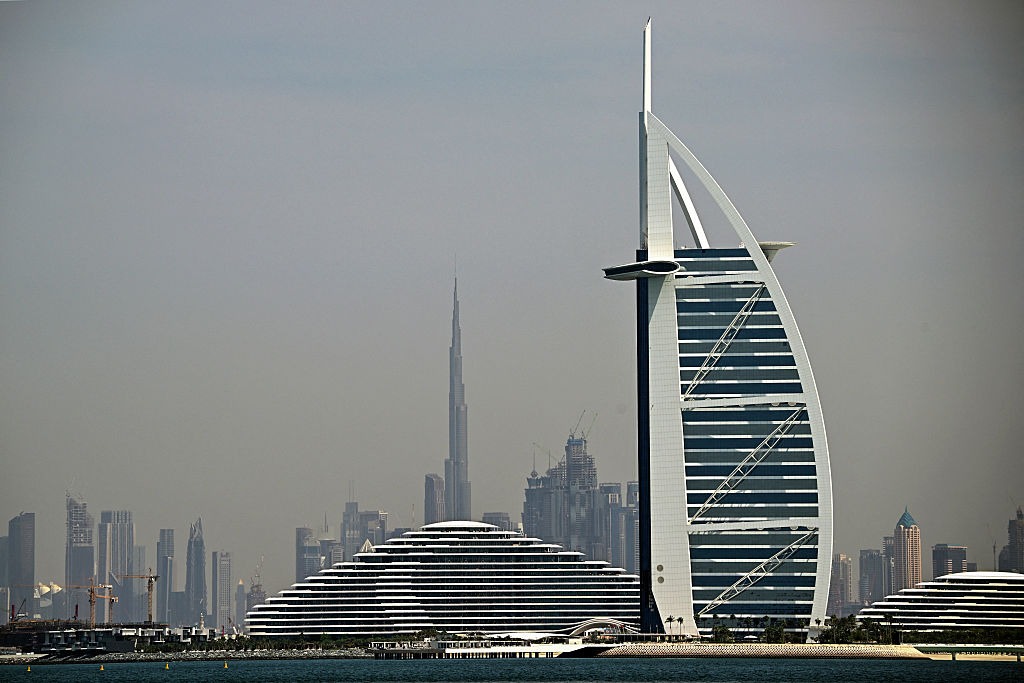
At a time when much of the Middle East remains trapped between revolutionary slogans and recurring violence, the United Arab Emirates has chosen a different path: order over chaos, statehood over militias, modernity over ideological ruin. For years, the UAE has worked to build a future-focused nation anchored in innovation, economic dynamism, strategic openness, and institutional strength. It has sought to project the image — and the reality — of an Arab state confident enough to embrace progress, invest in peace, and defend stability.
That is precisely why Iran and its proxies find the UAE so intolerable.
The success of the Emirates is not merely economic. It is political, strategic, and civilizational. It demonstrates that an Arab country does not need to surrender to the logic of militias, sectarian intimidation, or permanent confrontation in order to be strong. It can be sovereign, modern, secure, and globally connected. It can invest in opportunity instead of grievance. It can build instead of destroy. That example is a direct rebuke to the worldview promoted by the Iranian regime and the armed networks it has spent decades cultivating across the region.
Recent events have made that reality impossible to ignore. The dismantling by Emirati authorities of a terrorist network allegedly linked to Iran and Hezbollah is not simply a law-enforcement success story. It is the exposure of a method. The network reportedly operated under fictitious commercial cover and was allegedly involved in money laundering, terrorism financing, and activities threatening the country's national security and financial stability. This is not incidental. It reflects the deeper logic of Iranian power projection: not merely open confrontation, but covert penetration; not only military pressure, but financial infiltration; not just proxies on battlefields, but shadow networks working quietly inside sovereign states.
In other words, Iran's aggression is not confined to missiles, drones, or inflammatory rhetoric. It extends into the commercial sphere, the banking sphere, and the strategic vulnerabilities of the modern state. The aim is not only to intimidate, but to corrode. To create insecurity from within. To force governments to operate under the permanent shadow of destabilization.
What the UAE has shown is that it will not yield to that pressure.
This is what makes the Emirati response so important. The UAE has not retreated into panic. It has not allowed aggression to derail its national ambitions. It has not abandoned its model of development, its investment climate, or its strategic commitment to regional stability. Instead, it has responded as a serious state should respond: by defending its citizens, protecting its territory, reinforcing its institutions, and continuing to move forward.
That is resilience — not as a slogan, but as a governing doctrine.
Under international law, every sovereign state has the right, and indeed the obligation, to defend its population and territory against armed threats, covert subversion, and terrorist penetration. The UAE's determination to protect its infrastructure, its economy, and its public safety is therefore not an act of excess. It is an affirmation of sovereignty and legality. A state does not need to apologize for defending itself. Nor should it be expected to tolerate networks designed to weaken its security from within.
This is where the credibility of His Highness Sheikh Mohamed bin Zayed Al Nahyan becomes central. Under his leadership, the UAE has become one of the clearest examples in the Arab world of disciplined strength. He has guided the country with a strategic vision that rejects both passivity and recklessness. The Emirati model under Mohamed bin Zayed is not built on theatrical rage or ideological posturing. It is built on patience, institutional seriousness, technological advancement, and a clear understanding that national strength comes not only from deterrence, but from the ability to build, endure, and inspire confidence.
He has driven the UAE into modernity without allowing it to lose its strategic bearings. He has strengthened the state without allowing extremism to define its posture. He has shown that leadership in the modern Middle East requires more than rhetoric: it requires composure under pressure, clarity of purpose, and the ability to transform national ambition into durable policy.
Nowhere is that clearer than in the UAE's commitment to peace with Israel.
For the Iranian regime and its regional clients, normalization, coexistence, and regional cooperation are intolerable because they threaten the very foundations of their political narrative. Peace weakens the appeal of revolutionary confrontation. Prosperity undercuts the politics of grievance. Partnership exposes the bankruptcy of endless militancy. The Abraham Accords were therefore never merely diplomatic symbolism. They represented a strategic reordering of the region — one in which Arab states could openly choose cooperation, innovation, trade, and stability over perpetual conflict.
The UAE has not allowed Iranian aggression to reverse that choice.
That matters profoundly. Because the true answer to Tehran's model is not simply retaliation. It is the construction of an alternative order: one based on sovereignty, lawful statehood, economic growth, and pragmatic peace. Iran exports coercion. The UAE invests in connectivity. Iran relies on proxies and destabilization. The UAE has chosen development and strategic partnership. Iran thrives on fear. The UAE continues to build a future.
That is why the Emirates deserves recognition. Not only for dismantling covert threats and defending its citizens, but for refusing to let intimidation dictate its destiny. The country's message is unmistakable: the path to peace will not be abandoned, the march toward modernity will not be halted, and a sovereign Arab state has every right to defend itself while continuing to pursue prosperity.
In a region too often dominated by arsonists, the UAE stands for something rarer and far more valuable: order, courage, legitimacy, and the conviction that peace is not weakness, but strength.
Robert Williams is based in the United States.
