








For decades, the world treated Greenland as a sentimental footnote in Arctic mythology rather than a linchpin in global security and modern technology. This was strategic negligence with real consequences.
By contrast, President Donald J. Trump saw what Europe could not, or perhaps would not: that Greenland is not a quaint curiosity; in the 21st century, it is an essential security asset and industrial necessity for the West. "Everything comes over Greenland. If the bad guys start shooting, it comes over Greenland," he said.
From the Arctic flight path of Russian and Chinese intercontinental ballistic missiles to the Arctic shipping lanes increasingly packed with Russian warships, Greenland's importance has surged.
The US purchase of Alaska from Russia in 1867 was also ridiculed as a "folly."
The European Union, sadly, still seems to be having trouble emerging from doctrinaire fantasies about its military preeminence, green transitioning, and the illusion that the "Great Replacement" of Europeans and their values -- by immigrants and their values -- is merely a "conspiracy theory." Instead, Europe is continuing to betray its industrial base and toss away strategic opportunities.
Greenland's geopolitical significance was obvious to Trump before it became fashionable to talk about the Arctic as a new theater of great-power competition. Unlike the Brussels bureaucrats who mock and ignore both President Trump and the potential danger, Trump recognized three facts early:
- Greenland constitutes a strategic military platform for defending both the Western Hemisphere and Europe, and for monitoring adversaries across the Arctic.
- Melting Arctic ice will open up sea routes that could redefine maritime aggression as well as opportunities for global commerce.
- Greenland sits atop some of the world's richest deposits of rare earth elements and critical minerals — materials essential for everything from electric vehicles to missiles and microchips.
In 2019, Trump formally raised the idea of acquiring Greenland from Denmark — not as an offbeat real estate idea, but as a strategic imperative for the United States and the West. Even if the political optics are clumsy, the logic is sound: keeping these assets out of Chinese or Russian hands -- as well as their ability to use the Arctic for nuclear and ballistic missile attacks on the West, not to mention integrating Greenland's assets into the Western supply chain -- is vital.
According to multiple sources, Greenland has deposits of rare earth minerals among the largest outside China, and hosts 25 of the 34 minerals deemed "critical raw materials" by the European Commission. Rare earth elements — neodymium, dysprosium, terbium — are essential for permanent magnets in electric motors, smart electronics, and defense systems such as radar and precision guidance of air assets. Today, China controls roughly 70% of global rare earth production and 90% of processing capacity, giving Beijing disproportionate leverage over the global tech supply chain.
Trump's push, no matter how undiplomatically articulated, was consistent with a straightforward reality: You cannot safeguard Western security or technological superiority if the strategic routes by land, sea and sky, as well as essential raw materials, are controlled by your adversaries.
Europe's positive response is most welcome. Prior to this week, for example, while the US had moved to secure mining investment — the Trump-era Export-Import Bank considered a $120 million loan to fund the Tanbreez rare earth mine in Greenland — European politicians were negotiating memoranda of understanding and long-term value chains that only delay real production.
The great European flaw -- from which it hopefully will soon recover -- is that its political, economic and industrial policies are rooted in wishful thinking rather than in hard material realities.
It was not always so. Europe for centuries led the way in upholding civil liberties, equal justice under law, and the values of individual liberty that spring from the Judeo-Christian tradition, the Reformation and the Enlightenment. Europe was once a leader in heavy industry: cars, steel, coal, and defense manufacturing. Today, Europe struggles to keep up with global competitors in sectors that require strategic minerals. Instead, the technocrats in Brussels fixate on ideological goals — often at odds with cultural and economic viability as well as industrial competitiveness.
The European Union's decision to phase out combustion engines by 2035 epitomizes this disconnect. In Brussels, electric vehicle (EV) mandates were hailed as a triumph of green policy. For many policymakers in France and Germany, it was a moral high ground: a cleaner planet, fewer emissions. What could possibly go wrong?
The scientific reality, alas, tells a more nuanced story. Electric vehicles produce zero tailpipe emissions, yet their environmental footprint is not the utopian "silver bullet" that most Europeans assume. EVs require extensive mining, processing, and battery production — all of which consume energy and raw materials, the application of which can be just as damaging to the planet even if sourced from half a world away.
Moreover, the claim that EVs solve particulate pollution is overstated: they still emit particles from tire and brake wear — and because they are heavier than traditional cars, non-tailpipe particulate concerns persist.
The European Parliament's own studies acknowledge the "environmental challenges throughout the life cycle of battery electric vehicles," noting that carbon footprints depend heavily on raw material extraction, production methods, and electricity sources.
Europe traded industrial strength for half-baked environmental virtue signaling, and now must source more and more critical materials — such as those found in Greenland — just to keep its green fantasies alive.
This disconnect highlights two core challenges:
- Europe lacks secure supply chains. Dependence on Chinese rare earth elements undermines strategic autonomy.
- Europe's industrial policies, driven by environmental ideology rather than material science, risk hollowing out its manufacturing base.
Meanwhile, Trump's America is not afraid to focus on where security for the West, chips for the West and rare earths for the West actually lie.
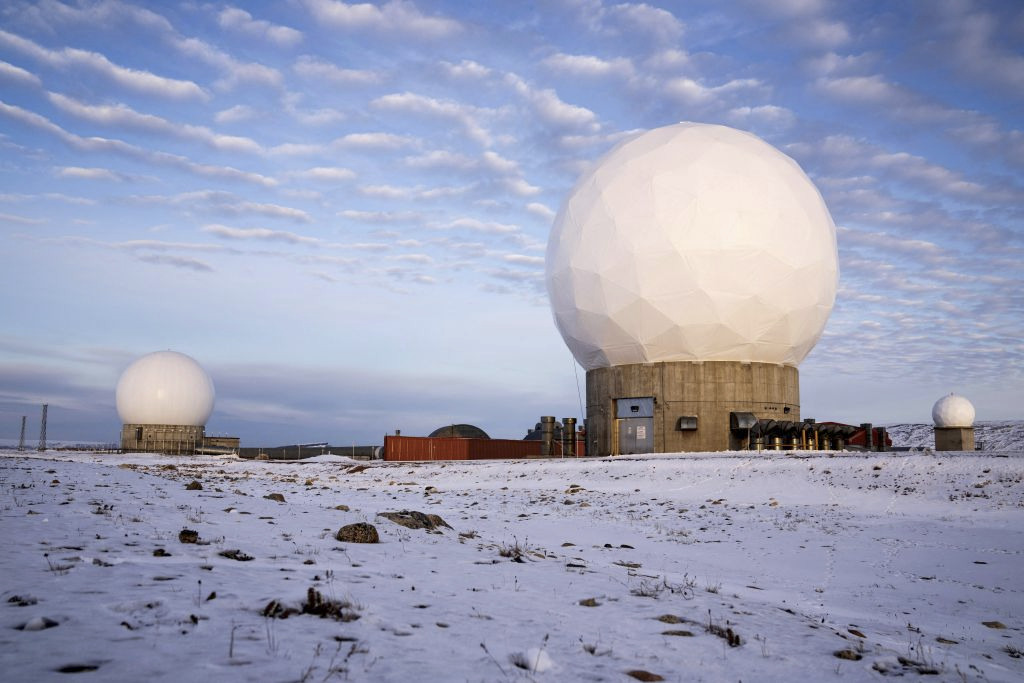
Today, international news outlets highlight Greenland's burgeoning role in great-power politics. Melting sea ice will open Arctic shipping lanes, and both Russia and China are increasing their Arctic presence. Greenland's geographic position — guarding the gateway between the Arctic and Atlantic — makes it invaluable for missile interception, military surveillance, and future naval operations.
Western analysts confirm what Trump grasped years earlier: Greenland is not remote; it is central. It lies at the intersection of climate change's strategic effects, great-power competition, and the global scramble for critical minerals.
Rather than laugh or dismiss Trump's interest as "absurd," European leaders might have asked a more serious question: Why was Trump so intent on it? Today we have answers — and they vindicate Trump's instinct.
From a geopolitical lens, the competition for Arctic influence is real. China, although at its closest point is 900 miles from the Arctic, quixotically brands itself a "near-Arctic state" and has sought a presence through scientific expeditions and infrastructure investments. Russia maintains military facilities. Europe's best move would be to allow the United States, which has both the will and the capability, to secure a foothold in Greenland that allows it, along with its allies, to shape and protect the future of the West.
Many Europeans, sadly, will remain content with soft power and diplomatic protests. In 2026, US Treasury Secretary Scott Bessent even suggested that European "weakness" justified increased American presence in Greenland -- a statement that, for all its bluntness, reflected Europe's default strategic vacuum.
Critics of Trump's Greenland policy often frame it as brash or impractical. Viewed objectively, it is grounded in three hard realities:
- Control of strategic geography matters in a multipolar world.
- Critical minerals are national security assets.
- Policies divorced from reality -- including the erosion of Western values by migrants, many of whom at best are conflicted about assimilating -- invite decline.
These are principles that any serious global power must recognize. Europe has yet to fully grasp them.
Rare earth elements power wind turbines, electric vehicle motors, fiber-optic communication, defense systems, and advanced semiconductors. China's dominance in rare earth processing is not a theoretical risk — it is a concrete vulnerability for Western economies. Greenland offers a chance to diversify the supply and break dependence on a self-declared enemy.
Trump's effort to involve the U.S. Export-Import Bank in financing Greenland's Tanbreez rare earth mine is evidence of an administration that connects mineral security to national security — a connection Brussels bureaucrats still struggle to make.
Europe's leaders, meanwhile, chase their vainglorious dreams. As their economies sink, these leaders still insist on green regulations, assuming that the raw materials their regulations require will be plentiful, without even first securing them, just as these leaders still keep believing -- or pretending to -- that millions of immigrants from a totally different culture will adopt the laws and values of the West.
To sustain EV production at scale, batteries require lithium, cobalt, nickel, and rare earth elements — yet Europe, lacking domestic sources, keeps relying on foreign supply chains that are increasingly unreliable.
This view appears to be a genuine strategic blind spot. While American policymakers debate hard choices over Greenland, European policymakers debate emission targets and bureaucratic carbon accounting. Those matters are not unimportant, but they are insufficient when divorced from the physical realities of production and supply.
Europe's obsession with ideology over industry has consequences:
- Loss of auto industry competitiveness as EV mandates make production more expensive and dependent on imported materials.
- Increased reliance on foreign sources, especially China, for critical inputs like rare earth elements.
- A strategic deficit in Arctic influence at a time when climate change may begin to reshape global trade routes.
Compare this with Trump's approach: bold, unapologetically strategic, and grounded in material interest. Trump did not simply call Greenland "important"— he acted. Whether through investment, diplomatic pressure, or territorial negotiation, his policy treats Greenland as what it is: a linchpin in the emerging Arctic century.
Greenland is not a romantic artifact from some explorer's diary. It is a geographic chokepoint with defense implications, a repository of minerals that will power future technologies, and a strategic fulcrum in the Arctic's geopolitical contest. Trump's focus on Greenland is not whimsy — it is realism.
Europe's dismissive reaction is more than incomprehension; it is symptomatic of a terrifying atrophy. While Brussels applauds itself for lofty climate goals and soft power diplomacy, Trump identifies what truly matters: power, resources, geography, and readiness to act.
In a world where strategic competition between the US, China, and Russia intensifies, Europe's fixation on ideological policies rather than material security reveals a profound misunderstanding of the geopolitical game. Trump saw past the fog of political correctness; Europe sadly still remains lost in it.
History will remember this period not for what Europeans dreamed, but for what was accomplished by those who understood the stakes. In the Arctic, and beyond, Trump is right -- and Europe, once again, is too vain to learn.
Pierre Rehov, who holds a law degree from Paris-Assas, is a French reporter, novelist and documentary filmmaker. He is the author of six novels, including "Beyond Red Lines", "The Third Testament" and "Red Eden", translated from French. His latest essay on the aftermath of the October 7 massacre " 7 octobre - La riposte " became a bestseller in France. As a filmmaker, he has produced and directed 17 documentaries, many photographed at high risk in Middle Eastern war zones, and focusing on terrorism, media bias, and the persecution of Christians. His latest documentary, "Pogrom(s)" highlights the context of ancient Jew hatred within Muslim civilization as the main force behind the October 7 massacre.
 R van Druten