








"Tell me what is your nightmare and I will tell you who you are!" The quip attributed to Freud may be apocryphal, but I think it contains a grain of truth.
I don't know what your nightmare is, but I have known mine since I bought my first newspaper in Ahvaz as a child. It goes like this: I am up in the morning, the sun is shining, the birds are chirping, and breakfast is ready. But I suddenly realize that something is missing: the day's newspaper.
Like most addictions over the years, my being hooked on reading newspapers grew and grew until, at one point, Asharq Al-Awsat provided me with an average of 15 newspapers in four languages every day.
To me, circulation of information in a society is like that of blood in the human body, essential for staying alive.
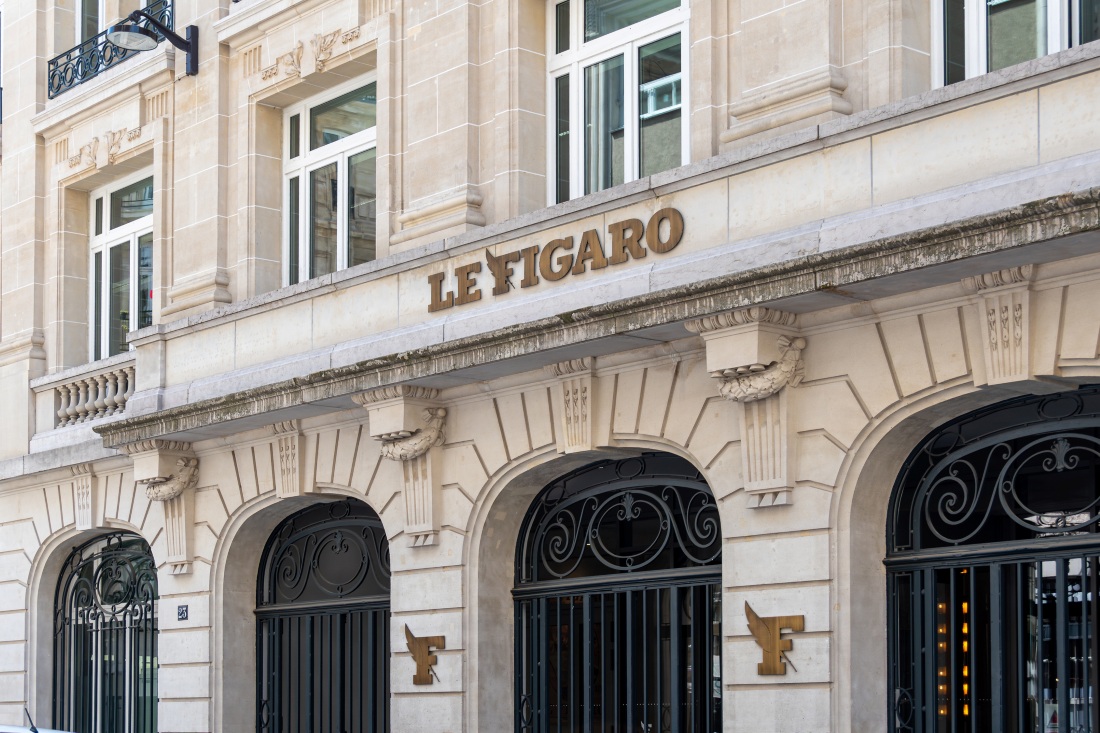
I was reminded of the horror of a day without a newspaper recently when French daily Le Figaro unveiled plans to mark its bicentenary covering 200 years of journalism that helped shape what Frenchness is today.
In those years, France experienced the return of monarchy after the fall of the Napoleonic empire, a republican interregnum closed by the second Napoleonic empire, a third republic, the Paris Commune revolution, the humiliating defeat in the Franco-Prussian war, the loss of Alsace-Lorraine, two world wars, a series of colonial wars, and a fourth and a fifth republic.
Throughout those tumultuous decades, Le Figaro remained a compass, always trying to prevent the pendulum of history from getting stuck in one extreme or another. The unwritten rule was that there is no absolute truth engraved in marble forever and that the main task of a newspaper is to challenge certainties, affirm shared values and praise human achievements.
Having started as a satirical publication, Le Figaro took its name from the hero of several plays by Beaumarchais, including "The Barber of Seville" and "The Sinful Mother".
The paper became an advocate of what the English call "common sense" and the Germans "collective wisdom". Unlike elitist ideologies that reserved virtue for a clan, a class or a coterie, Le Figaro addressed itself to the "ordinary" citizens.
Needless to say, that position exposed Le Figaro to criticism from both the left and the right. The left branded Le Figaro as "the mouthpiece of counter-revolutionaries" while the right castigated it for reflecting all views, including some of the left. Le Figaro provided a tribune for many of France's writers, philosophers, and of course, reporters, Émile Zola, Théophile Gauthier, Raymond Aaron and François Mauriac among them.
Thinking of Le Figaro and its motto "Without harsh criticism there is no flattering praise", I was reminded of other newspapers that, in other countries and under many different circumstances, proved my amateurish pet theory that a single newspaper can set or reset the course of a nation's history and shape its character.
I think the London Times, founded even earlier than Le Figaro in 1788, did that for the British Empire. It played a crucial role in bringing the English, the Scots, the Welsh and the Ulstermen together as a five-in-one nation and established a standard form of the English language first developed by lexicographer Samuel Johnson.
Far away in Japan, the daily Asahi Shimbun ("Rising Sun"), founded in 1879, played a similar role. It became a tribune for reformers in the Meiji era that blended a patchwork of shogunates into a modern western-style nation-state. It helped establish a standard form of the Japanese language, disseminated the narrative of the Nippon family and forged a national identity that stood the test of a century of competition, clashes and catastrophes in contacting the outside world.
In our own region, I think Al-Ahram, created by two Lebanese Christian brothers in Alexandria in 1876, also played a key role in forging a distinct Egyptian-Arab identity away from the Ottomanized khedivate under a Turkish-Albanian reigning family. The paper also had a major role in disseminating a standard form of Arabic that found an audience beyond Egypt's borders. Even under Nasserite rule, when it became a mouthpiece of pan-Arabism, the paper, especially under Hassanein Heykal's editorship, never became a mere propaganda sheet.
In Turkey, the daily Cumhuriyet ("The Republic") played a similar role in helping create a Turkish nation from the debris of the Ottoman Empire. With Ataturk's reforms, a new Turkish language was invented with a new Latin alphabet and the purge of more than 10,000 Arabic and Persian words and the borrowing of thousands from French.
Cumhuriyet shared the values of moderation, common sense and respect for human dignity that had contributed to the success of Le Figaro and The Times in France and Britain.
Under military dictators and the neo-Ottoman hegemonic rule, the paper suffered shutdowns and the assassination of eight of its journalists and the imprisonment of others.
In Iran, the daily Kayhan ("Universe") played a similar role until the 1979 Islamic revolution put the nation on a different trajectory. It was created in 1942 with a loan from the Shah to fight pro-Soviet and pro-British papers published during Iran's occupation by the Allies. Its crucial role was highlighted in 1945-46 in the campaign to force Soviet troops out of northwestern Iran.
Over the decades, Kayhan established a new style of journalism and helped popularize hundreds of new words and terms. It also upheld moderation, diversity and common sense as milestones in the bumpy road of Iranian journalism.
In Germany, an important role was played by the weekly magazine Der Spiegel, founded by a British army officer John Seymour Chaloner in the British occupation zone in Hamburg. Der Spiegel, soon taken over by the now legendary Rudolf Augstein as editor-in-chief, had the seemingly impossible task of wiping off all traces of the Nazi nightmare, helping restore the German people's self-esteem, and prepare it for joining the family of democratic nations. The magazine also initiated what became known as investigative journalism and exported it as a style to the rest of the world.
Last, but not necessarily the least, we have El Pais ("The Country") in Spain, which was launched six months after the death of General Francisco Franco in 1976, with Juan-Luis Cebrian as editor-in-chief, when Spain appeared to be on the brink of another civil war between Franco nostalgics backed by the Church, and leftist parties returning from exile and thirsty for revenge.
El Pais traced a third path: with constitutional monarchy towards democracy and a return to the European family and membership of both the European Union and NATO.
Yes, a single newspaper has and still can help a nation find its way out of historic dead-ends or negotiate a rough patch traced by circumstances. Next time you pick up a newspaper, remember that it could be something more than a wrapper for your fish and chips.
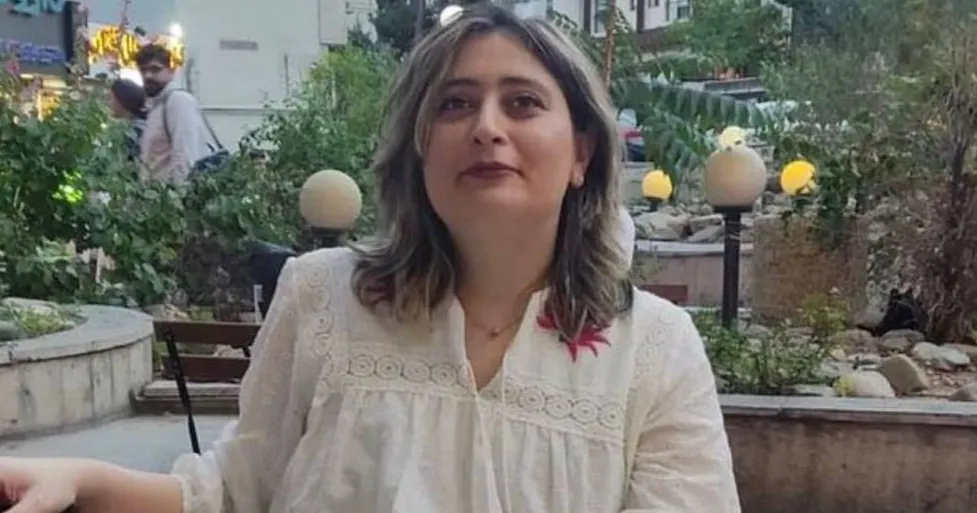
Amir Taheri was the executive editor-in-chief of the daily Kayhan in Iran from 1972 to 1979. He has worked at or written for innumerable publications, published eleven books, and has been a columnist for Asharq Al-Awsat since 1987.
Gatestone Institute would like to thank the author for his kind permission to reprint this article in slightly different form from Asharq Al-Awsat. He graciously serves as Chairman of Gatestone Europe.