








After the Iranian regime's recent brutal crackdown on protesters — marked by mass murders, mass arrests, torture, and sweeping internet shutdowns designed to hide the scale of the violence — one might reasonably have expected the international community that piously lectures everyone about human rights and protecting civilians to erupt in outrage and mobilize immediately.
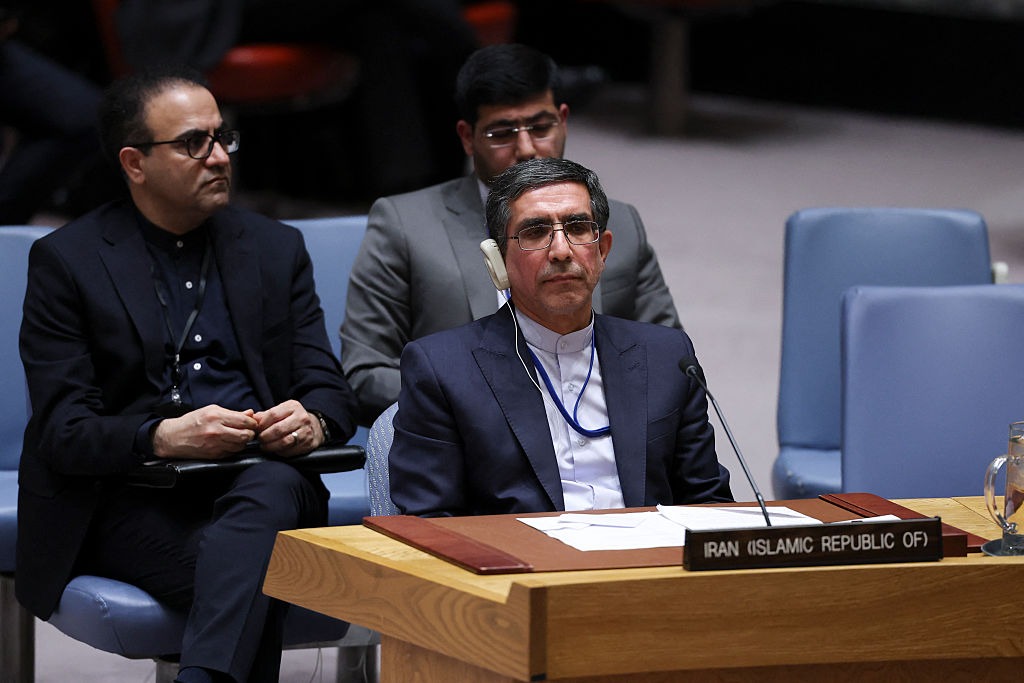
Instead, in an unsurprising reversal of its own stated principles, the United Nations elevated the Islamic Republic of Iran, the serial human-rights-abusing regime, by appointing it vice-chair to a body charged with overseeing the UN Charter.
UN Watch recently wrote:
"NO JOKE: The Islamic regime in Iran has just been elected as Vice-Chair of the U.N. Commission for Social Development, whose priority theme will be promoting democracy, gender equality, and ensuring tolerance and non-violence."
The European Union failed to block the appointment, despite having previously acted to prevent Russia from holding certain international positions after it invaded Ukraine. European governments possess diplomatic leverage and experience in stopping controversial candidates, yet in this instance they chose silence.
At the same moment as the Iranian people, protesting in the streets, were risking their lives for freedom, the world's most prominent international organization handed their rulers a position of prestige and legitimacy.
The UN Charter -- a document born from the ashes of World War II that promises to defend human rights, prevent atrocities and protect nations from aggression -- was intended to enshrine the collective conscience of humanity. The UN, however, has once again allowed a government widely accused of violent systemic repression and large-scale extrajudicial executions to play a leadership role related to the UN Charter.
The result is that rulers of Iran, which has long been the leading state sponsor of terrorism, are now in a position connected to overseeing the principles meant to restrain state violence and uphold international law. The UN's abuses of moral decency and taxpayer-funds have to be stopped – or at least financially curtailed into the irrelevance the UN so painstakingly earned.
The message this appointment sends to the Iranian people and other victims of repressive and exploitative tyrannies, is that the mass murder, torture and blinding of dissidents are secondary to diplomatic etiquette. This appointment signals that the international system will normalize their oppressors while offering them little more concern than what is, in reality, nothing more than vapid bromides – and a vicious betrayal of the UN's purported ideals. Instead of invoking doctrines such as the "responsibility to protect" when thousands of innocent civilians were being deliberately gunned down in the streets, the UN rewarded the authorities responsible.
The brutality of the Iranian regime's actions during recent protests has been widely documented by dissidents and other witnesses. Security forces fired into crowds, conducted mass arrests, used torture to extract confessions, shot wounded protesters in the head in hospitals, and deliberately blinded civilians. Entire cities experienced internet blackouts to prevent images of the crackdown from reaching other cities and the outside world.
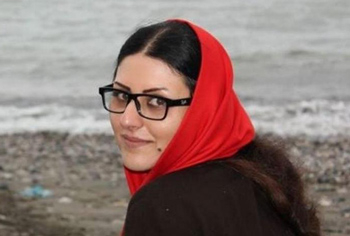
Women — many of whom previously led demonstrations against compulsory veiling laws and broader gender discrimination — faced particularly harsh repression. This is a regime with one of the world's worst human rights records regarding women's freedoms, personal autonomy, and political dissent. The UN has promoted it.
Hillel Neuer, executive director of UN Watch, condemned the decision:
"By electing Iran to help lead a commission devoted to democracy, women's rights and non-violence, the U.N. makes itself into a mockery. This is a regime that brutalizes women for not covering their hair, and that just massacred tens of thousands of its own civilians in two days."
Neuer further argued that governments had the power to stop the appointment but chose not to:
"The EU states know how to stop abusive regimes from winning these seats .... but this time on Iran, they chose silence and complicity. By rewarding the Mullahs right after their slaughter of innocents, the U.N. has now sent a very dangerous message to Tehran."
The appointment is even more obscene when considering Iran's activities beyond its borders. Tehran has long funded and armed Hezbollah, Hamas, and the Houthis, terrorist organizations involved in conflicts that have destabilized entire regions and claimed countless civilian lives, including American victims. Blame for the October 7, 2023 Hamas invasion of Israel should be directed right back to the instigator and funder of the attack.
At the same time, Iran has been supplied attack drones and ballistic missiles and technology to Russia for use in its war against Ukraine, while the US and the Free World try to prevent more of Russian President Vladimir Putin's signature scorched-earth slaughter, the same as he unhesitatingly used in Chechnya, then Syria, Abkhazia, Georgia and Crimea before the wholesale slaughter in Ukraine.
There is also the unacceptable pattern at the UN of double standards. When Iran's regime violently suppresses its own citizens, the response from international bodies is often muted, cautious, or delayed. When, however, a democratic state such as Israel acts in self-defense against armed attacks, condemnation from the UN is invariably swift and intense. The hopelessly politicized UN applies its now sham principles selectively, depending on geopolitical considerations.
U.S. Ambassador to the United Nations Mike Waltz wrote in response to Iran's UN appointment:
"Yet another reason why we are not a member of, nor do we participate in, this ridiculous 'Commission for Social Development.'"
Authoritarian governments often value symbolic recognition as much as material power: it signals to their populations that resistance is futile and that the world accepts their rule. For the Iranian people — many of whom continue to protest despite unimaginable risks — such a decision can only feel like abandonment. The international community, instead of standing with those demanding freedom, stands alongside the regime suppressing them.
In the end, this episode raises profound questions about the ongoing viability of the UN and other questionable international institutions. If a government that massacres protesters, represses women, funds terrorist groups, threatens neighboring states, and fuels foreign wars can be elevated within the UN system, the gap between rhetoric and reality has become impossible to ignore. The organization founded to protect humanity has irrevocably detached itself from the very people it was meant to serve.
Instead of defending the Iranian people, the United Nations has empowered those who oppress them. Instead of upholding its charter, it has operated against it in a display of gross institutional failure.
It is time to withdraw further support from the United Nations and many other unaccountable and untransparent unelected institutions. They had the power to stop these grotesque masquerades but chose not to act.
Dr. Majid Rafizadeh, is a political scientist, Harvard-educated analyst, and board member of Harvard International Review. He has authored several books on the US foreign policy. He can be reached at dr.rafizadeh@post.harvard.edu
 Rob Porter