








The following are among the murders and abuses Muslims inflicted on Christians throughout the month of February 2026.
The Muslim Slaughter of Christians
Nigeria: According to a Feb. 13 report, more than 100 Christians were killed and more than 90,000 displaced after months of coordinated attacks on rural communities since September 2025. In areas such as Takum, Ussa, and Donga, armed groups have repeatedly raided villages, killing residents, burning homes, churches, and crops, and forcing survivors to flee into the surrounding areas. Entire communities have been obliterated. Many displaced families are unable to return: attackers reportedly seized farmland and target those who try to come back.
A Feb. 10 report detailed that Christian communities, amid ongoing kidnappings and killings, continue to live in fear. In one instance, more than 160 Christians were abducted during church services—particularly in regions of Kaduna state. A Catholic priest, Bobbo Paschal, was released after spending 61 days in captivity after his abduction during an attack in which another church member was killed and others were taken hostage.
On Feb. 6, nine Catholic worshippers were kidnapped in Benue State during a night prayer vigil at a mission station. Armed terrorists stormed the church and abducted them to an unknown location, prompting calls for prayer and urgent rescue efforts from the local diocese.
On Feb. 7, coordinated terror attacks on multiple predominantly Christian villages in Taraba State left some 70 people dead. Homes were burned, food supplies destroyed, and property looted, forcing many residents to flee into nearby bushes or neighboring areas. Community leaders reported that at least 35 churches were vandalized or destroyed; a pastor was among those killed. One person was abducted; many others remain missing.
Survivors said there was no visible security presence during the attack, thereby leaving the community defenseless.
According to a Feb. 6 report, Fulani herdsmen killed a Christian pastor, Rev. Bulus Madaki, along with his daughter and son-in-law during an ambush in Plateau State. Only the 3-month-old granddaughter, despite suffering a severe machete gash, survived, but is an orphan.
On Feb. 1, in Niger State, armed militants carried out coordinated attacks, targeting Christians. The terrorists burned a police station, destroyed homes, kidnapped several residents, and later set fire to an evangelical church belonging to the United Missionary Church of Africa. The violence also extended to Mashegu, where a Catholic convent and nearby clinic were attacked; the nuns managed to escape, but the medical facilities were looted and severely damaged.
Democratic Republic of Congo: On Feb. 6, in the northeastern region, Islamist militants carried out coordinated attacks that killed at least 24 Christians, while burning homes and spreading violence across the North Kivu Province. The Islamic State Central Africa Province (ISCAP) went on to announce the massacre of "21 Christians ... praise be to Allah." They added, "Let the Christians of Africa know there is no security for you except by Islam or jizya." Since late 2024, ISCAP has reportedly killed many hundreds of Christians in the area, and worsening an already severe humanitarian crisis.
Separately, on Feb. 1, Muslim terrorists of the Allied Democratic Forces (ADF) devastated the village of Mamove and its nearby communities.The terrorists killed at least eight Christians, burned homes, shops, and vehicles, destroyed the local economy and displaced residents. The terror and destruction left communities paralyzed with widespread fear, hunger, and trauma—especially among children who had witnessed the violence. Many Christians lost their only sources of income, and local leaders have expressed anger and frustration at the lack of response from authorities.
Muslim Abduction of Christian Girls
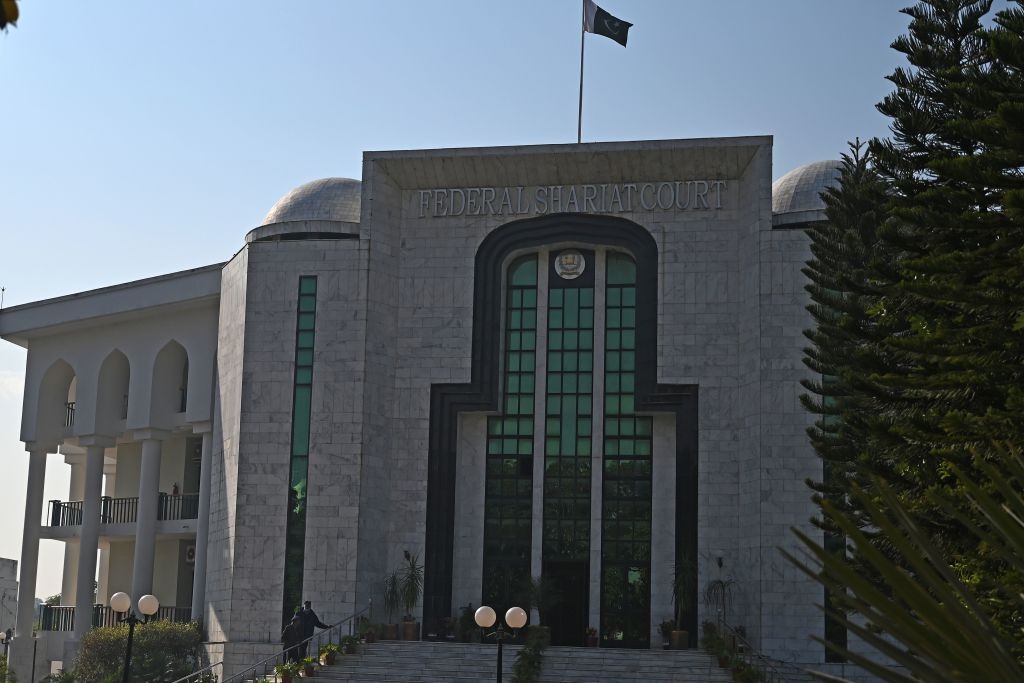
Pakistan: On February 3, Pakistan's Federal Constitutional Court granted custody of 13-year-old Christian girl Maria Shahbaz to a 30-year-old Muslim man accused of kidnapping, forcibly converting, and marrying her. The court rejected her official birth certificate and ignored prior findings that the marriage was illegal, instead accepting her statement that she converted and married voluntarily—despite claims from her family and lawyer that it was made under coercion. Rights advocates and the girl's family criticized the ruling, pointing to evidence that the marriage certificate was fake and raising concerns about police inaction and possible collusion. They argue the girl had been in the suspect's custody for months, making any statement unreliable.
Separately, according to a Feb. 20 report, 14-year-old Christian girl Sataish Maryam was abducted from her home in Punjab. Her family says she was forcibly converted to Islam and married to a 26-year-old Muslim man, Ali Haider. Despite the family providing a birth certificate proving she is a minor, a magistrate handed the girl over to Haider. Police reportedly failed to include charges of child marriage, statutory rape, or forgery in the official report. The family is facing armed intimidation from the perpetrators to withdraw their complaint, while their legal team is petitioning the High Court to challenge the "fabricated" conversion and marriage documents.
Egypt: According to a Feb. 16 report, Silvana Atef, a Christian minor from Fayoum, disappeared and later appeared in a video claiming to have converted to Islam. Under Egyptian law, because she is under 18, she lacks the legal capacity to change her religious status. In the video, a woman standing behind Silvana refers to Christians as "kuffar" (infidels). Lawyers argue this constitutes sectarian incitement and points to coercion by an older man allegedly involved in her disappearance. Although the prosecution reportedly ordered her placed in a social care institution, her family found no record of her presence there. The facility reportedly claimed they do not accept Christian residents. The family fears authorities are waiting for Silvana to turn eighteen this coming March, at which point her change of religion would become legally permanent. After staging a silent protest for transparency at the Prosecutor General's office, several family members, including Silvana's uncles, were detained by police until the following evening. The family continues to demand why Silvana has not been returned to her legal guardians and why her current location remains undisclosed despite a prosecutorial order. According to some, the incident sends a troubling message to Coptic families: all Coptic girls effectively have no protection from the state.
Muslim Attacks on Christian Freedom: Apostates, Blasphemers, and Evangelists
Uganda: According to a Feb. 19 report, a 62-year-old Muslim, Ahammada, killed his 33-year-old son, Juma, after the son converted to Christianity. The father, after luring his son outside their home, used a panga (long knife) to stab him to death. According to the victim's wife, Nangobi, the murder appeared premeditated: the father fled immediately and may have had help escaping. The couple had faced ongoing threats from family members after converting from Islam, she said:
"My father-in-law together with other family members have been insulting us... promising to kill all of us for leaving Islam."
The victim, a father of four young children, died, despite efforts to get him to a hospital. As of the report, police had not conducted an investigation.
Separately, on Feb. 8, a group of masked men violently attacked two pastors, John Michael Okoel and Abraham Omoding, as they returned from a night prayer meeting near Pallisa. The masked men, armed with sticks and knives and dressed in Islamic attire, accused them of blasphemy and trying to convert Muslims before beating them severely, leaving one unconscious and the other with serious injuries, including a fractured arm and lost teeth. In the words of Pastor Okoel,
"They began accusing us of lying about Allah, preaching that Allah has a Son and converting their brothers and sisters. Before I could respond, one of them, Ali Kitaali, slapped me, cut me near my mouth and hit my knee and hand. I fell unconscious."
The attack only stopped when a passing vehicle approached, causing the Muslims to flee, after which the pastors were taken for medical treatment.
Egypt: On Feb. 23, an Egyptian court rejected the appeal of Coptic Christian Augustinos Semaan and upheld his five-year prison sentence for "contempt of religions" (blasphemy) under Article 98(f) of the Penal Code. Semaan, a scholar of comparative religion with a master's degree in theology and affiliated with a prominent YouTube channel, was convicted for statements he made defending Christianity and critiquing Islam. The core of the case was his assertion that Islam was spread by force while Christianity was spread by preaching and love. Semaan's lawyers argued the conviction violated freedom of religion and belief. They stated that his trial fell far short of the minimum standards of justice: defense lawyers were not notified of the referral to trial, nor given copies of the investigation or the initial ruling. The defense also proved the arrest report had been falsified — its date shows it had been written a full week after the arrest. Citing the Egyptian Constitution and Criminal Procedure Code, they challenged the legality of monitoring Semaan's social media accounts without a warrant. part of his defense team, the Egyptian Initiative for Personal Rights (EPPR), condemned the verdict as unconstitutional: Article 98(f) "undermines the right to equality and non-discrimination, impedes the right to a fair trial and the right to defense, and opens the door to inquiring into citizens' beliefs."
In a separate incident, according to a February 16 report, converts to Christianity in Egypt face significant challenges and risks when attending church: official identity cards list religion, and most converts are still registered as Muslim. Since many churches require ID checks for security, this can expose converts or prevent them from entering, thereby forcing them to rely on methods such as attending less strict churches, using personal connections, or informally proving their faith. Many also live in secrecy within their families and communities, as openly converting can lead to social hostility or even violence.
Pakistan: On February 4, a blind Christian man, Nadeem Masih, was denied bail by the Lahore High Court after being charged under Pakistan's blasphemy laws, which carry the death penalty. He has been in custody since August 2025 after his arrest. Police accused him of making insulting remarks about the Prophet Muhammad. His lawyer argues that the case is built on inconsistent statements, questionable timing, and evidence that contradicts the official police account, including claims that key witnesses reported the incident long after it allegedly took place. Masih's family maintains that the accusation followed a dispute with local park contractors who had previously harassed and exploited him. They allege that after he was taken into custody, he was beaten and coerced. Despite his disability, education, and role as the sole provider for his family, the court rejected bail on the grounds that he might flee or influence witnesses.
In a separate Feb. 5 report, a court acquitted two Christian nurses, Mariam Lal and Navish Arooj, of blasphemy charges after nearly four years. The women were arrested in 2021 after accusations by a Muslim colleague that they had desecrated an Islamic sticker at a hospital. Although released on bail after five months, they remained in hiding following threats while their case proceeded. The case is notable because lower courts in Pakistan rarely acquit blasphemy cases due to social pressure and security risks. Rights groups state that such laws are often misused to target minorities, sometimes leading to violence, intimidation, or personal exploitation. Despite their acquittal, concerns remain about the women's safety and ability to rebuild their lives. According to Human Rights Watch,
"Blasphemy accusations are increasingly weaponized to incite mob violence, displace marginalized groups and seize their property with impunity."
South Sudan: According to a Feb. 24 report, Mosab Haroon Ahmed, a 31-year-old Sudanese refugee at the Gorom Refugee Settlement near Juba, is facing credible death threats after converting from Islam to Christianity. Ahmed's conversion triggered immediate hostility from Muslim extremists within the camp: "After I believed in Jesus, radical Muslims started to persecute me and other converts," he said. When his family in Darfur, Sudan, was notified of his change of faith to Christianity, they disowned him and approved his killing in accordance with strict Islamic views on apostasy. "My family wants me dead," Ahmed said. Fearing an "honor killing" or mob violence, he has since taken refuge inside a church. The local pastor confirmed that as extremists are aware of Ahmed's whereabouts, he is in constant danger.
In a different episode, on Feb. 19, Pastor Lino Pasquale of the Hai Baraka Pentecostal Church was abducted while fishing. His body was discovered six days later; church leaders said he was "targeted and killed by an unknown gunman." The incident follows the assassination of Rev. Christopher Maring, a senior leader of the Africa Inland Church, who was shot and killed at his home in a Juba suburb on January 14, 2026. Leaders of the Sudan Pentecostal Church (SPC) expressed heartbreak over the loss of a "faithful shepherd," calling his murder a "heinous and targeted killing."
Indonesia: On Feb. 18, a Christian leader and former Muslim, Dedi Saputra, was arrested, based on a TikTok video. Saputra had answered a question about religious conversion by stating that Muhammad had only one wife before becoming a prophet, but a dozen wives afterward. Despite the historical accuracy of the statement (corroborated by a Suara Muhammadiyah magazine article), the Aceh Islamic Sharia Office and several Islamic youth organizations reported him for "religious defamation" and "hate speech," and claimed that the video "hurt the feelings of Muslims" and "sparked unrest." Advocates accused the police of favoritism and focusing on "managing citizens' faith" rather than protecting constitutional religious freedom.
Muslim Attacks on Christian Churches
USA: On Feb. 28, San Francisco police arrested 51-year-old Sadat Mousa for defacing a church with swastikas, antisemitic language, and anti-gay slurs. Damage to the property is estimated to exceed $20,000. While not officially confirmed by police, a social media account matching the suspect's name and location contains several extremist posts. These include reposts calling for violence against Jewish people, praise for Hamas, and the slogan "Palestine from the river to the sea." The suspect's social media presence reportedly includes messages disparaging Christianity, such as "learn from your bloody Jesus," and assertions that Palestinians "will never share heaven with the devils."
Syria: On Sunday, Feb. 1, a Muslim man, carrying a Koran and chanting "Allahu akbar," entered the Melkite Greek Cathedral of Al Zaitoun (the Patriarchate headquarters) before the Sunday Mass.
Two weeks later, on Sunday, Feb. 15, a Muslim man entered the Syriac Catholic Church of Our Lady of Deliverance in Qatana town, where he began to utter "offensive remarks about their faith."
The intruder also repeatedly recited a verse from the Koran, causing fear and panic among the worshippers present in the church.
Armenia: According to a February 11 report, an Armenian church in Vaghuhas, in the Artsakh region (Nagorno-Karabakh), was vandalized in January 2026. The Church of Saint Mary was reportedly desecrated, with visible damage including a broken khachkar, a traditional carved stone cross, an important symbol of Armenian Christian heritage. The incident reflects ongoing cultural and religious site damage in the region, where tensions have led to repeated destruction of historical and religious landmarks.
Italy: According to a Feb. 22 report, the Church of San Sepolcro in Piacenza is facing nightly "escalations" of vandalism, littering, and property damage. Beyond the accumulation of alcohol bottles and trash, the building itself has been targeted. Vandalism includes cracked structural columns, smashed planters, uprooted cobblestones, and bricks ripped out of the exterior walls. Parish priest Iuri Ursachi attributes the behavior to a specific group of youths, noting a lack of respect for the religious site: "The fault always lies with the same group of boys, mostly North-Africans." He recounted confronting them by asking, "Do you act like this in your mosque?"
A separate group of teenagers stormed the San Pietro Viminario parish center during an event with local families. The teenagers vandalized the premises, then occupied the cloister garden. For months, the same group has been responsible for property damage, public disturbances (firecrackers and moped racing), and physical harassment—including spitting in the face of a teenage girl.
Finally, on February 2 in Rome, a 35-year-old man was arrested in St. Peter's Basilica after attempting to enter the church while carrying flammable liquids and ignition devices during a major Mass led by the pope. Security stopped the man before he could enter, thereby preventing a potential catastrophe to the large crowd present. Authorities believe the suspect is linked to earlier arson attacks on churches in Rome, including San Giacomo in via del Corso and San Lorenzo in Lucina.
Nigeria: On Feb. 1, Muslim bandits launched an early-morning raid on Agwara community in Niger State, attacking a police station, burning part of a United Methodist church, and abducting at least five people.
In a separate incident, on Feb. 26, arsonists targeted St. Mary's Catholic Church in Katchuan Iruan. They set fire to the sacristy and completely destroyed all the church's historical and religious records. In addition, two vehicles parked on the premises were burned.
Democratic Republic of Congo: On the night of February 15–16, unknown assailants broke into and desecrated a Catholic church in Bule. They tore off the church shutters, forced open the tabernacle, and scattered the consecrated hosts on the floor.
General Muslim Abuse of Christians
Yemen: According to a Feb. 17 report, at least 20 Yemeni Christians were arrested or abducted from their homes or off the street. While some are confirmed in Houthi-run prisons, others have "disappeared" and face potential torture or execution for their faith. Yemen is officially 99-100% Muslim; conversion to Christianity under Yemeni law is punishable by death. The state and various ruling entities do not officially recognize any Christian minority. The current indigenous church grew after the martyrdom of foreign missionaries by Islamic extremists: In 2002, an Islamic jihadist killed three American missionaries at Jibla Baptist Hospital to "cleanse his religion and get closer to God." In 2012 Al-Qaeda killed an American teacher in Taiz for "spreading Christianity." In 2016, Islamic State gunmen killed four nuns and 12 others at a home for the elderly in Aden. By 2017, nearly all foreign missionaries had left Yemen, yet various Christian ministries observe and report on the Yemeni situation.
Iran: According to a Feb. 19 report, although fewer Christians were sentenced in 2025 (73) compared to 2024 (96), the sentences became significantly harsher, totaling 280 cumulative years in prison. The state officially labeled many of them as "Mossad mercenaries" and accused them of acting under a "Zionist Christian evangelization movement" trained by the U.S. and Israel. Persecution intensified significantly in 2025: 254 Christians were arrested — nearly double the 139 arrests recorded in 2024. 90% of cases were brought under Article 500, which criminalizes "propaganda contrary to the holy religion of Islam." The government also increasingly criminalized the possession of imported Bibles. A Christian convert, Aida Najaflou, was sentenced to 17 years for "evangelism, prayer, and celebrating Christmas." She was charged with "propaganda against the regime" and "acting against national security." Despite sustaining a spinal fracture in prison, she was reportedly returned to her cell on a stretcher and denied a proper hospital recovery period. Najaflou's case is one of many. According to the report, Christian prisoners face serious mistreatments, including "denial of healthcare, psychological torture, and even physical abuse."
Another February 5 report highlights the tightly restricted conditions a small Orthodox Christian community experiences. Services are rare, limited mostly to Holy Week, and must be conducted in Greek to avoid accusations of proselytism. The community cannot freely perform sacraments such as baptisms or marriages, and visits by the clergy are infrequent. Believers are therefore to wait years for full participation in religious life. Priests must move discreetly, wear civilian clothes and limit their movements for safety. Some individuals, officially considered Muslims, practice Christianity in secret, putting themselves at serious risk if discovered. Fr. Nikiforos illustrated the situation:
"On Saturday night, after the end of the Resurrection service, two people of Iranian origin approached me secretly. They begged me to give them Holy Communion after the rest of the faithful had left the church. They lived in Tehran and, to the outside world, they were considered Muslims! The fact that they had received Holy Communion must not become known, because in that case their lives would be in danger. Although officially considered Muslims, they had been baptized as Orthodox Christians during a previous visit to an Orthodox country."
Philippines: A Feb. 17 report disclosed that Christian settler leaders in the Bangsamoro Autonomous Region in Muslim Mindanao (BARMM) warned the Senate that recent legislation poses an "existential threat" to non-Muslim representation. Parliament Bill No. 419, enacted Jan. 28, voided all sectoral certifications, forcing more than 260 Christian settler groups to re-register within a strict 15-day deadline, thereby erasing "the hard-won legitimacy" of their organizations. Leaders also opposed replacing sector-managed "reserved seats" with region-wide elections, arguing it reduces minority protections to a "popularity contest" and risks a "tyranny of the majority." They warn disenfranchisement could undermine missionary security, economic rights, and the region's inclusive "Tri-People" framework.
Netherlands: According to a Feb. 22 report, Elyas, a Lebanese-born evangelist who has lived in the Netherlands for 26 years, was assaulted while preaching in the streets of Utrecht. A group of Muslim men interrupted his preaching, shouting Islamist slogans such as "Allah is one" and "Jesus is a human." The situation escalated when one of the men, apparently attempting to assert dominance, struck Elyas before bystanders intervened to stop the violence. Police arrived and dispersed the group, although it remains unclear if the attacker was arrested.
Germany: A 35-year-old Afghan man attacked three Jehovah's Witnesses at Würzburg Central Station, attempting to stab a 68-year-old man and assaulting two others. Bystanders, including an off-duty police officer, subdued him before serious injuries occurred.
Separately, according to a Feb. 27 report, since 2024, a 34-year-old Syrian man named Khaled K. has been terrorizing the Hessian municipality of Kriftel. He has sent to the city administration more than 100 emails filled with anti-Christian insults, hatred toward Germans, and misogyny. At the beginning of 2026, the threats escalated. Khaled explicitly vowed to go on a killing spree—"I will kill everything I see before me, women, children, and everything." He also insulted Christianity as the "dirtiest religion," referred to Germany as a "Nazi land," and insulted Jesus and Mary in the most vulgar terms. Despite numerous criminal complaints for insults, threats, and property damage (such as smashing glass bottles in the town hall parking lot), West Hesse police have only conducted "threat talks" (Gefährderansprachen) but, as no "serious crimes" have been committed, apparently see no legal basis yet for an arrest.
Pakistan: Jameel Masih, a 14-year-old Christian boy, forcibly converted to Islam , is being held in illegal custody by a Muslim landlord, Muhammad Boota Bajwa. Due to extreme poverty, Jameel was sent five years ago. to work at Bajwa's cattle shed. The family was paid only in grain—roughly 200 kg of wheat annually (worth about $58)—a practice rights activists describe as bonded labor. On February 22, after the family managed to bring Jameel home briefly, Bajwa and two armed men reportedly attacked the parents and forcibly snatched the boy back. The family later saw a TikTok video of Jameel wearing an Islamic cap while Muslim hymns were playing. Local residents confirmed the boy had been converted to Islam. Activist Napolean Qayyum notes that minor children from minorities are often converted to ensure permanent control over them as laborers.
In a different incident, according to a Feb. 18 report, Sadiq Masih, a Christian brick kiln worker in Punjab, was coerced into converting to Islam and changing his name to "Muhammad Sadiq" years ago while indebted to an employer. Although he remains a practicing Christian, the National Database and Registration Authority (NADRA) refuses to correct his records. Because their father is registered as Muslim, NADRA has also been blocking his five children from registering as Christians on their National Identity Cards (CNICs). Without these cards, the children are barred from education, banking, voting, and government assistance. Human rights advocates highlight that the brick kiln sector uses financial advances (debt bondage) to trap illiterate Christian workers, thereby making them vulnerable to forced religious identity changes. The Masih family, living in extreme poverty, lacks the means for the lengthy court battles required to prove "clerical error," leaving them trapped in a Muslim legal identity they do not profess. Attorney Lazar Allah Rakha notes that while conversion to Islam is processed easily, conversion from Islam (apostasy) is treated with suspicion and effectively blocked by administrative policy. Attempting to renounce a Muslim identity in Pakistan carries severe risks under Section 295-A (outraging religious feelings) and can trigger mob violence or accusations of blasphemy that can result in death.
Raymond Ibrahim, author of Defenders of the West, Sword and Scimitar, Crucified Again, and The Al Qaeda Reader, is the Distinguished Senior Shillman Fellow at the Gatestone Institute and the Judith Rosen Friedman Fellow at the Middle East Forum.
About this Series
While not all, or even most, Muslims are involved, persecution of Christians by extremists is growing. The report posits that such persecution is not random but rather systematic, and takes place irrespective of language, ethnicity, or location. It includes incidents that take place during, or are reported on, any given month.
Previous reports
- January, 2026
- December, 2025
- November, 2025
- October, 2025
- September, 2025
- August, 2025
- July, 2025
- May, 2025
- April, 2025
- March, 2025
- February, 2025
- January, 2025
- December, 2024
- November, 2024
- October, 2024
- September, 2024
- August, 2024
- July, 2024
- June, 2024
- May, 2024
- April, 2024
- March, 2024
- February, 2024
- January, 2024
- December, 2023
- November, 2023
- October, 2023
- September, 2023
- August, 2023
- July, 2023
- June, 2023
- May, 2023
- April, 2023
- March, 2023
- February, 2023
- January, 2023
- December, 2022
- November, 2022
- October, 2022
- September, 2022
- August 2022
- July, 2022
- June, 2022
- May, 2022
- April, 2022
- March, 2022
- February, 2022
- January, 2022
- December, 2021
- November, 2021
- October, 2021
- September, 2021
- August 2021
- July, 2021
- June, 2021
- May, 2021
- April, 2021
- March, 2021
- February, 2021
- January, 2021
- December, 2020
- November, 2020
- October, 2020
- September, 2020
- August, 2020
- July, 2020
- June, 2020
- May, 2020
- April, 2020
- March, 2020
- February, 2020
- January, 2020
- December, 2019
- November, 2019
- October, 2019
- September, 2019
- August, 2019
- July, 2019
- June, 2019
- May, 2019
- April, 2019
- March, 2019
- February, 2019
- January, 2019
- December, 2018
- November, 2018
- October, 2018
- September, 2018
- August, 2018
- July, 2018
- June, 2018
- May, 2018
- April, 2018
- March, 2018
- February, 2018
- January, 2018
- December, 2017
- November, 2017
- October, 2017
- September, 2017
- August, 2017
- July, 2017
- June, 2017
- May, 2017
- April, 2017
- March, 2017
- February, 2017
- January, 2017
- December, 2016
- November, 2016
- October, 2016
- September, 2016
- August, 2016
- July, 2016
- June, 2016
- May, 2016
- April, 2016
- March, 2016
- February, 2016
- January, 2016
- December, 2015
- November, 2015
- October, 2015
- September, 2015
- August, 2015
- July, 2015
- June, 2015
- May, 2015
- April, 2015
- March, 2015
- February, 2015
- January, 2015
- December, 2014
- November, 2014
- October, 2014
- September, 2014
- August, 2014
- July, 2014
- June, 2014
- May, 2014
- April, 2014
- March, 2014
- February, 2014
- January, 2014
- December, 2013
- November, 2013
- October, 2013
- September, 2013
- August, 2013
- June, 2013
- May, 2013
- April, 2013
- March, 2013
- February, 2013
- January, 2013
- December, 2012
- November, 2012
- October, 2012
- September, 2012
- August, 2012
- July, 2012
- June, 2012
- May, 2012
- April, 2012
- March, 2012
- February, 2012
- January, 2012
- December, 2011
- November, 2011
- October, 2011
- September, 2011
- August, 2011
 Tershia